10 Authentic East African Dinner Recipes
Bold. Coastal. Deeply Rooted in Tradition.
East African cuisine is one of the most diverse and exciting food cultures on the planet. It stretches across a vast and varied region — from the spice-scented coastal cities of Mombasa and Zanzibar to the highland plateaus of Ethiopia and Uganda, from the great lake shores of Tanzania to the sun-baked plains of Kenya.
Ancient agricultural traditions gave the region its staple grains, stews, and fermented flavors. The result is a cuisine layered with history, rich with spice, and deeply satisfying in every bowl and on every plate. These 10 authentic recipes bring the true flavors of East Africa into your kitchen. Cook them with curiosity. Serve them with generosity.
See Also: Healthy Winter Dinner Recipes
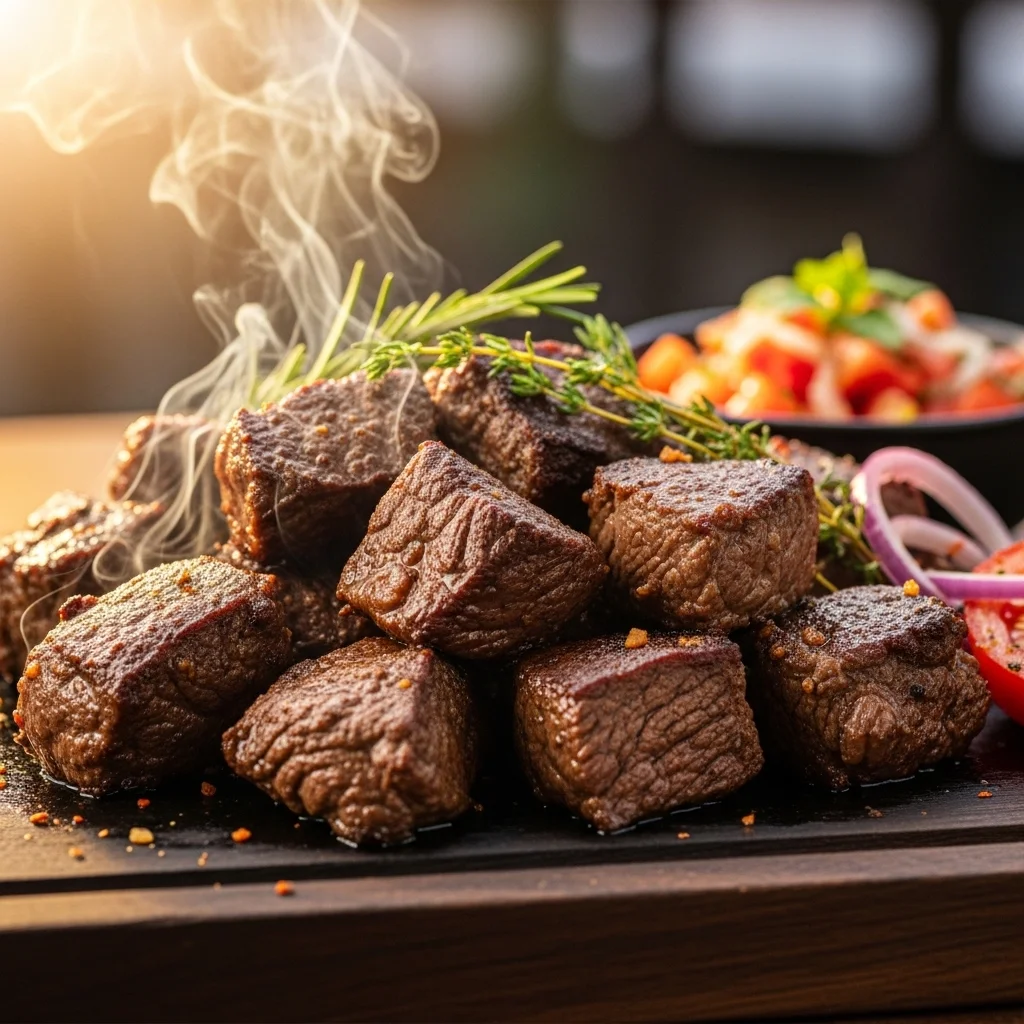
Nyama Choma (Kenyan Grilled Meat)
Prep: 10 min + marinate | Cook: 40 min | Serves: 4–6 | Difficulty: Easy
Nyama choma is the heartbeat of Kenyan social life. It literally means grilled meat and it is exactly that — simply seasoned goat or beef grilled low and slow over charcoal until smoky, tender, and deeply flavored. No elaborate sauces. No complexity. Just honest meat, fire, and the company of people you love.
Ingredients
- 1.5kg goat ribs or beef short ribs
- 2 tsp salt
- 1 tsp garlic powder
- 1 tsp cumin
- 1 tsp cracked black pepper
- Juice of 1 lemon
- For the kachumbari: 3 ripe tomatoes, finely diced + 1 red onion, finely diced + 1 cucumber, finely diced + large handful fresh cilantro + juice of 2 limes + 1 green chili, finely sliced + salt
- Ugali and kachumbari to serve
Instructions
Rub meat generously with salt, garlic powder, cumin, pepper, and lemon juice. Marinate for at least 1 hour. Overnight in the fridge builds a deeper, more complex flavor.
Light a charcoal grill and let it burn down to medium heat with glowing coals. Grill meat for 30 to 40 minutes, turning regularly, until cooked through and charred in patches. The slow cook over charcoal is essential. High fierce heat only toughens the meat.
Make kachumbari by combining all ingredients in a bowl. Toss well and leave to sit for 10 minutes so the flavors meld and the vegetables soften slightly.
Serve the meat whole or roughly chopped on a board alongside kachumbari and warm ugali.
Pro Tip: Charcoal is the soul of nyama choma. Gas grilling produces cooked meat. Charcoal produces nyama choma. The smoke infuses every fiber and creates the flavor that no indoor cooking method can replicate.
Ugali (East African Cornmeal Porridge)
Prep: 5 min | Cook: 15 min | Serves: 4–6 | Difficulty: Easy
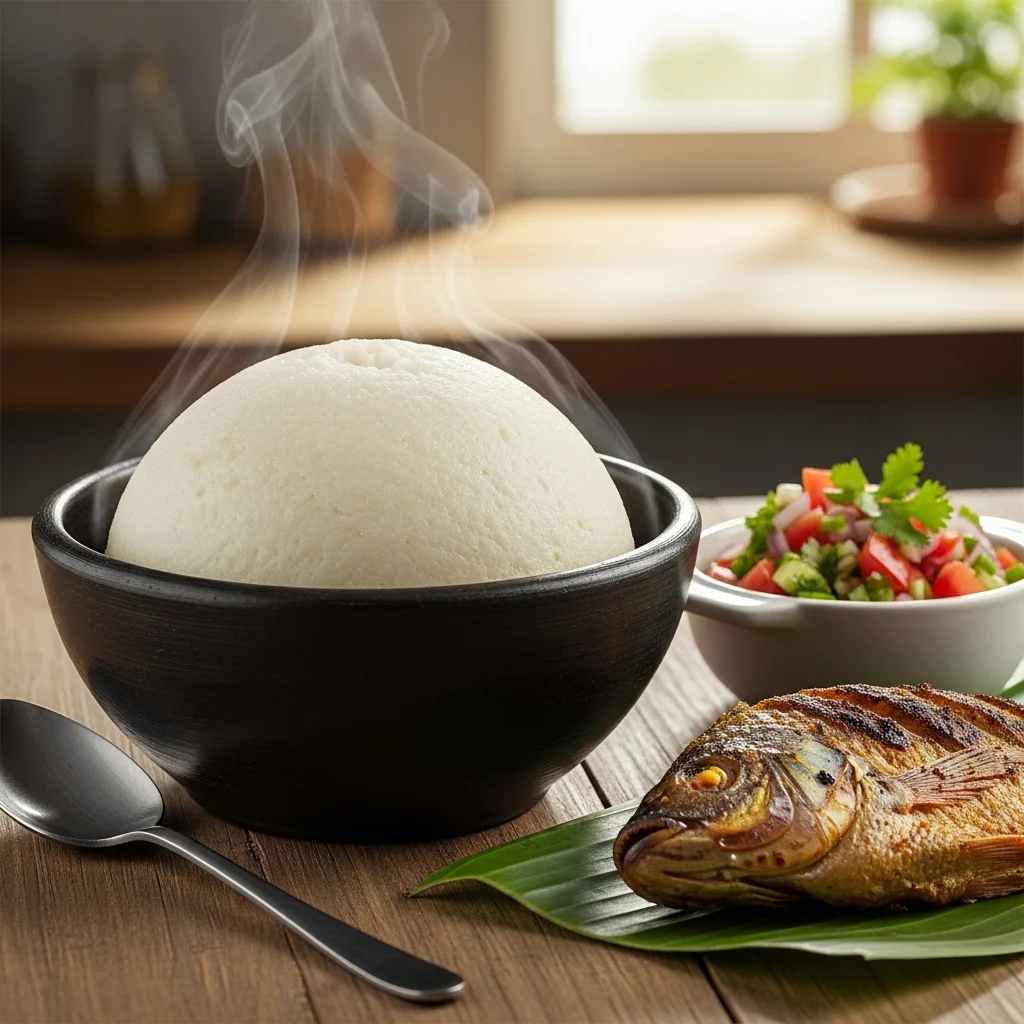
Ugali is the staple starch of East Africa. Made from white maize flour stirred into boiling water until thick and firm, it is eaten at almost every meal across Kenya, Tanzania, and Uganda. It is simple beyond measure. It is also the perfect vehicle for every stew, soup, and grilled meat on this list.
Ingredients
- 2 cups white maize flour (unga wa mahindi)
- 4 cups water
- 1 tsp salt
Instructions
Bring water and salt to a rolling boil in a large heavy pot. Reduce heat to medium.
Slowly pour in maize flour while stirring constantly with a wooden spoon. Work quickly to prevent lumps forming. Stir vigorously until the mixture comes together into a thick, unified mass.
Reduce heat to low. Continue stirring firmly for 8 to 10 minutes. The ugali is ready when it pulls cleanly away from the sides of the pot and holds its shape when pressed. It should feel like very firm mashed potato.
Wet your hands with cold water. Shape the ugali into a smooth round mound on a plate or wooden board. Serve alongside stews, grilled meat, and braised greens.
Pro Tip: Ugali should be thick enough to roll into a ball and use as a scoop. If it sticks to your hands, it needs more cooking time. Keep stirring firmly on low heat until it becomes genuinely stiff and holds its shape without slumping.
Pilau (East African Spiced Rice)
Prep: 20 min | Cook: 40 min | Serves: 4–6 | Difficulty: Medium
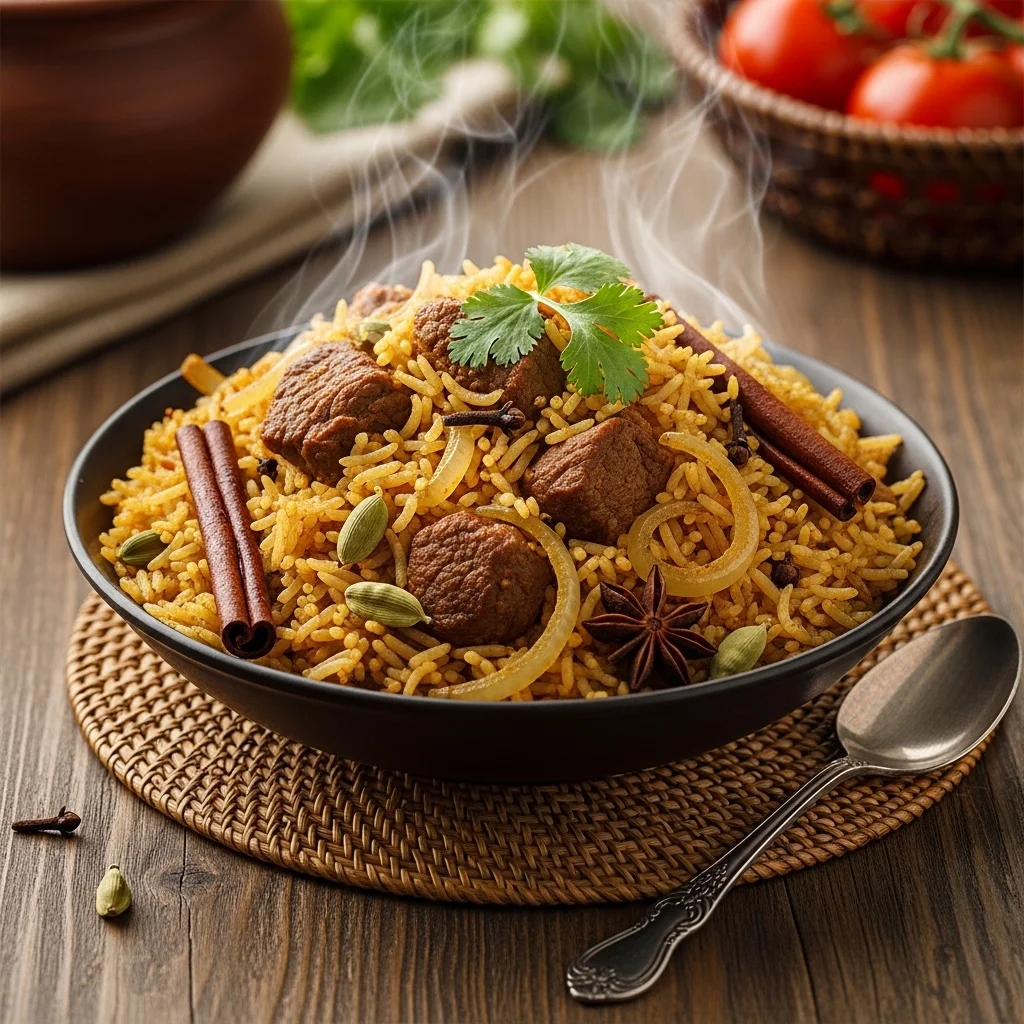
Kenyan pilau is one of the most fragrant and deeply satisfying rice dishes in all of East Africa. Whole spices — cardamom, cinnamon, cloves, and cumin — are toasted in oil with caramelized onions and beef before the rice is added and cooked in a deeply spiced broth until every grain is golden and aromatic. This is celebratory food. Served at weddings, holidays, and every gathering of significance.
Ingredients
- 2 cups basmati rice, rinsed and soaked for 20 minutes
- 500g beef or chicken, cut into chunks
- 2 large onions, very finely diced
- 4 garlic cloves, minced
- 1 tbsp fresh ginger, minced
- 400g canned diced tomatoes
- 3 tbsp neutral oil
- Whole spices: 4 cardamom pods + 1 cinnamon stick + 4 cloves + 1 tsp cumin seeds + 1 tsp black peppercorns
- 1 tsp pilau masala or garam masala
- 3 cups beef or chicken stock, hot
- Salt to taste
- Fresh cilantro and sliced tomato to serve
Instructions
Heat oil in a large heavy pot over medium heat. Add all whole spices and toast for 60 seconds until sizzling and fragrant. The kitchen should smell extraordinary immediately.
Add onions and cook for 12 to 15 minutes, stirring regularly, until deeply golden and caramelized. Do not rush this step. The caramelized onion is the foundation of the entire dish.
Add garlic and ginger and cook 2 minutes. Add meat and cook until browned on all sides. Add tomatoes and pilau masala. Cook for 8 minutes until the sauce thickens and the oil rises to the surface.
Add drained rice and stir for 2 minutes until every grain is coated in the spiced tomato and meat mixture. Pour in hot stock. Season with salt. Bring to a boil then reduce to the lowest possible heat.
Cover tightly and cook for 18 to 20 minutes. Do not lift the lid. Remove from heat and rest covered for 10 minutes. Fluff gently with a fork. Serve with fresh cilantro and sliced tomato.
Pro Tip: The deeply caramelized onion is what gives Kenyan pilau its characteristic dark golden color and sweet depth. Pale, undercooked onion produces pale, flat pilau. Give the onions the full 15 minutes they need and the results will be incomparable.
Supu ya Ndizi (Tanzanian Green Banana Soup)
Prep: 15 min | Cook: 40 min | Serves: 4–6 | Difficulty: Easy
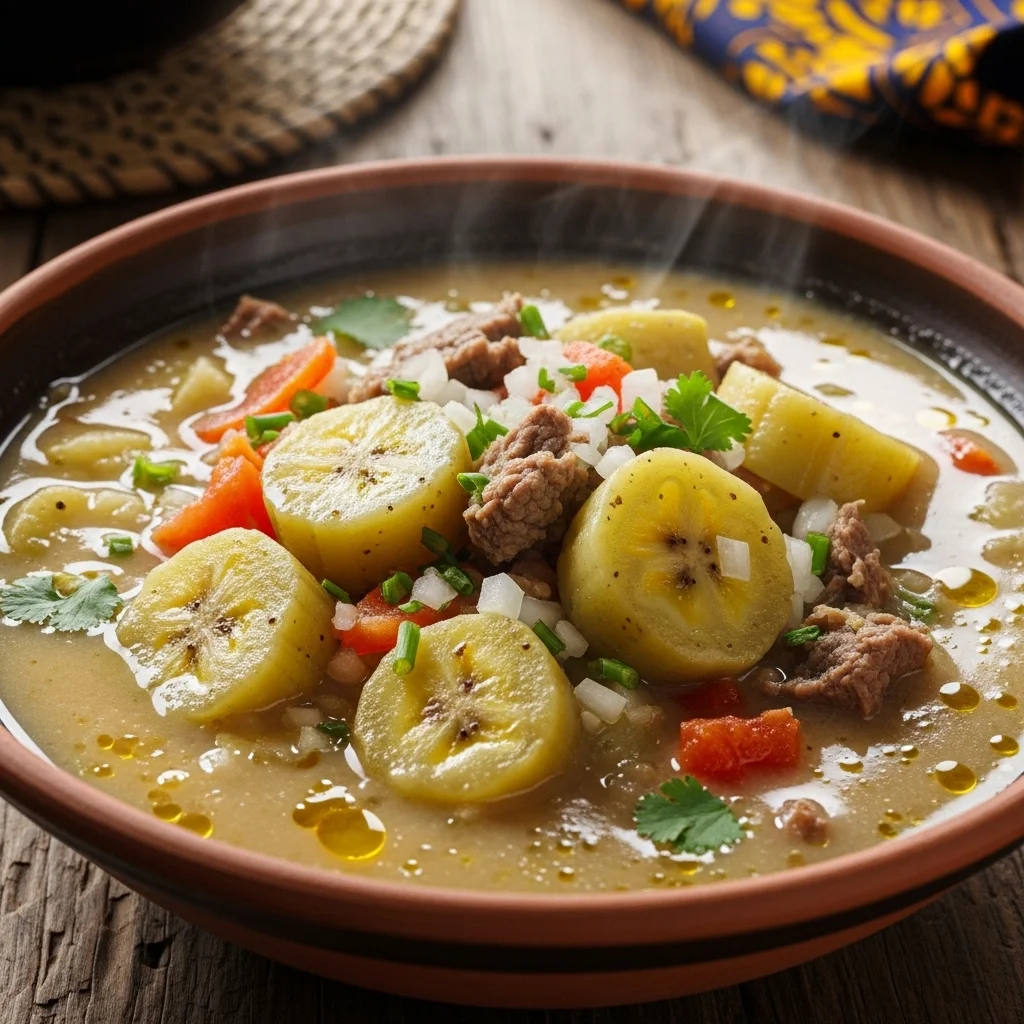
A deeply nourishing, uniquely Tanzanian soup made with green unripe bananas simmered in a richly spiced beef and coconut broth. Green bananas behave like a starchy vegetable rather than a fruit. They absorb the broth beautifully and become tender and satisfying in a way that makes this soup unlike anything else you will ever taste.
Ingredients
- 4 large green unripe bananas, peeled and cut into thick rounds
- 300g beef or goat, cut into small pieces
- 400ml coconut milk
- 1 large onion, diced
- 3 garlic cloves, minced
- 2 ripe tomatoes, diced
- 1 tsp cumin
- 1 tsp turmeric
- ½ tsp cinnamon
- 2 tbsp neutral oil
- 1 litre water or beef stock
- Salt and cracked black pepper
- Fresh cilantro to serve
Instructions
Peel green bananas and place immediately in cold salted water to prevent browning. They oxidize quickly once peeled.
Heat oil in a large pot over medium heat. Brown meat for 3 to 4 minutes until sealed and golden. Remove and set aside.
Cook onion in the same pot for 5 minutes until soft. Add garlic, cumin, turmeric, and cinnamon. Cook 2 minutes. Add tomatoes and cook for 5 more minutes until the mixture thickens.
Return meat to the pot. Add water or stock and drained banana pieces. Bring to a boil then reduce to a steady simmer. Cook for 25 minutes until the bananas are completely tender.
Pour in coconut milk and stir gently. Simmer for 5 more minutes. Season generously with salt and pepper. Serve in deep bowls with fresh cilantro.
Pro Tip: Use genuinely unripe green bananas firm, starchy, and completely yellow-free on the inside. Even slightly ripened bananas will sweeten and soften too much during cooking and turn the soup into something much too sweet and mushy.
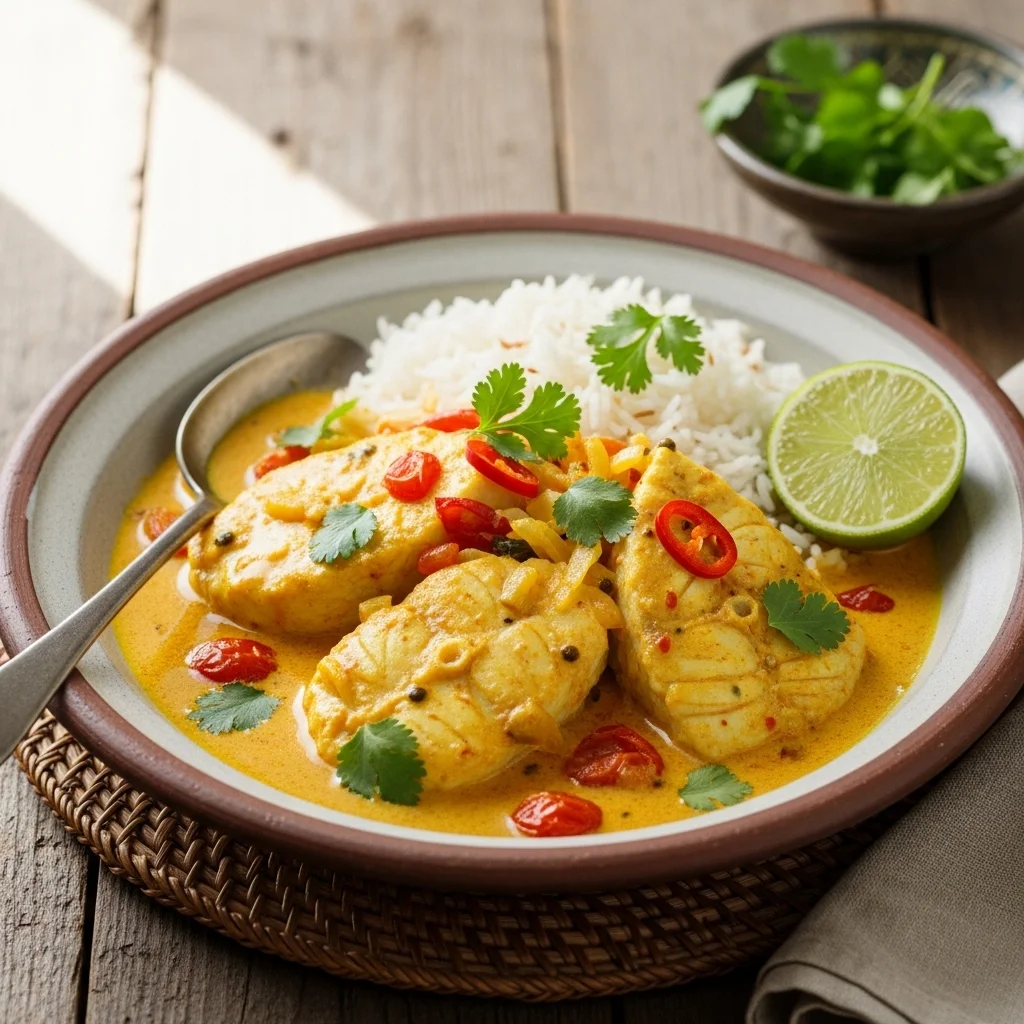
Mchuzi wa Samaki (Swahili Coconut Fish Curry)
Prep: 15 min | Cook: 25 min | Serves: 4 | Difficulty: Easy
From the spice-rich Swahili coast comes one of East Africa’s most celebrated dishes. Firm white fish cooked in a fragrant coconut milk curry with turmeric, tomatoes, garlic, and fresh tamarind. Light, aromatic, and deeply coastal in character. This is the flavor of Mombasa and Zanzibar on a single plate.
Ingredients
- 700g firm white fish fillets (tilapia, snapper, or kingfish), cut into large pieces
- 400ml coconut milk
- 2 large ripe tomatoes, diced
- 1 large onion, finely diced
- 4 garlic cloves, minced
- 1 tbsp fresh ginger, minced
- 1 tsp turmeric
- 1 tsp cumin
- ½ tsp chili powder
- 1 tbsp tamarind paste dissolved in 3 tbsp warm water
- 2 tbsp neutral oil
- Juice of 1 lime
- Fresh cilantro and steamed rice to serve
Instructions
Season fish pieces with salt and half the turmeric. Set aside for 10 minutes.
Heat oil in a wide skillet or pot over medium heat. Cook onion for 6 minutes until soft and golden. Add garlic, ginger, remaining turmeric, cumin, and chili powder. Cook 2 minutes until deeply fragrant.
Add tomatoes and cook for 8 minutes until completely broken down and the oil rises to the surface. Add tamarind water and stir through.
Pour in coconut milk and bring to a gentle simmer. Add fish pieces carefully in a single layer. Spoon sauce over the top.
Cook for 10 to 12 minutes until the fish is just cooked through. Add lime juice and taste. Adjust seasoning. Garnish with fresh cilantro and serve over steamed rice.
Pro Tip: Spoon the sauce continuously over the fish during cooking rather than submerging it and stirring. Fish breaks apart easily. Gentle spooning keeps every piece intact and beautifully presented when it reaches the table.
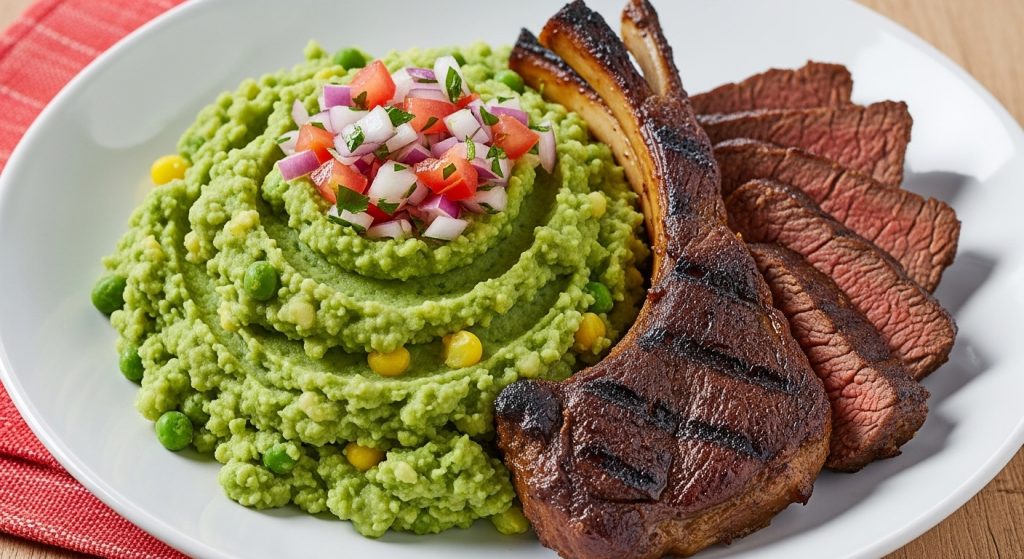
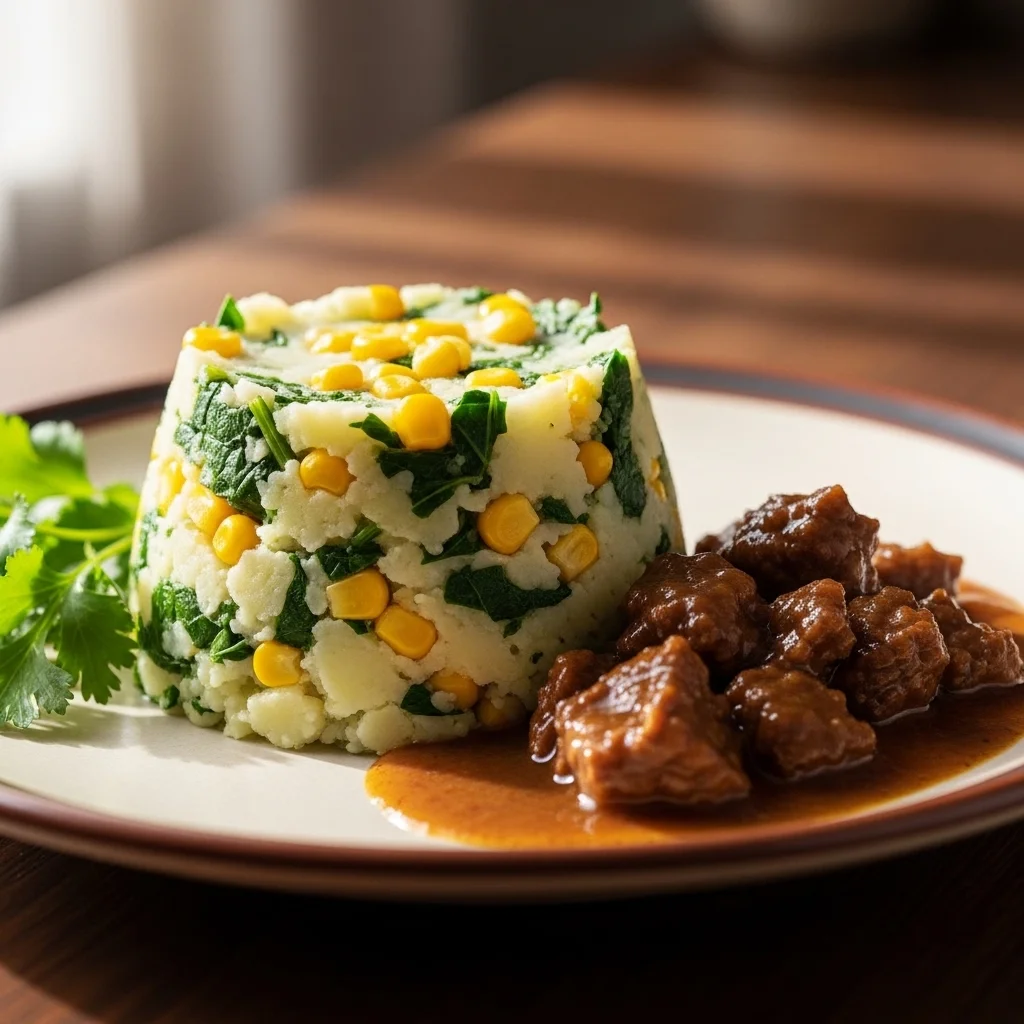
Mukimo (Kenyan Mashed Potato with Greens and Corn)
Prep: 20 min | Cook: 30 min | Serves: 4–6 | Difficulty: Easy
Mukimo is a beloved Kenyan dish from the Kikuyu community. Potatoes, corn, peas, and pumpkin leaves or spinach are all cooked together and mashed into a vibrant green, deeply nourishing mound that is served alongside stews and braised meats. Humble ingredients. Extraordinary results.
Ingredients
- 1kg potatoes, peeled and cut into chunks
- 1 cup fresh or frozen corn kernels
- 1 cup fresh or frozen peas
- 2 cups pumpkin leaves, spinach, or kale, washed and roughly chopped
- 1 large onion, finely diced
- 3 tbsp butter or vegetable oil
- Salt and cracked black pepper
- Water for boiling
Instructions
Boil potatoes in well-salted water for 15 to 18 minutes until completely tender. Drain and set aside but keep in the warm pot.
In a separate pot, boil corn and peas together for 5 minutes until tender. Drain.
Blanch greens in boiling salted water for 2 minutes. Drain and squeeze out excess water thoroughly.
Cook onion in butter or oil in a large pot for 6 minutes until golden. Add drained potatoes, corn, peas, and squeezed greens to the pot all at once. Mash everything together firmly with a potato masher until well combined. The mukimo should be green, chunky, and hearty rather than completely smooth.
Season generously with salt and pepper. Serve hot alongside stews or grilled meat.
Pro Tip: Squeeze every drop of water from the blanched greens before adding them to the mash. Excess water makes the mukimo loose, watery, and pale. Thoroughly squeezed greens produce a vivid green, firm, and deeply flavored result.
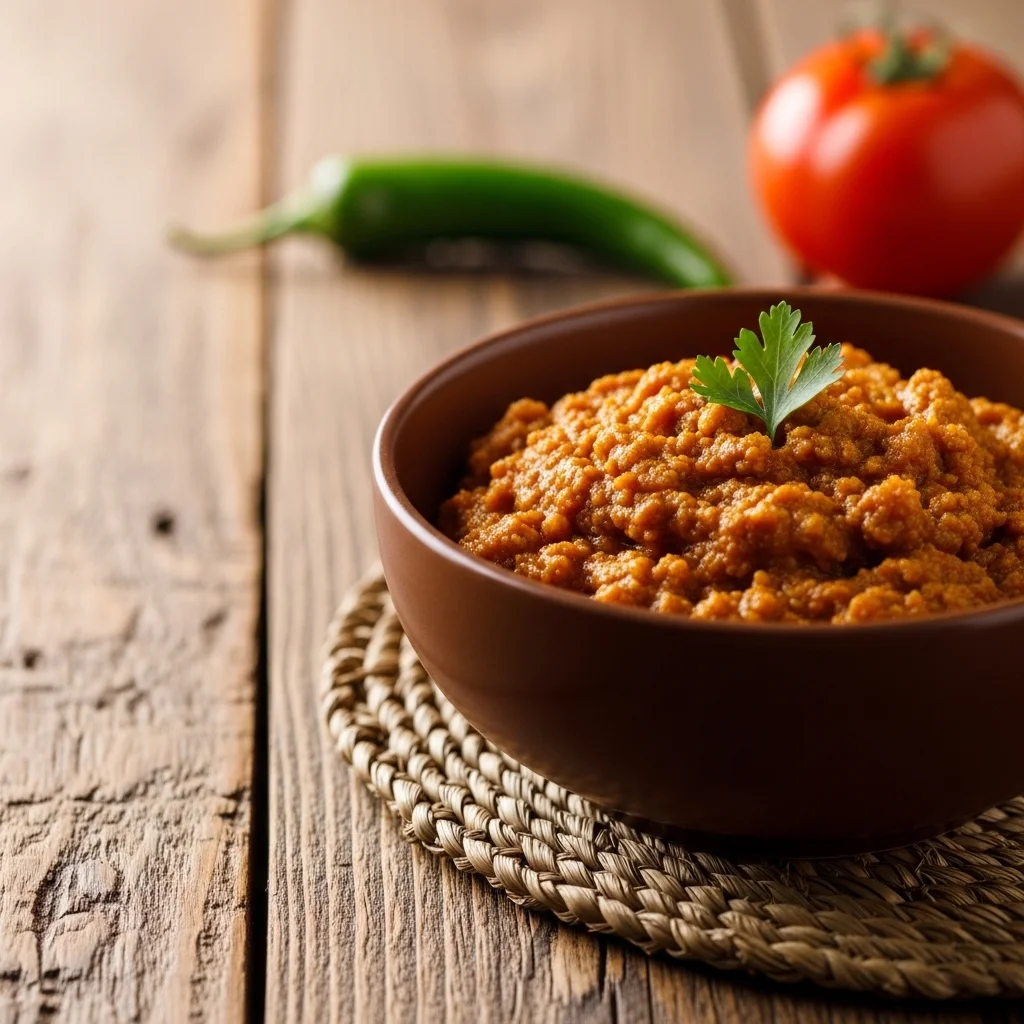
Githeri (Kenyan Corn and Bean Stew)
Prep: 15 min | Cook: 30 min (with canned beans) | Serves: 4–6 | Difficulty: Very Easy
Githeri is one of Kenya’s oldest and most beloved everyday dishes. Whole corn kernels and beans simmered together in a richly spiced tomato sauce. It is inexpensive, deeply filling, and packed with plant-based protein. Every Kenyan grandmother has a version and every version is delicious.
Ingredients
- 2 cups whole corn kernels (fresh, frozen, or canned)
- 2 cans kidney beans or borlotti beans, drained and rinsed
- 1 large onion, finely diced
- 3 garlic cloves, minced
- 3 ripe tomatoes, diced
- 1 tsp cumin
- 1 tsp smoked paprika
- ½ tsp turmeric
- 2 tbsp neutral oil
- 1 cup vegetable stock or water
- Salt and cracked black pepper
- Fresh cilantro to serve
Instructions
Heat oil in a large pot over medium heat. Cook onion for 6 minutes until very soft and golden. Add garlic, cumin, paprika, and turmeric. Cook 2 minutes until fragrant and the spices coat the onion.
Add tomatoes and cook for 8 minutes until completely broken down into a thick sauce. Season with salt and pepper.
Add corn kernels and drained beans. Pour in stock. Stir well to combine everything into the spiced tomato base.
Simmer for 15 to 18 minutes until the sauce has reduced and thickened around the corn and beans. The githeri should be saucy but not soupy. Taste and adjust seasoning.
Serve in deep bowls with fresh cilantro and warm ugali or crusty bread alongside.
Pro Tip: Cook the tomatoes long enough that they completely break down and the oil rises to the surface. Undercooked tomatoes leave a sharp, raw acidity in the sauce that no amount of seasoning can fix. Patient cooking produces a sweet, deeply flavored tomato base that carries the entire dish.
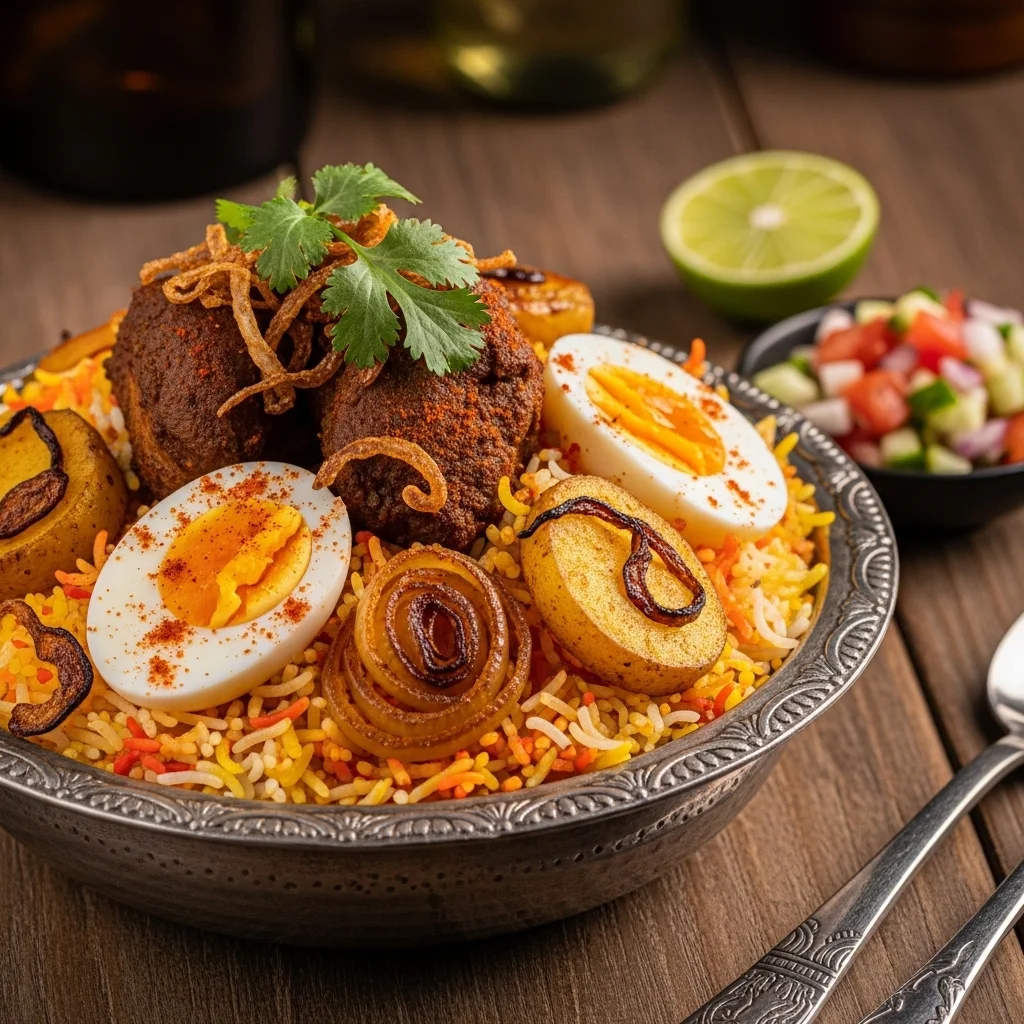
Zanzibar Biryani
Prep: 30 min | Cook: 1 hr | Serves: 6 | Difficulty: Medium
Zanzibar biryani is one of the most magnificent rice dishes in all of East Africa. Influenced by Arab and Indian traders who passed through the spice island for centuries, it is a layered dish of fragrant basmati rice, tender spiced chicken or beef, caramelized onions, hard-boiled eggs, and fried potatoes perfumed with cloves, cardamom, saffron, and rose water. This is celebration food at its most glorious.
Ingredients
- 2 cups basmati rice, rinsed and soaked for 30 minutes
- 800g chicken pieces or beef, bone-in
- 2 large onions, thinly sliced
- 4 garlic cloves, minced
- 1 tbsp fresh ginger, minced
- 1 cup full-fat plain yogurt
- 400g canned diced tomatoes
- 4 tbsp neutral oil plus extra for frying
- Whole spices: 4 cardamom pods + 1 cinnamon stick + 4 cloves + 1 tsp cumin seeds
- 1 tsp each: turmeric, cumin, coriander, garam masala
- Large pinch of saffron soaked in 3 tbsp warm water
- 1 tbsp rose water
- 4 hard-boiled eggs, halved
- 2 medium potatoes, peeled, cubed, and fried until golden
- Salt to taste
- Fresh cilantro and fried onions to finish
Instructions
Fry sliced onions in oil over medium heat for 15 to 18 minutes until deeply golden and caramelized. Remove half and set aside for layering. Continue cooking the rest until dark and crispy for garnish.
Add garlic and ginger to the remaining onions in the pot. Cook 2 minutes. Add all ground spices and cook 1 more minute. Add chicken or beef and sear until browned on all sides.
Add yogurt one tablespoon at a time, stirring between each addition to prevent splitting. Add tomatoes and simmer covered for 30 minutes until the meat is tender and the sauce is thick and dark.
Cook soaked rice in heavily salted boiling water for 6 minutes until just barely al dente. Drain completely.
Layer the biryani in the pot. Start with the meat and sauce. Add a layer of par-cooked rice. Scatter caramelized onions, fried potatoes, and boiled egg halves. Add remaining rice. Drizzle saffron water and rose water over the top layer. Cover tightly with foil then the lid.
Cook on the lowest possible heat for 20 minutes to finish steaming. Serve from the pot with fresh cilantro and crispy fried onions scattered over the top.
Pro Tip: The foil under the lid creates a tight seal that traps all the steam inside the pot. That trapped steam is what cooks the rice through in those final 20 minutes and infuses every grain with saffron and rose water fragrance. A loose lid lets the steam escape and the top layer stays undercooked.
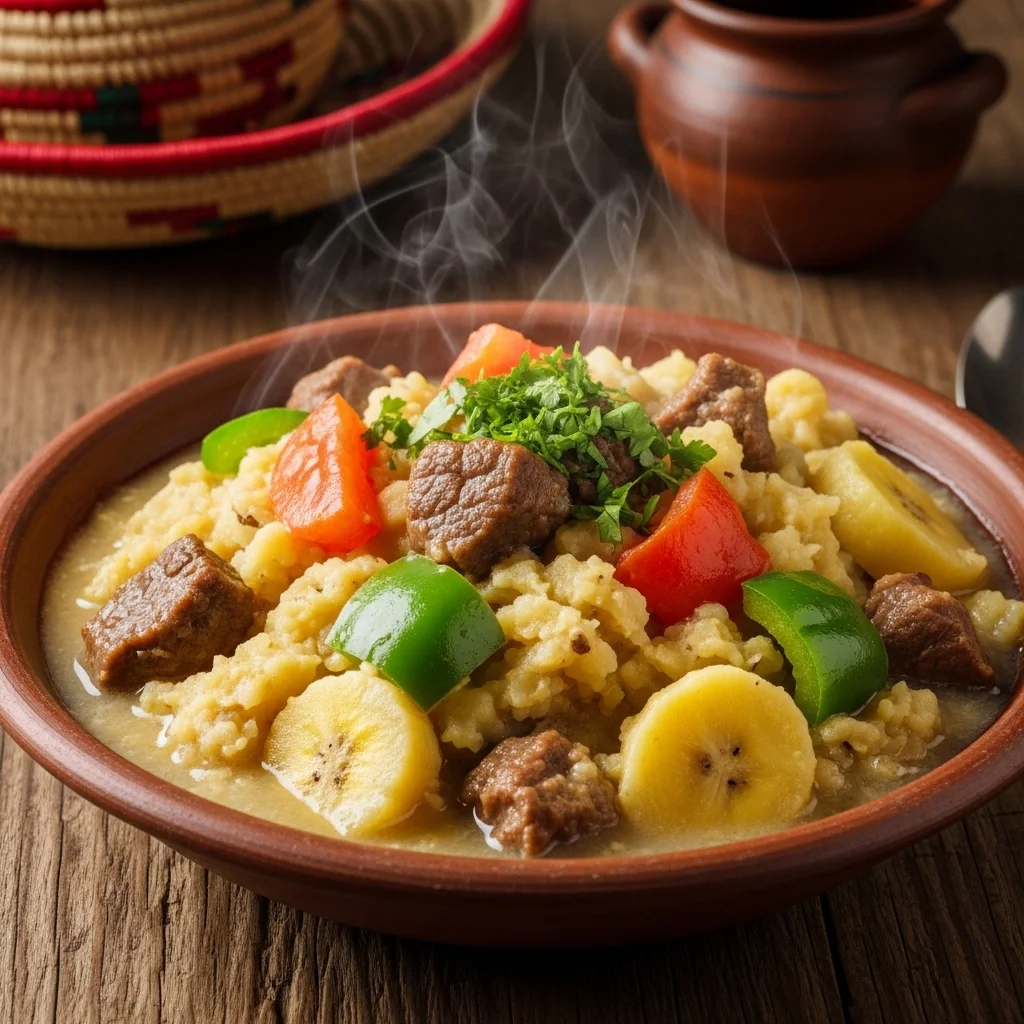
Matoke (Ugandan Steamed Green Banana Stew)
Prep: 20 min | Cook: 45 min | Serves: 4–6 | Difficulty: Easy
Matoke is Uganda’s national dish and one of the most important staple foods in all of East Africa. Green cooking bananas are peeled, wrapped in banana leaves, and steamed until completely soft, then mashed and served with a rich groundnut or beef stew. Creamy, earthy, and deeply nourishing. This is Ugandan soul food.
Ingredients
- 8 large green cooking bananas (matoke), peeled
- 1 large onion, diced
- 3 ripe tomatoes, diced
- 3 garlic cloves, minced
- 300g beef or goat, cut into small pieces (optional — can be made vegetarian)
- 1 tsp cumin
- 1 tsp turmeric
- 2 tbsp neutral oil
- 1 cup beef or vegetable stock
- Salt and cracked black pepper
- Banana leaves or foil for wrapping
- Fresh cilantro to serve
Instructions
Peel green bananas immediately before use and place in cold water to prevent browning. Wrap banana pieces tightly in banana leaves or foil parcels. Place in a steamer basket over boiling water. Steam for 35 to 40 minutes until completely tender when pierced.
While bananas steam, heat oil in a pot over medium heat. Brown meat for 3 to 4 minutes. Add onion and cook 5 minutes until soft. Add garlic, cumin, and turmeric and cook 2 minutes. Add tomatoes and cook for 10 minutes until thick and deeply flavored. Add stock and simmer for 15 minutes.
Unwrap steamed bananas and mash roughly — they should be soft and yielding with a creamy texture similar to mashed potato but earthier and more neutral.
Serve the mashed matoke topped generously with the meat and tomato stew. Finish with fresh cilantro.
Pro Tip: Steaming the bananas in banana leaf parcels rather than boiling them directly in water preserves their flavor and keeps the flesh from becoming waterlogged.
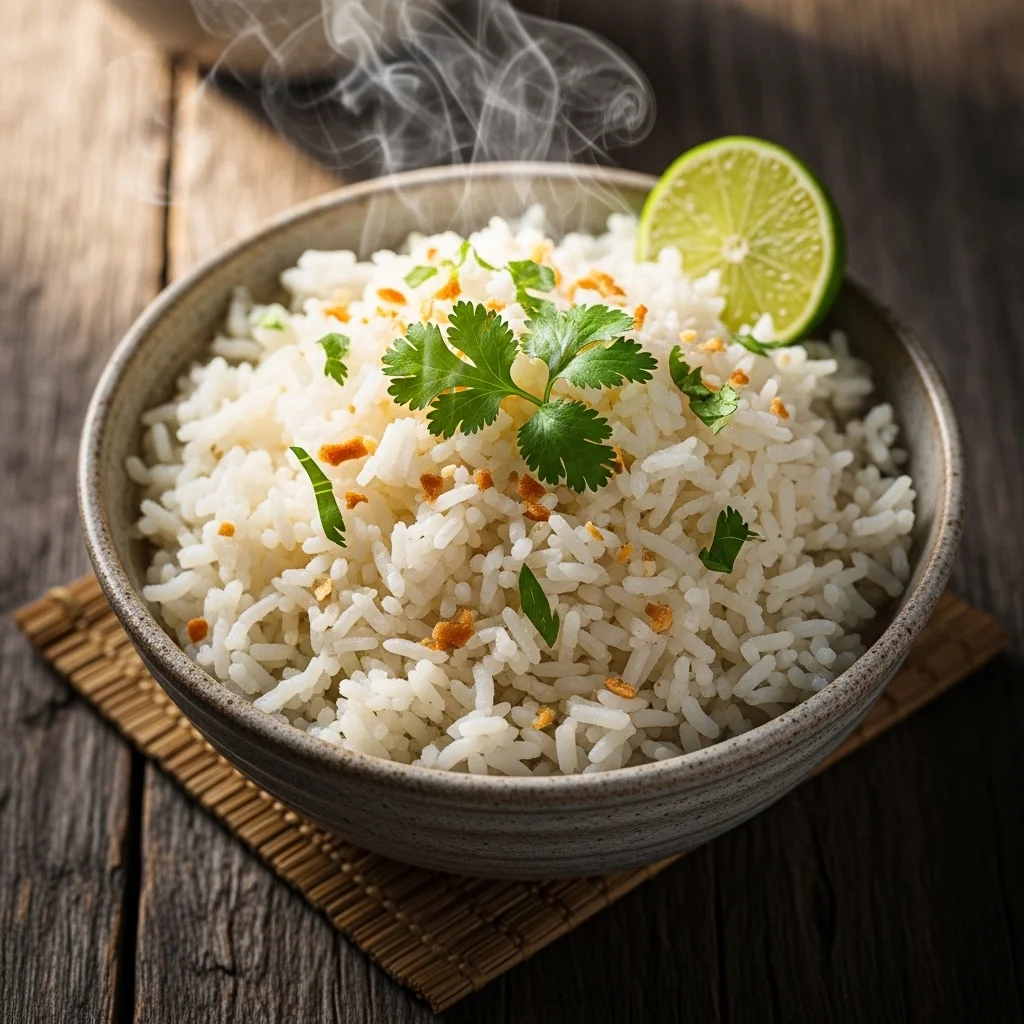
Wali wa Nazi (Tanzanian Coconut Rice)
Prep: 10 min | Cook: 25 min | Serves: 4–6 | Difficulty: Very Easy
Wali wa nazi is the most fragrant, most beautiful rice you will ever cook. Long grain rice simmered entirely in coconut milk instead of water until every grain is infused with a sweet, creamy richness that pairs magnificently with curries, stews, and grilled fish. It is served all along the Swahili coast and once you make it there is no going back to plain rice.
Ingredients
- 2 cups long grain white rice, rinsed thoroughly
- 400ml full-fat coconut milk
- 1.5 cups water
- 1 tsp salt
- 1 tsp sugar (optional but traditional)
- 2 cardamom pods (optional for fragrance)
Instructions
Combine coconut milk, water, salt, sugar, and cardamom pods in a medium pot. Bring to a gentle boil over medium heat, stirring occasionally to prevent the coconut milk from catching on the base.
Add rinsed rice and stir once to distribute evenly. Bring back to a boil then reduce to the lowest possible heat.
Cover tightly and cook for 18 to 20 minutes without lifting the lid. The coconut milk absorbs completely and the rice cooks through in the fragrant steam.
Remove from heat and leave covered for 5 minutes. Uncover and fluff gently with a fork. Remove cardamom pods before serving.
Serve alongside mchuzi wa samaki, grilled fish, or any East African stew.
Pro Tip: Use full-fat coconut milk without exception. Light coconut milk is mostly water and produces pale, thin, flavorless rice with none of the richness and fragrance that makes wali wa nazi so extraordinary. Full-fat only.