10 Authentic Brazilian Dinner Recipes to Try At Home In 2026
Brazilian cuisine is diverse, flavorful, and vibrant, combining African, Portuguese, and Indigenous influences. These 10 authentic Brazilian dinner recipes bring the bold, hearty flavors of Brazil straight to your kitchen.
Why Brazilian Dinner Recipes Are Special ?
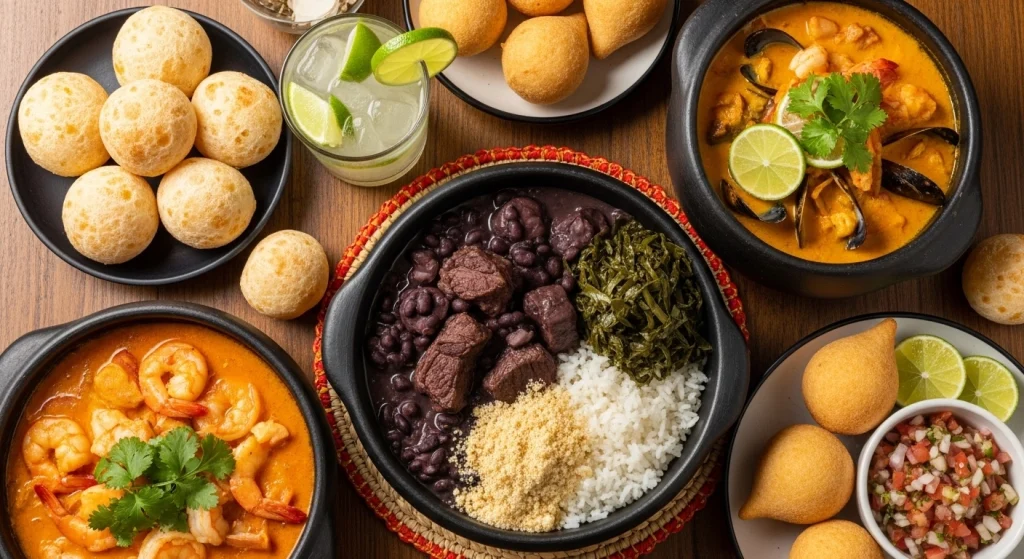
Brazilian dinners often feature:
- Grilled meats, seafood, and beans
- Rice, manioc (cassava), and potatoes as staples
- Fresh herbs, garlic, and tropical spices
- Bold, savory, and slightly sweet flavor profiles
These recipes are perfect for family meals, casual dinners, or festive gatherings.
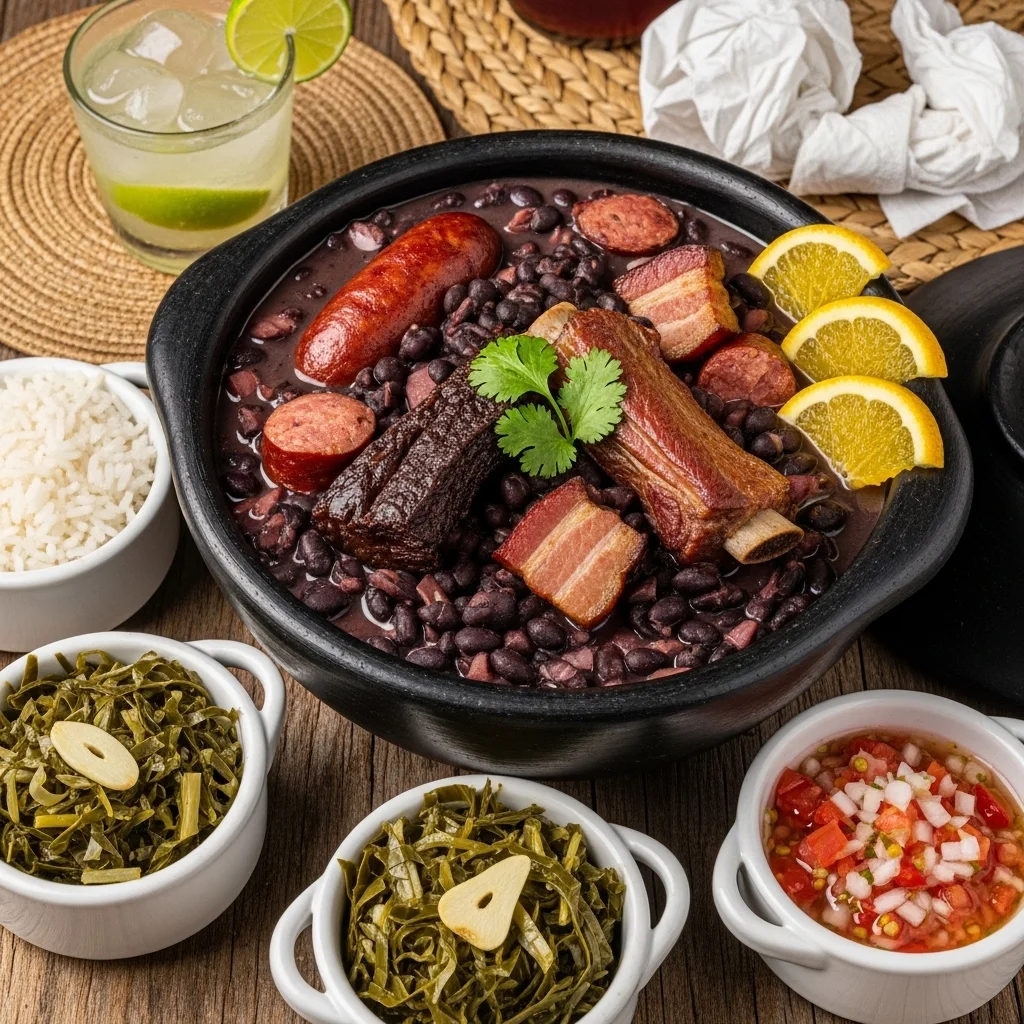
Feijoada (Brazilian Black Bean Stew)
Brazil’s national dish is a celebration of abundance – a rich, smoky stew that transforms humble beans into a feast worthy of special occasions. Traditionally served on Wednesdays and Saturdays, this dish brings families together around the table.
Ingredients:
- 500g dried black beans, soaked overnight
- 300g pork shoulder, cubed
- 200g beef chuck, cubed
- 150g bacon, diced
- 200g linguiça or chorizo, sliced
- 150g smoked pork ribs
- 1 large onion, diced
- 6 cloves garlic, minced
- 2 bay leaves
- 2 tbsp olive oil
- Salt and black pepper
- Orange slices for serving
- Couve (collard greens) for serving
Method:
Start the beans: Drain soaked beans and place in large pot with fresh water to cover by 3 inches. Add bay leaves and simmer 1 hour until starting to soften.
Brown the meats: In separate large pot, heat olive oil and brown all meats in batches – pork shoulder, beef chuck, bacon, and sausage. This creates deep flavor base.
Build the base: Add diced onion to the same pot and cook until softened. Add garlic and cook until fragrant.
Combine everything: Add partially cooked beans with their liquid to the meat pot. Add smoked ribs and enough water to cover everything by 1 inch.
Slow simmer: Bring to boil, then reduce to gentle simmer. Cook 2-3 hours, stirring occasionally, until beans are creamy and meats are fork-tender.
Adjust consistency: Mash some beans against the side of pot to thicken. The stew should be thick but not dry – add water if needed.
Traditional service: Serve over white rice with orange slices, sautéed collard greens, farofa, and pork cracklings.
Pro Tips:
The long cooking time is essential don’t rush this dish. Orange slices aren’t just garnish the citrus cuts through the richness. Make a day ahead for even better flavor.
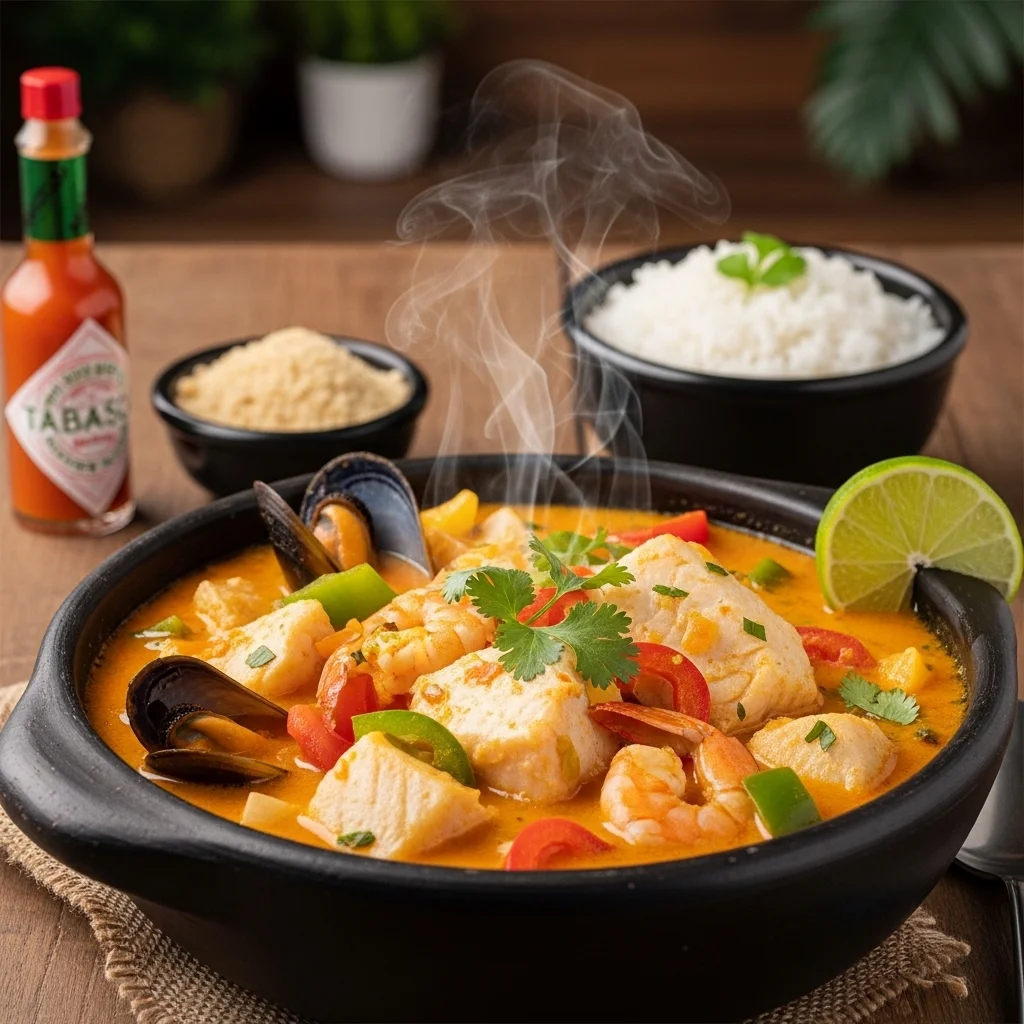
Moqueca (Brazilian Fish Stew)
This vibrant Bahian stew showcases Brazil’s African heritage with its use of coconut milk and dendê (palm oil). The key is gentle cooking that keeps the fish tender while building layers of tropical flavor.
Ingredients:
- 750g firm white fish (cod, snapper, or mahi-mahi), cut in chunks
- 400ml coconut milk
- 2 large tomatoes, chopped
- 1 large onion, sliced
- 1 bell pepper (red or yellow), sliced
- 4 cloves garlic, minced
- 2 tbsp dendê (palm oil) or olive oil
- Juice of 2 limes
- 1 bunch fresh cilantro, chopped
- 2 malagueta peppers or jalapeños, minced
- Salt and pepper
Method:
Marinate the fish: Season fish chunks with lime juice, salt, and pepper. Let marinate 15 minutes while preparing other ingredients.
Build the base: Heat dendê in large, heavy pan (traditionally a clay panela). Sauté onions until translucent, about 5 minutes.
Add aromatics: Add garlic and minced peppers, cooking until fragrant. The dendê gives authentic flavor and beautiful orange color.
Create the stew: Add tomatoes and bell peppers. Cook 5 minutes until tomatoes start to break down and release juices.
Add coconut milk: Pour in coconut milk and bring to gentle simmer. Don’t boil vigorously or it may curdle.
Cook fish gently: Add marinated fish and simmer 8-10 minutes until fish flakes easily. Don’t overcook or fish will become tough.
Finish bright: Stir in fresh cilantro and adjust seasoning. Serve immediately with white rice and farofa.
Pro Tips:
Use full-fat coconut milk for richness. Dendê palm oil is traditional but olive oil works as substitute. The fish should be just cooked through it continues cooking in the hot stew.
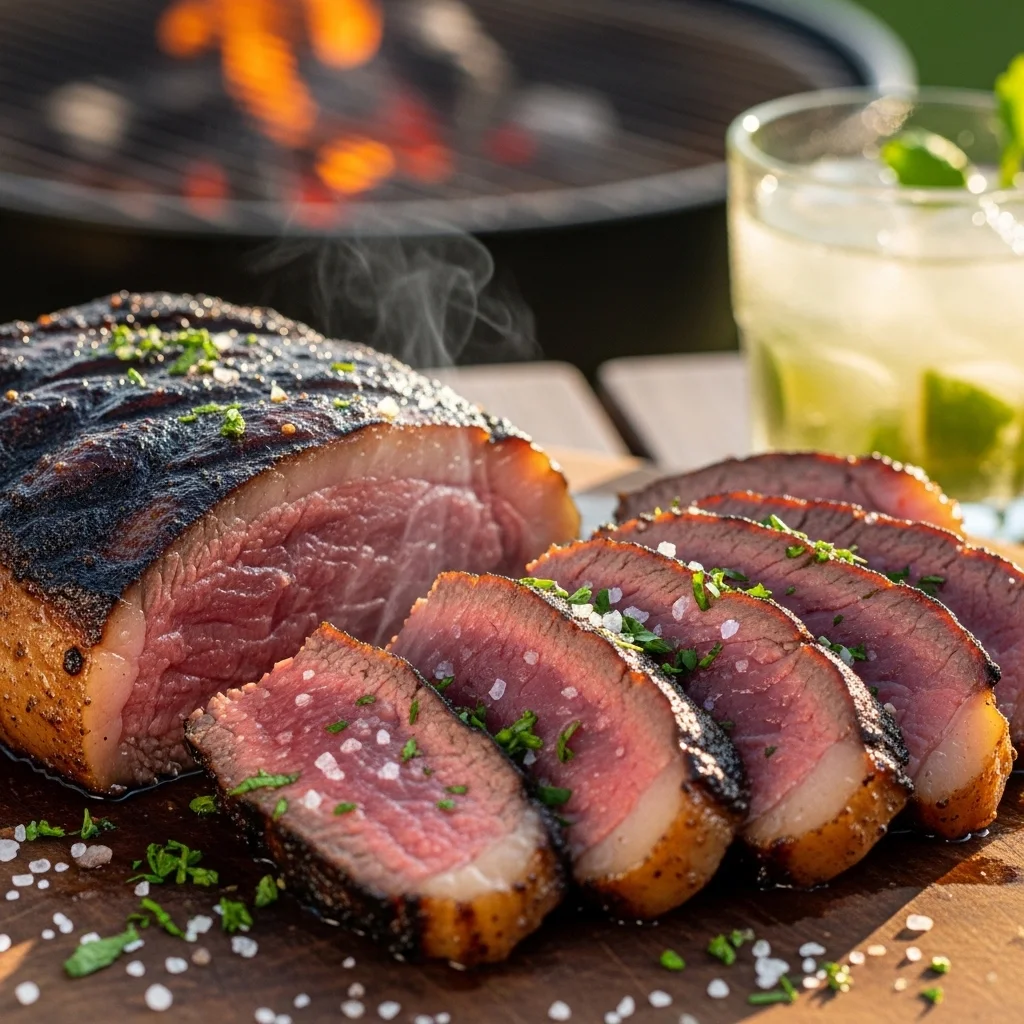
Picanha (Brazilian Grilled Beef)
This prized cut from the top of the rump is Brazil’s favorite for churrasco. The key is respecting the meat’s natural flavor with minimal seasoning and proper grilling technique that creates a perfect crust.
Ingredients:
- 1 kg picanha (top sirloin cap), with fat cap intact
- Coarse sea salt (sal grosso)
- Optional: garlic cloves for rubbing
Method:
Prepare the meat: Remove picanha from refrigerator 30 minutes before cooking. Score the fat cap in a crosshatch pattern, cutting about 1/4 inch deep.
Season simply: Coat generously with coarse salt, pressing it into the meat. This is the traditional and only seasoning needed.
Prepare the grill: Heat grill to high heat. For authentic flavor, use charcoal, but gas grill works too.
Grill fat-side first: Place picanha fat-side down and grill 6-8 minutes until fat renders and creates crispy crust. The fat will flare up – this is normal.
Flip and finish: Turn and grill 4-6 minutes more for medium-rare (internal temp 130°F). The meat should have beautiful grill marks.
Rest and slice: Let rest 5 minutes, then slice against the grain in thick slices. The fat cap should be crispy and the meat juicy.
Serve Brazilian style: Traditionally served with rice, beans, farofa, and grilled pineapple.
Pro Tips:
Don’t trim the fat cap it’s essential for flavor and moisture. Slice against the grain for maximum tenderness. The meat should be pink in the center for authentic preparation
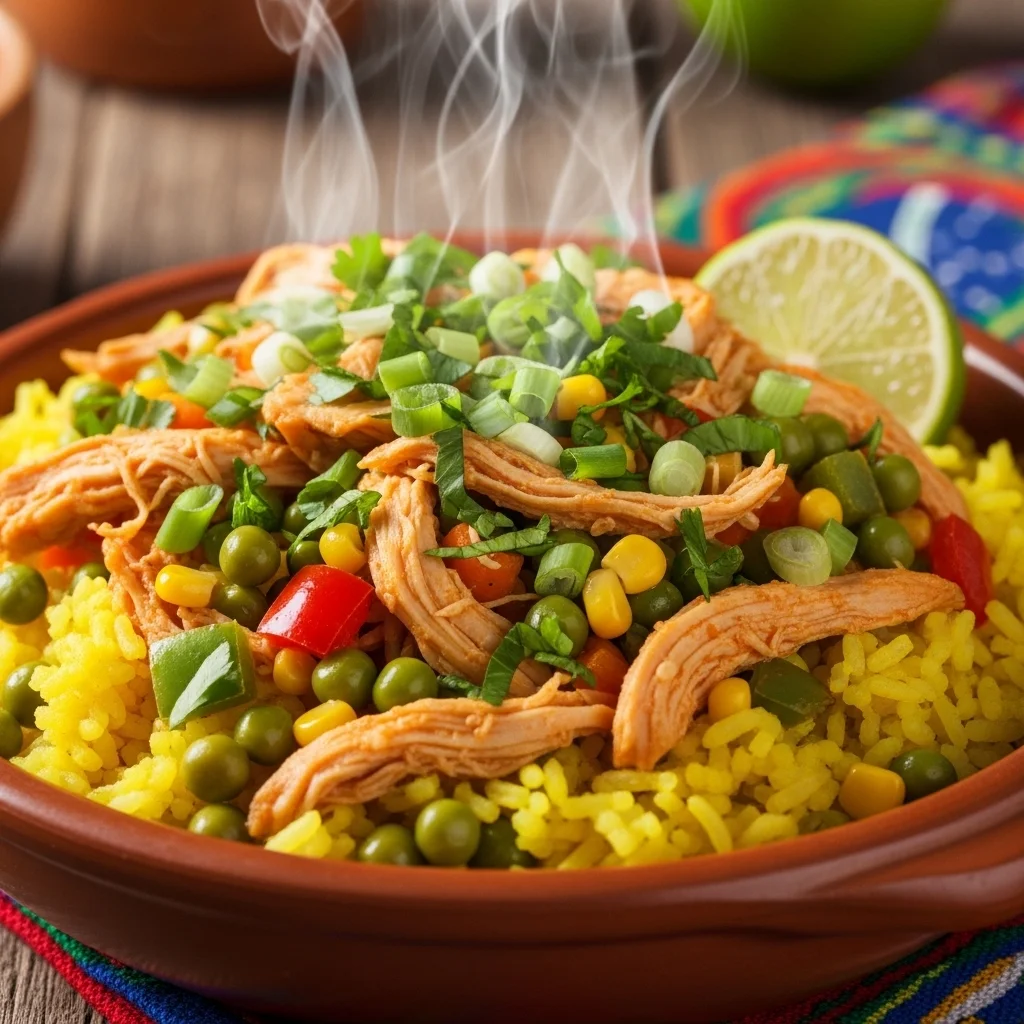
Galinhada (Brazilian Chicken and Rice)
This comforting one-pot meal is Brazil’s answer to chicken and rice, elevated with saffron and vegetables. The technique ensures perfectly cooked rice that absorbs all the chicken’s flavor.
Ingredients:
- 1 whole chicken, cut into pieces
- 2 cups long-grain rice
- 4 cups warm chicken broth
- Pinch of saffron threads
- 1 large onion, diced
- 1 bell pepper, diced
- 4 cloves garlic, minced
- 2 tomatoes, chopped
- 1 cup green peas
- 1/4 cup olive oil
- 2 bay leaves
- Salt and pepper
- Fresh parsley for garnish
Method:
Season and brown chicken: Season chicken pieces with salt and pepper. Heat olive oil in large, heavy pot and brown chicken on all sides, about 12 minutes total.
Remove and sauté vegetables: Remove chicken and set aside. In same pot, sauté onion and bell pepper until softened, about 6 minutes.
Build flavor base: Add garlic and cook until fragrant. Add chopped tomatoes and cook until they start to break down.
Prepare saffron: Steep saffron in warm chicken broth for 10 minutes. This creates the signature golden color.
Toast the rice: Add rice to pot and stir for 2-3 minutes until grains are coated and slightly translucent.
Combine and simmer: Return chicken to pot, add saffron broth and bay leaves. Bring to boil, then reduce heat and simmer covered 20-25 minutes.
Add peas and finish: Stir in peas during last 5 minutes. Let rest 5 minutes, then garnish with parsley.
Pro Tips:
Don’t stir the rice once liquid is added – this prevents it from becoming mushy. The bottom should develop a slight crust. Use bone-in chicken for maximum flavor.
Coxinha (Chicken Croquettes)
These teardrop-shaped croquettes are Brazil’s most beloved street food. The technique of making the dough and shaping requires practice, but the crispy exterior and creamy filling make it worthwhile.
Ingredients:
For the filling:
- 500g cooked chicken breast, finely shredded
- 100g cream cheese, softened
- 2 tbsp butter
- 1 small onion, minced
- 2 cloves garlic, minced
- Salt and pepper
For the dough:
- 2 cups chicken broth
- 2 tbsp butter
- 2 cups all-purpose flour
- 2 eggs, beaten
- 2 cups fine breadcrumbs
- Oil for deep frying
Method:
Make the filling: Sauté minced onion and garlic in butter until soft. Mix with shredded chicken and cream cheese. Season well and let cool completely.
Prepare the dough: Bring chicken broth and butter to boil. Remove from heat and quickly stir in flour until smooth dough forms. Let cool until handleable.
Shape the coxinhas: Take portions of dough, flatten in palm, add filling, and shape into teardrop. This takes practice – keep hands slightly damp.
Set up breading station: Three bowls – beaten eggs and breadcrumbs. Dip each coxinha in egg, then roll in breadcrumbs.
Chill before frying: Refrigerate shaped coxinhas 30 minutes. This helps them hold shape during frying.
Fry to golden: Heat oil to 350°F. Fry coxinhas in batches 3-4 minutes until golden brown. Don’t overcrowd.
Drain and serve: Drain on paper towels and serve hot. They’re best eaten immediately while crispy.
Pro Tips:
The filling must be completely cool before shaping or the dough will become sticky. Practice the shaping technique – it gets easier with repetition.

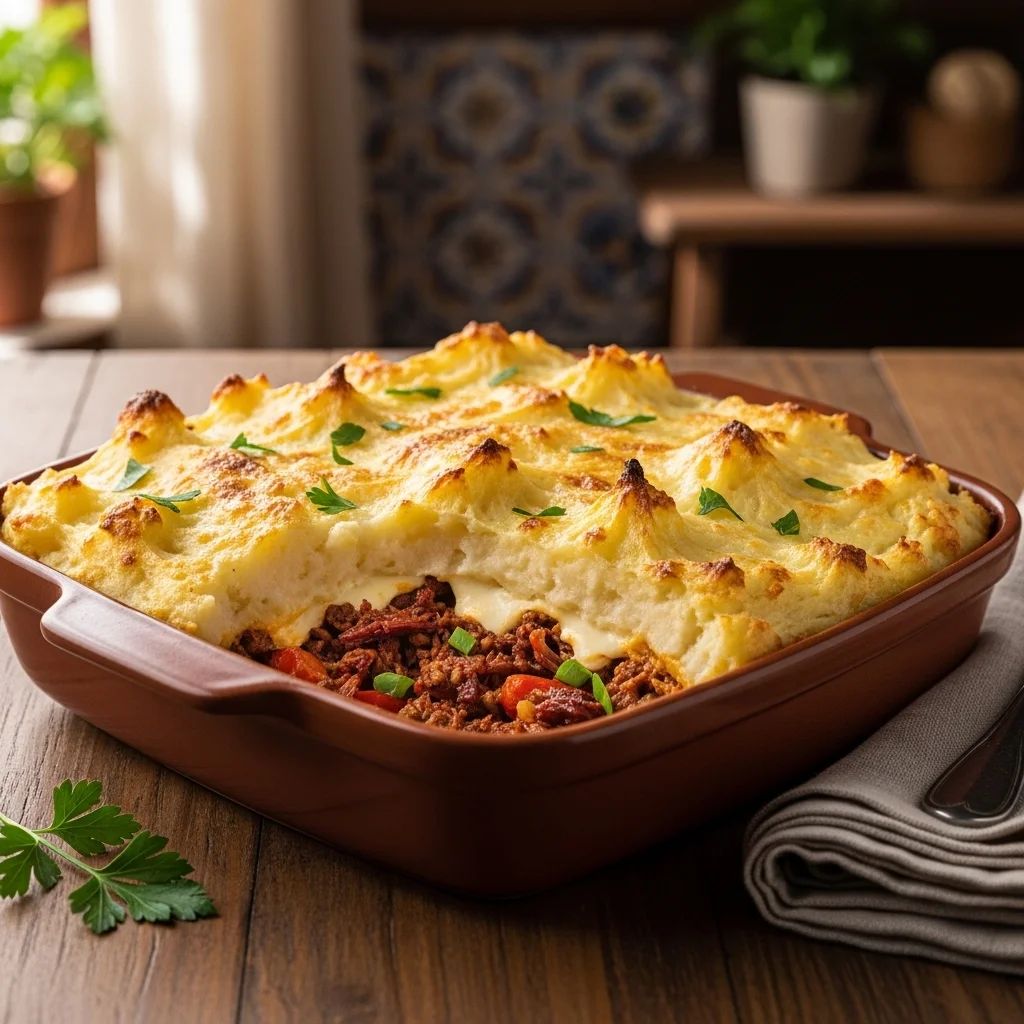
Escondidinho de Carne (Brazilian Shepherd’s Pie)
This Brazilian comfort food layers seasoned meat with creamy cassava instead of potatoes. The name means “little hidden one” because the meat is hidden under the cassava layer.
Ingredients:
- 1 kg cassava (yuca), peeled and chunked
- 750g ground beef
- 1 large onion, diced
- 4 cloves garlic, minced
- 2 tomatoes, chopped
- 1 cup beef broth
- 200g mozzarella cheese, grated
- 1/4 cup milk
- 2 tbsp butter
- 2 tbsp olive oil
- Salt and pepper
- Fresh parsley for garnish
Method:
Cook the cassava: Boil cassava in salted water 20-25 minutes until very tender. Drain well and mash with butter and milk until smooth and creamy.
Prepare the meat: Heat olive oil in large skillet. Brown ground beef, breaking it up, about 8 minutes. Season with salt and pepper.
Build flavor: Add diced onion and cook until softened. Add garlic and cook until fragrant. Add chopped tomatoes and cook until they break down.
Create sauce: Add beef broth and simmer 15 minutes until mixture thickens but isn’t dry. The meat should be well-seasoned and saucy.
Layer the casserole: Spread meat mixture in greased baking dish. Top with smooth cassava layer, spreading evenly.
Add cheese and bake: Sprinkle grated cheese over cassava. Bake at 375°F for 25-30 minutes until golden on top.
Rest and serve: Let cool 10 minutes before serving. Garnish with fresh parsley.
Pro Tips:
The cassava should be very smooth pass through ricer if needed. The meat layer should be moist but not soupy. This can be assembled ahead and baked when needed.
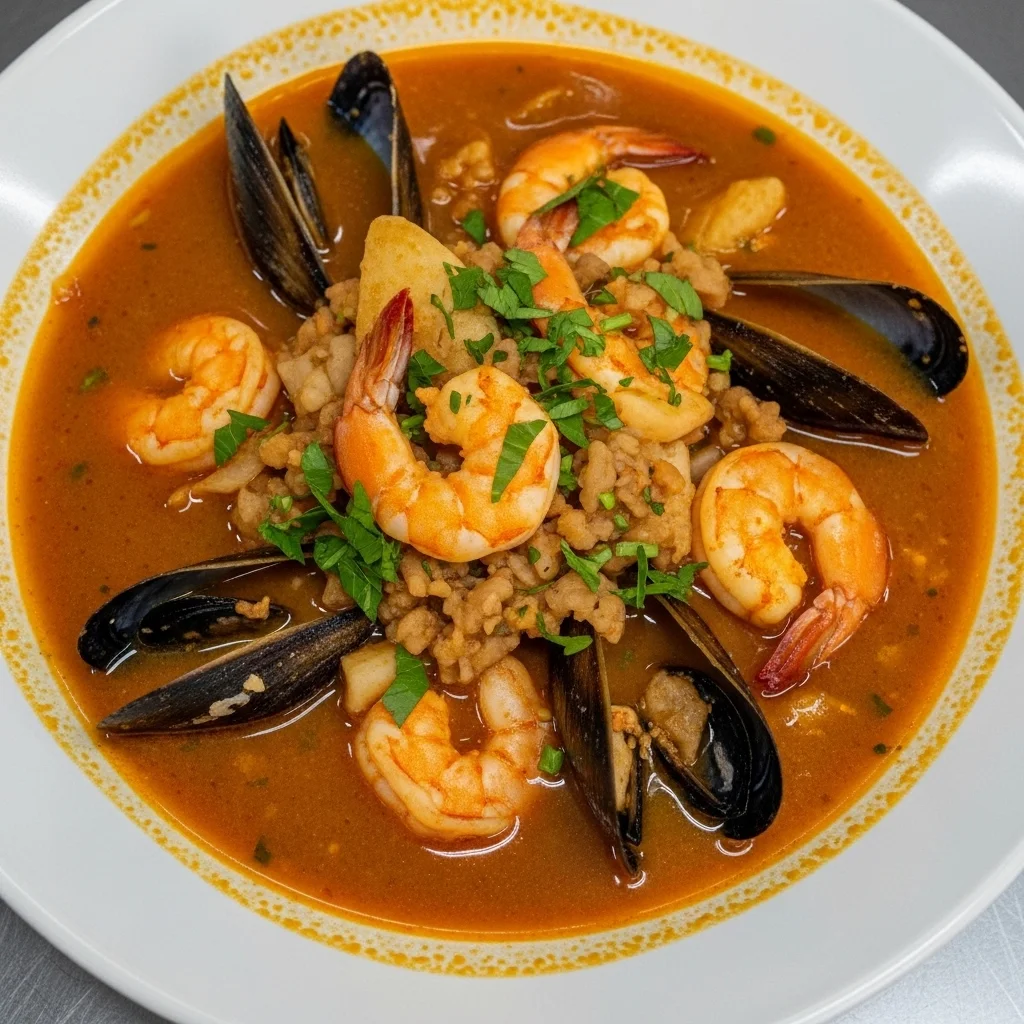
Vatapá (Brazilian Seafood Stew)
This rich Bahian stew combines African and indigenous ingredients into something uniquely Brazilian. The bread and nuts create an incredibly creamy base that’s unlike any other seafood stew.
Ingredients:
- 500g large shrimp, peeled and deveined
- 4 slices day-old bread, crusts removed
- 1 cup roasted peanuts
- 1 cup cashews
- 400ml coconut milk
- 2 tbsp dendê (palm oil)
- 1 large onion, chopped
- 4 cloves garlic, minced
- 2 tbsp dried shrimp (optional but traditional)
- 1 tsp ground ginger
- Salt and pepper
- Fresh cilantro for garnish
Method:
Prepare the base: Soak bread in water until soft, then squeeze out excess liquid. Blend bread, peanuts, cashews, and 1 cup coconut milk until very smooth.
Cook aromatics: Heat dendê in large pan. Sauté onion until translucent, about 5 minutes. Add garlic and ginger, cooking until fragrant.
Add the cream base: Stir in the blended mixture and remaining coconut milk. Add dried shrimp if using. Simmer 15 minutes, stirring frequently.
Adjust consistency: The mixture should be creamy but not too thick. Add water or more coconut milk as needed.
Cook shrimp: Add fresh shrimp and cook just until pink and cooked through, about 4-5 minutes. Don’t overcook.
Season and serve: Season with salt and pepper. Garnish with cilantro and serve over white rice.
Pro Tips:
Blend the base very smooth for proper texture. Dendê palm oil is traditional but olive oil can substitute. The stew should coat a spoon but not be too thick.
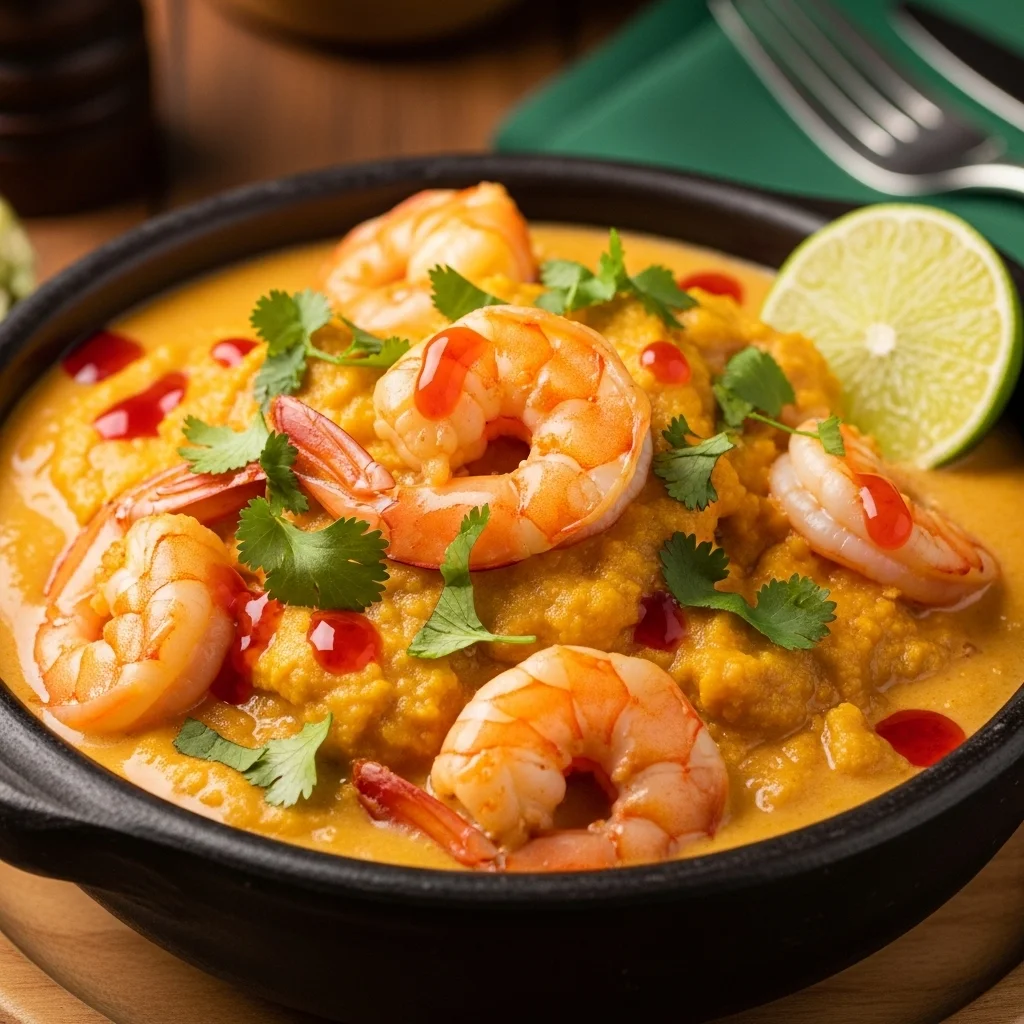
Bobó de Camarão (Shrimp In Cassava Cream)
This luxurious dish from Bahia combines tender shrimp with silky cassava cream. The technique of cooking cassava into a smooth puree creates an incredibly rich and satisfying base.
Ingredients:
- 750g large shrimp, peeled and deveined
- 1 kg cassava, peeled and chunked
- 400ml coconut milk
- 3 tbsp dendê (palm oil)
- 1 large onion, diced
- 4 cloves garlic, minced
- 2 tomatoes, chopped
- 1 bell pepper, diced
- Juice of 1 lime
- Fresh cilantro, chopped
- Salt and pepper
Method:
Cook cassava: Boil cassava in salted water until very tender, about 25 minutes. Drain and mash until completely smooth.
Create cassava cream: Gradually add coconut milk to mashed cassava, stirring until smooth and creamy. Pass through fine sieve if needed.
Season shrimp: Toss shrimp with lime juice, salt, and pepper. Let marinate while preparing other ingredients.
Build flavor base: Heat dendê in large pan. Sauté onion and bell pepper until softened, about 6 minutes. Add garlic and cook until fragrant.
Add tomatoes: Add chopped tomatoes and cook until they break down and create a sauce base.
Combine with cassava: Stir in the cassava cream and bring to gentle simmer. The mixture should be smooth and creamy.
Cook shrimp: Add marinated shrimp and cook just until pink, about 4-5 minutes. Garnish with cilantro.
Pro Tips:
The cassava must be very smooth – any lumps will affect the final texture. Cook shrimp briefly to keep them tender. Serve immediately while hot and creamy.
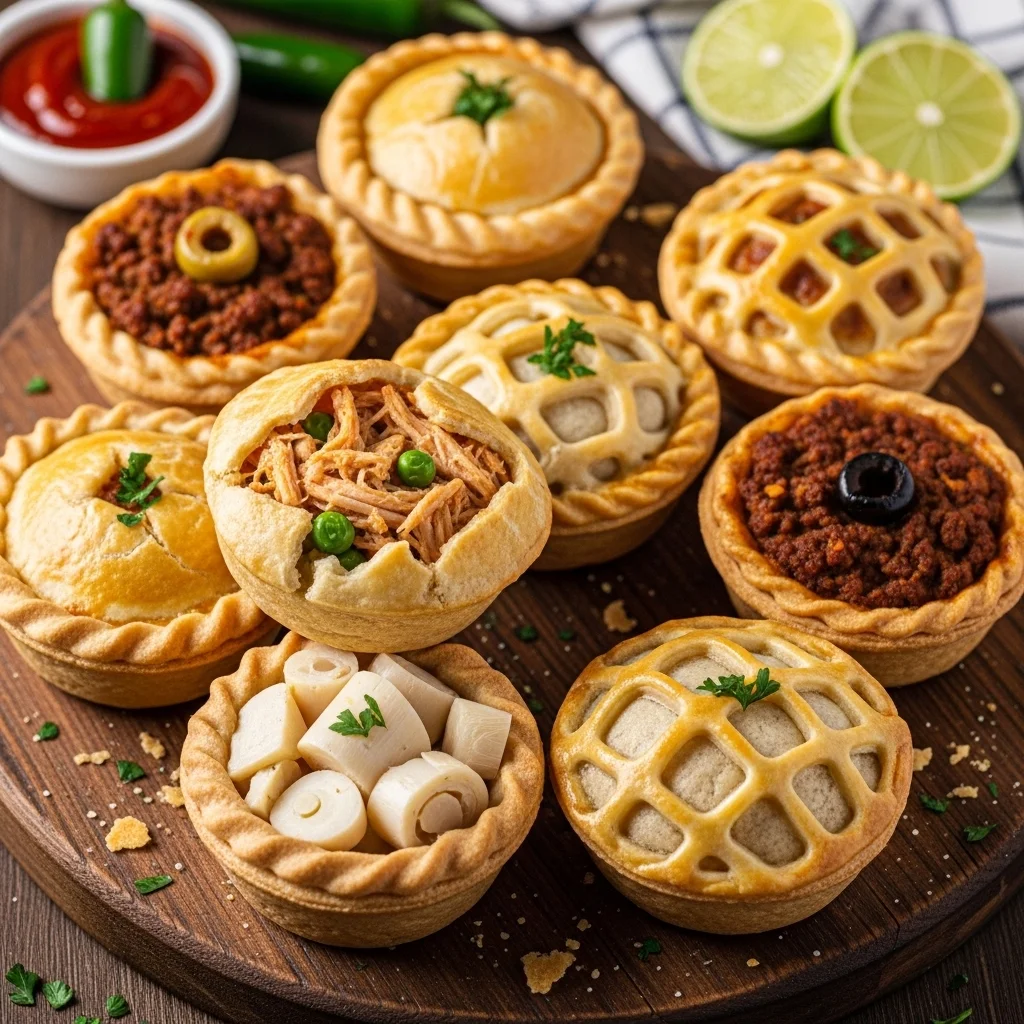
Brazilian Meat Pies (Empadas)
These individual savory pies are perfect for parties or snacks. The buttery pastry encases well-seasoned fillings, creating handheld comfort food that’s beloved throughout Brazil.
Ingredients:
For the pastry:
- 3 cups all-purpose flour
- 200g cold butter, cubed
- 2 egg yolks
- 1/4 cup cold water
- 1 tsp salt
For the filling:
- 500g ground beef or shredded chicken
- 1 onion, diced
- 2 cloves garlic, minced
- 1 tomato, chopped
- 2 tbsp olive oil
- 1 tsp cumin
- Salt and pepper
- Hard-boiled eggs, chopped (optional)
Method:
Make the pastry: Mix flour and salt. Cut in cold butter until mixture resembles coarse crumbs. Add egg yolks and water, mixing just until dough comes together.
Rest the dough: Wrap in plastic and refrigerate 30 minutes. This makes it easier to roll and prevents shrinking.
Prepare filling: Heat olive oil and brown the meat. Add onion and cook until softened. Add garlic, tomato, and seasonings. Cook until mixture is well-seasoned but not dry.
Roll and cut: Roll dough thin and cut circles to fit muffin tins. Press into greased muffin cups.
Fill and top: Add filling to pastry cups. Top with smaller pastry circles, sealing edges with fork.
Bake until golden: Brush tops with beaten egg. Bake at 375°F for 20-25 minutes until golden brown.
Cool and serve: Let cool in pans 5 minutes before removing. Serve warm or at room temperature.
Pro Tips:
Keep pastry cold for easier handling. Don’t overfill or they’ll leak during baking. These freeze well before or after baking.
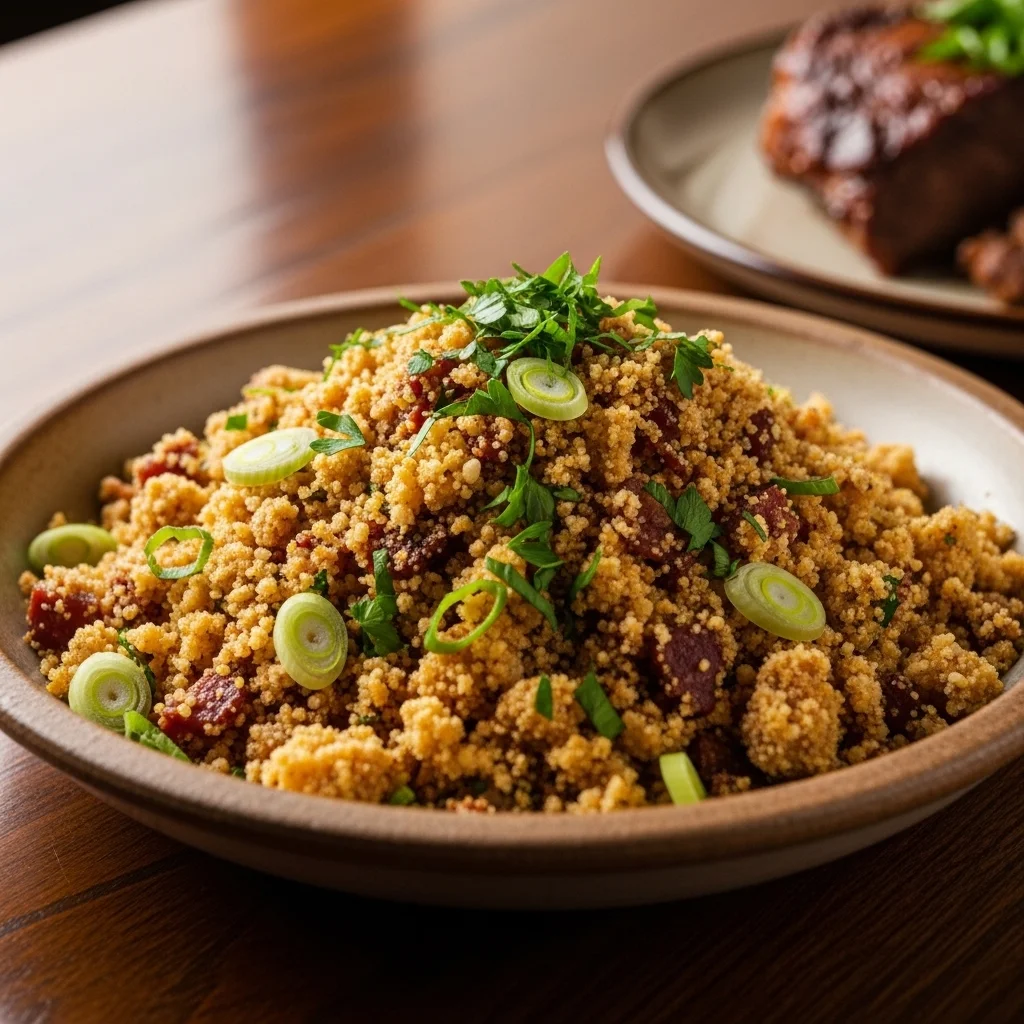
Farofa (Toasted Cassava Flour Side)
This versatile side dish is Brazil’s answer to breadcrumbs, but so much more. The toasted cassava flour absorbs flavors while adding texture and substance to any meal.
Ingredients:
- 2 cups cassava flour (farinha de mandioca)
- 4 strips bacon, diced
- 1 large onion, diced
- 3 cloves garlic, minced
- 2 tbsp butter
- 2 hard-boiled eggs, chopped (optional)
- 2 tbsp fresh parsley, chopped
- Salt and pepper
Method:
Render the bacon: Cook diced bacon in large skillet over medium heat until crispy, about 6-8 minutes. Remove bacon but keep the fat.
Sauté aromatics: Add diced onion to bacon fat and cook until golden, about 5 minutes. Add garlic and cook until fragrant.
Toast the flour: Add cassava flour to pan and stir constantly for 5-8 minutes until lightly golden and fragrant. Don’t let it burn.
Add butter: Stir in butter for richness and to help bind the mixture. The farofa should be moist but not clumpy.
Finish with additions: Return crispy bacon to pan. Add chopped eggs and parsley if using. Season with salt and pepper.
Serve immediately: Farofa is best served warm alongside feijoada, grilled meats, or any Brazilian meal.
Pro Tips:
Stir constantly while toasting to prevent burning. The texture should be like coarse breadcrumbs. Farofa can be made with various additions – sausage, olives, or dried fruits.
See Also: Cuban Dinner Recipes