8 Authentic Persian Dinner Recipes
Ancient. Aromatic. Among the Most Refined Cuisines on Earth.
Persian cuisine is one of the oldest, most sophisticated, and most deeply beautiful food cultures in human history. It stretches back thousands of years to the great empires of ancient Persia, shaped by Silk Road trade routes that brought saffron, dried fruits, nuts, and spices from across the known world into the royal kitchens of Isfahan and Shiraz.
A handful of walnuts and pomegranate molasses becomes the soul of a magnificent stew. Saffron dissolved in warm water transforms a pot of rice into something golden and otherworldly. Fresh herbs piled high on a dinner table are not a garnish they are a course in themselves.
See Also: 7 Easy Low Calorie Dinner Recipes
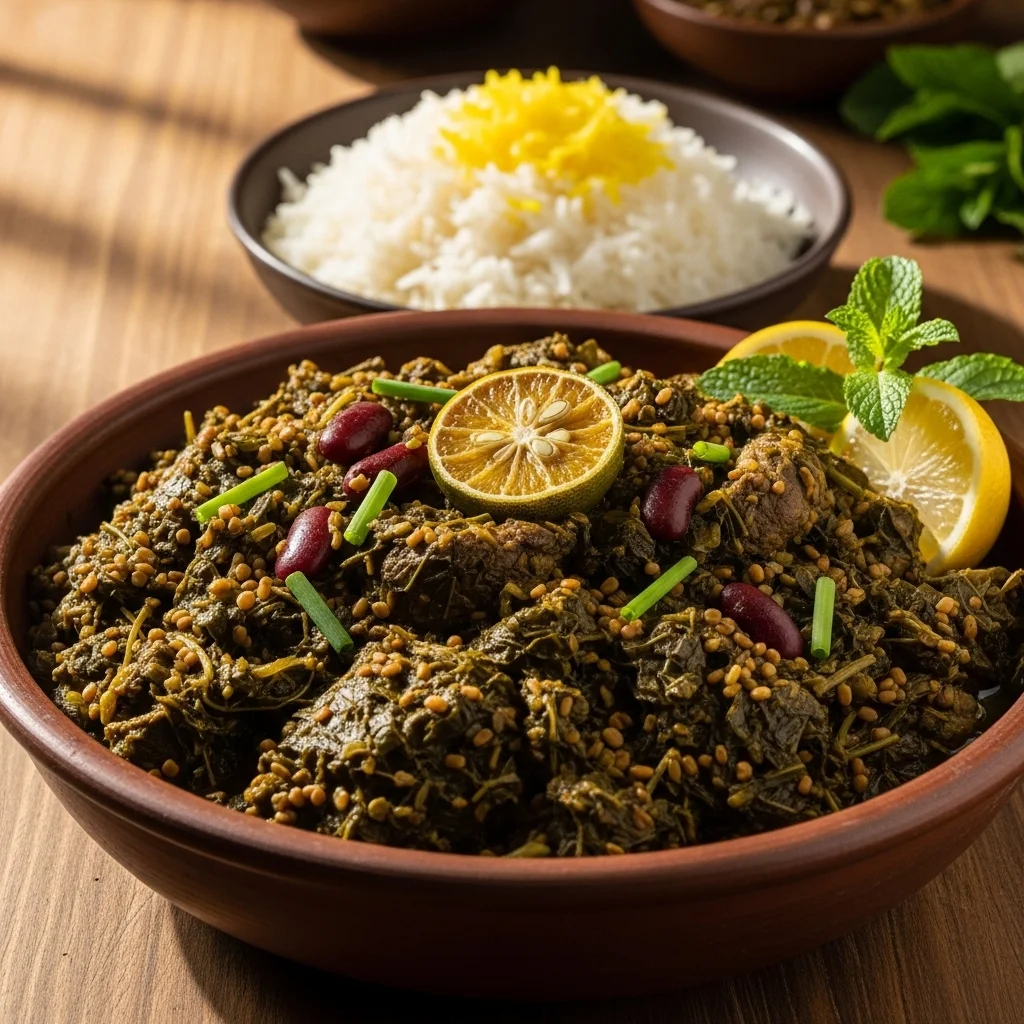
Ghormeh Sabzi (Persian Herb and Lamb Stew)
Prep: 25 min | Cook: 2 hrs | Serves: 4–6 | Difficulty: Medium
Ghormeh sabzi is Iran’s most beloved national dish. A deeply fragrant, slow-cooked stew of tender lamb, dried limes, kidney beans, and an extraordinary quantity of fresh herbs that are cooked down into a dark, intensely flavored sauce unlike anything else in the world. It is the dish every Iranian grows up eating and every Iranian misses when they are far from home.
Ingredients
- 700g lamb shoulder, cut into chunks
- 2 cans kidney beans, drained and rinsed
- 4 dried limes (limoo amani), pierced several times with a skewer
- 1 large onion, very finely diced
- 3 garlic cloves, minced
- For the herbs: 2 cups fresh flat-leaf parsley + 1.5 cups fresh fenugreek leaves (or 3 tbsp dried fenugreek) + 1.5 cups fresh chives or spring onion tops + ½ cup fresh cilantro — all very finely chopped
- 1 tsp turmeric
- ½ tsp cracked black pepper
- 3 tbsp neutral oil
- 1.5 cups water or light beef stock
- Salt to taste
- Saffron rice to serve
Instructions
Fry the finely chopped fresh herbs in 2 tablespoons of oil over medium heat for 15 to 20 minutes, stirring constantly, until deeply darkened, fragrant, and reduced to almost a paste. This slow frying of the herbs is the most important step in the entire recipe. It transforms raw greenness into the deep, complex flavor that defines ghormeh sabzi.
Heat remaining oil in a large heavy pot. Cook onion for 8 minutes until deeply golden. Add garlic and turmeric and cook 2 minutes. Add lamb pieces and brown on all sides for 4 to 5 minutes.
Add the fried herb mixture and stir through the meat and onion. Add pierced dried limes, kidney beans, and water or stock. Bring to a boil.
Reduce to the lowest possible simmer. Cover and cook for 1.5 to 2 hours until the lamb is completely tender and the sauce is dark, thick, and deeply fragrant. Squeeze the softened dried limes with the back of a spoon to release their juice into the stew. Season with salt and adjust flavor.
Serve over saffron steamed rice.
Pro Tip: The dried limes must be pierced before adding to the stew. Unpierced limes float without releasing their distinctive sour flavor into the sauce. Pierce each one in four or five places and the tartness will infuse the entire stew during the long simmer.
Fesenjan (Persian Walnut and Pomegranate Stew)
Prep: 20 min | Cook: 1.5 hrs | Serves: 4 | Difficulty: Medium
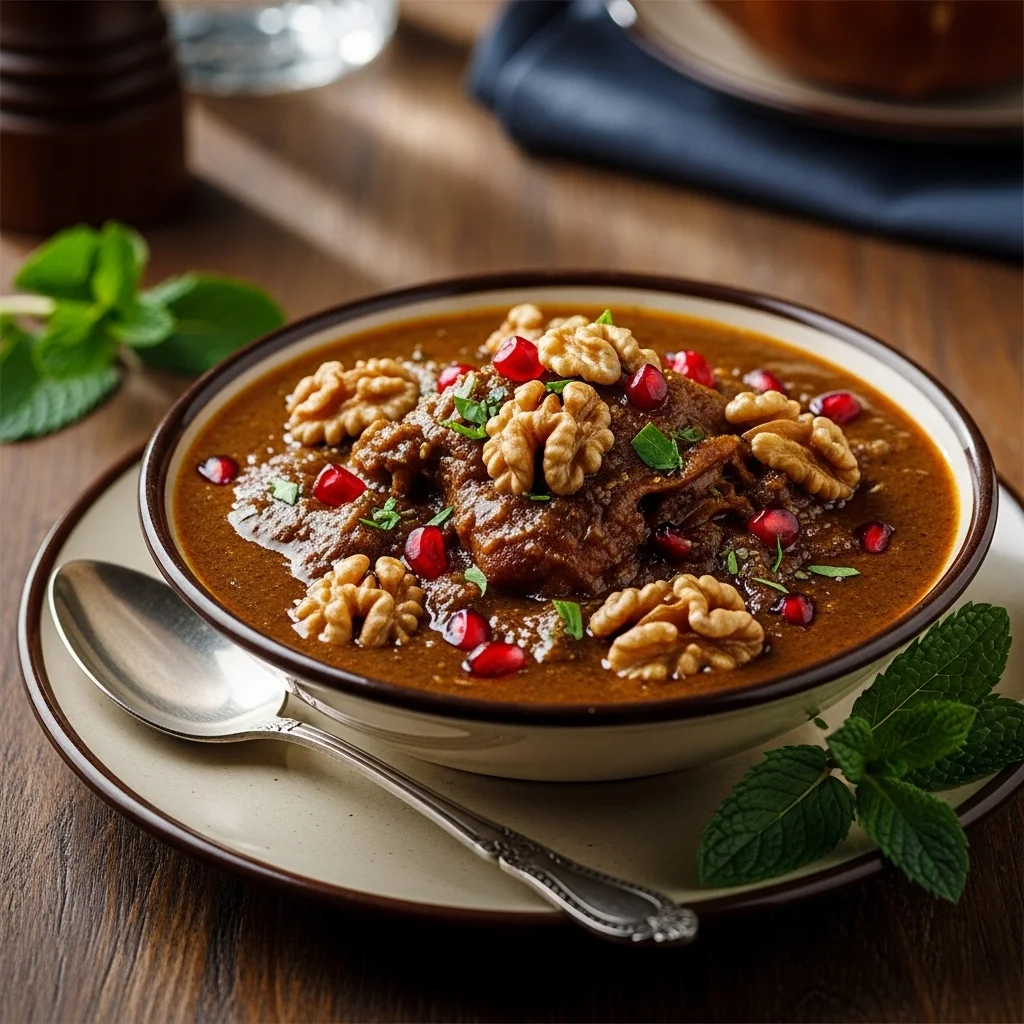
Fesenjan is one of the most uniquely extraordinary dishes in all of Persian cooking. Tender chicken slow-braised in a rich, dark sauce of ground walnuts and pomegranate molasses that is simultaneously nutty, tangy, sweet, and deeply savory. The sauce turns a remarkable deep mahogany color as it cooks and the flavor is unlike anything else on earth.
Ingredients
- 800g chicken thighs, bone-in and skinless
- 2 cups walnut halves, toasted and very finely ground
- ½ cup pomegranate molasses
- 1 large onion, very finely diced
- 2 tbsp neutral oil
- 1 cup chicken stock or water
- 2 tbsp sugar (adjust to taste)
- ½ tsp cinnamon
- ½ tsp turmeric
- Salt and cracked black pepper
- Pomegranate seeds and fresh parsley to garnish
- Saffron rice to serve
Instructions
Toast walnut halves in a dry pan over medium heat for 3 to 4 minutes until fragrant and lightly golden. Cool completely then grind very finely in a food processor. The walnuts should be almost paste-like. Roughly ground walnuts produce a grainy, uneven sauce.
Heat oil in a large heavy pot over medium heat. Cook onion for 8 minutes until deeply golden. Add turmeric and cinnamon and cook 1 minute.
Add chicken pieces and turn to coat in the spiced onion mixture. Cook for 3 minutes per side.
Add ground walnuts and stir to combine with the onion and chicken. Add pomegranate molasses and stock. Stir well. The sauce will look thick and dark immediately.
Bring to a gentle simmer. Cover and cook on the lowest possible heat for 45 minutes. Add sugar and taste. The sauce should be a beautiful balance of rich, tangy, and slightly sweet. Adjust with more pomegranate molasses for tartness or more sugar for sweetness. Cook uncovered for 15 more minutes until the sauce is thick, glossy, and deeply colored.
Garnish with pomegranate seeds and parsley. Serve over saffron rice.
Pro Tip: Fesenjan needs tasting and adjusting at the end. The balance of sweet and sour depends on the strength of your pomegranate molasses and personal preference.
Zereshk Polo Morgh (Saffron Chicken with Barberry Rice)
Prep: 20 min | Cook: 1 hr | Serves: 4–6 | Difficulty: Medium
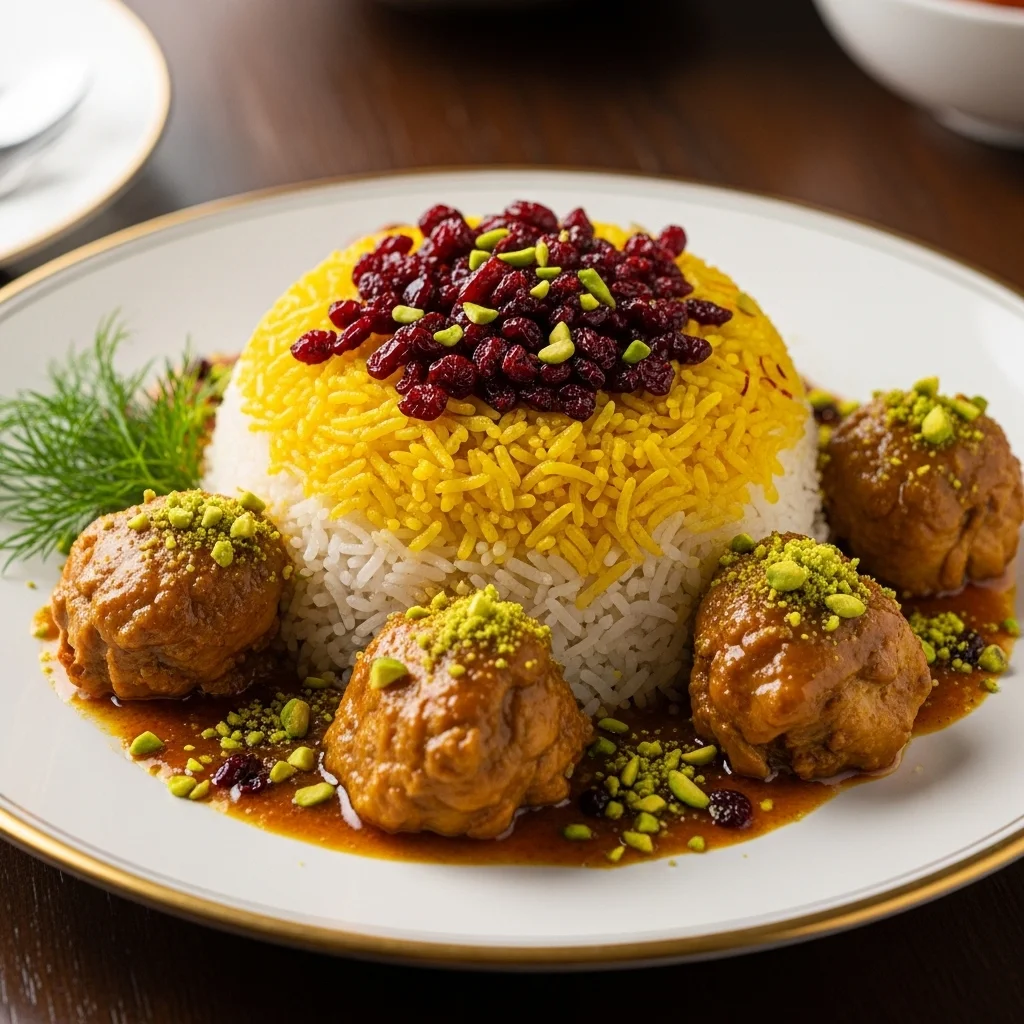
One of Iran’s most celebrated and beautiful dishes. Tender saffron-braised chicken served over fragrant basmati rice studded with tart ruby-red zereshk barberries and topped with a crispy saffron rice crust called tahdig. The combination of flavors — floral saffron, sour barberries, rich chicken — is Persian cooking at its most elegant.
Ingredients
- 1 whole chicken or 8 bone-in chicken pieces
- 2 cups basmati rice, washed and soaked for 30 minutes
- ½ cup zereshk (dried barberries), soaked in cold water for 10 minutes
- 1 large onion, thinly sliced
- Large pinch of saffron, ground and dissolved in 4 tbsp warm water
- 3 tbsp butter
- 2 tbsp neutral oil
- 1 tsp turmeric
- Salt and white pepper
- 2 tbsp sugar mixed with 1 tbsp butter for the barberries
Instructions
Season chicken generously with turmeric, salt, and white pepper. Heat oil in a large pot over medium-high heat. Brown chicken for 4 minutes per side until golden. Add sliced onion and cook around the chicken for 6 minutes. Add half the saffron water and enough water to come halfway up the chicken. Cover and braise for 35 to 40 minutes until cooked through and tender.
Cook drained barberries in butter and sugar for 1 to 2 minutes until glossy. Set aside.
Parboil soaked and drained rice in heavily salted boiling water for 6 minutes until just al dente. Drain completely.
Melt butter in a large non-stick pot. Add a layer of parboiled rice to the base. Mix remaining rice with half the barberries and layer on top. Drizzle remaining saffron water over the rice. Wrap the lid in a clean cloth and cover tightly. Steam on the lowest possible heat for 30 minutes. The bottom layer of rice will form the golden tahdig crust.
Serve rice on a large platter, invert the golden tahdig crust on top, and arrange chicken and remaining barberries over everything.
Pro Tip: Wrapping the pot lid in a clean tea towel before covering is a traditional Persian technique. The cloth absorbs the steam that rises during cooking and prevents condensation from dripping back onto the rice.
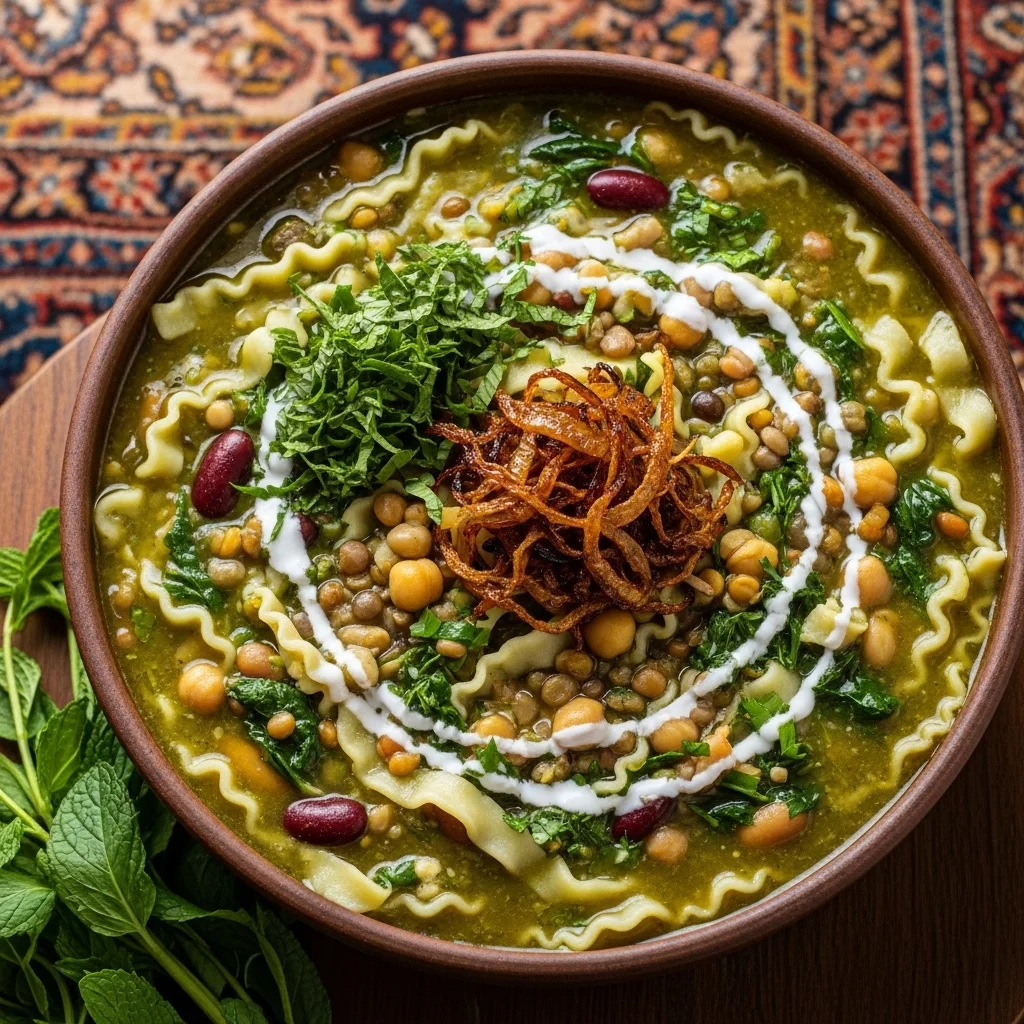
Ash Reshteh (Persian Herb and Noodle Soup)
Prep: 20 min | Cook: 1 hr | Serves: 6–8 | Difficulty: Easy
Ash reshteh is the thick, nourishing Persian noodle soup traditionally eaten at Nowruz, the Persian New Year, and at times of transition and good fortune. Loaded with fresh herbs, legumes, spinach, and flat Persian noodles, finished with caramelized onions, kashk (whey), and sizzling dried mint in butter. There is no soup more distinctly Persian than this one.
Ingredients
- 200g reshteh noodles or flat linguine, broken into pieces
- 1 cup chickpeas, cooked (canned is fine)
- 1 cup kidney beans, cooked
- 1 cup lentils, rinsed
- 3 cups fresh spinach, roughly chopped
- 2 cups fresh flat-leaf parsley, roughly chopped
- 1 cup fresh cilantro, roughly chopped
- 1 cup fresh fenugreek or extra parsley
- 2 large onions, thinly sliced
- 4 garlic cloves, minced
- 1 tsp each turmeric and dried fenugreek
- 3 tbsp neutral oil
- 1.5 litres vegetable or chicken stock
- Salt and cracked black pepper
- To finish: 4 tbsp kashk or thick sour cream + 2 tbsp dried mint fried in 2 tbsp butter until fragrant + extra caramelized onions
Instructions
Fry sliced onions in oil over medium heat for 20 to 25 minutes, stirring regularly, until deeply golden, caramelized, and slightly crispy. Remove half for the topping and set aside.
Add garlic, turmeric, and dried fenugreek to the remaining onions in the pot. Cook 2 minutes. Add stock and bring to a boil.
Add lentils and cook for 15 minutes. Add chickpeas and kidney beans. Cook 10 more minutes.
Add noodles and cook for 8 minutes. Add spinach, parsley, cilantro, and fresh fenugreek and stir through. Simmer for 5 more minutes until the herbs are completely incorporated and the soup is thick and fragrant. Season generously.
Ladle into bowls. Top each bowl with a spoonful of kashk or sour cream, the reserved caramelized onions, and a drizzle of sizzling mint butter.
Pro Tip: The deeper the caramelization on the onions the better. Pale onions add very little. Deeply golden, slightly crispy, almost jammy onions add the sweet, savory depth that distinguishes a great ash reshteh from a merely acceptable one.
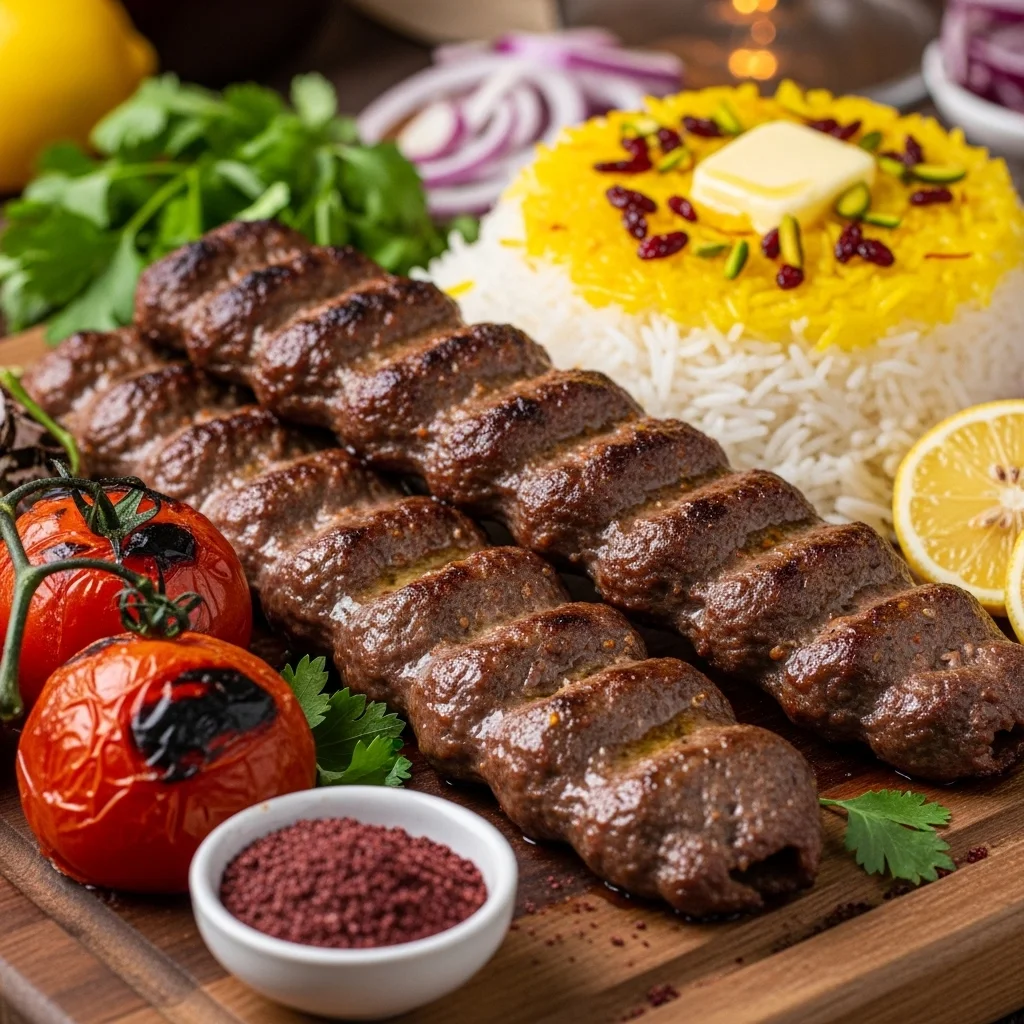
Kabab Koobideh (Persian Ground Meat Kebabs)
Prep: 20 min + 1 hr rest | Cook: 15 min | Serves: 4 | Difficulty: Medium
Long, flat, perfectly spiced ground lamb or beef kebabs grilled over charcoal until slightly charred on the outside and extraordinarily juicy within. Kabab koobideh is Iran’s most iconic street food and one of the great kebab traditions in the world. The technique of the hand mixing and shaping is everything.
Ingredients
- 600g ground lamb or a mixture of lamb and beef (20% fat content minimum)
- 1 large onion, very finely grated and squeezed of excess liquid
- 1 tsp each turmeric, smoked paprika, cumin, cracked black pepper
- ½ tsp cinnamon
- 1 tsp salt
- 1 egg yolk
- Large flat metal skewers (essential for authentic koobideh)
- Saffron rice, grilled tomatoes, and flatbread to serve
- Sumac to sprinkle at the table
Instructions
Grate onion very finely and squeeze every drop of liquid out using a clean cloth. Wet onion makes koobideh that falls off the skewer during grilling.
Combine ground meat, squeezed onion, all spices, salt, and egg yolk in a bowl. Knead the mixture firmly and continuously for 5 full minutes. The mixture must become completely smooth, sticky, and cohesive. This extensive kneading develops the proteins in the meat and is what allows the koobideh to grip the skewer without falling.
Refrigerate for 1 hour. Cold mixture grips the skewer far better than warm.
Wet your hands and take a portion of the mixture. Squeeze it firmly around a wide flat skewer and press it flat, working from the center outward. The koobideh should be about 3cm wide and evenly flat along the skewer.
Grill over very hot charcoal for 4 to 5 minutes per side until slightly charred and cooked through. Serve immediately with saffron rice, grilled tomatoes, flatbread, and sumac sprinkled at the table.
Pro Tip: Kneading the meat mixture for the full 5 minutes is not optional. Under-kneaded koobideh falls apart on the skewer and crumbles during grilling.
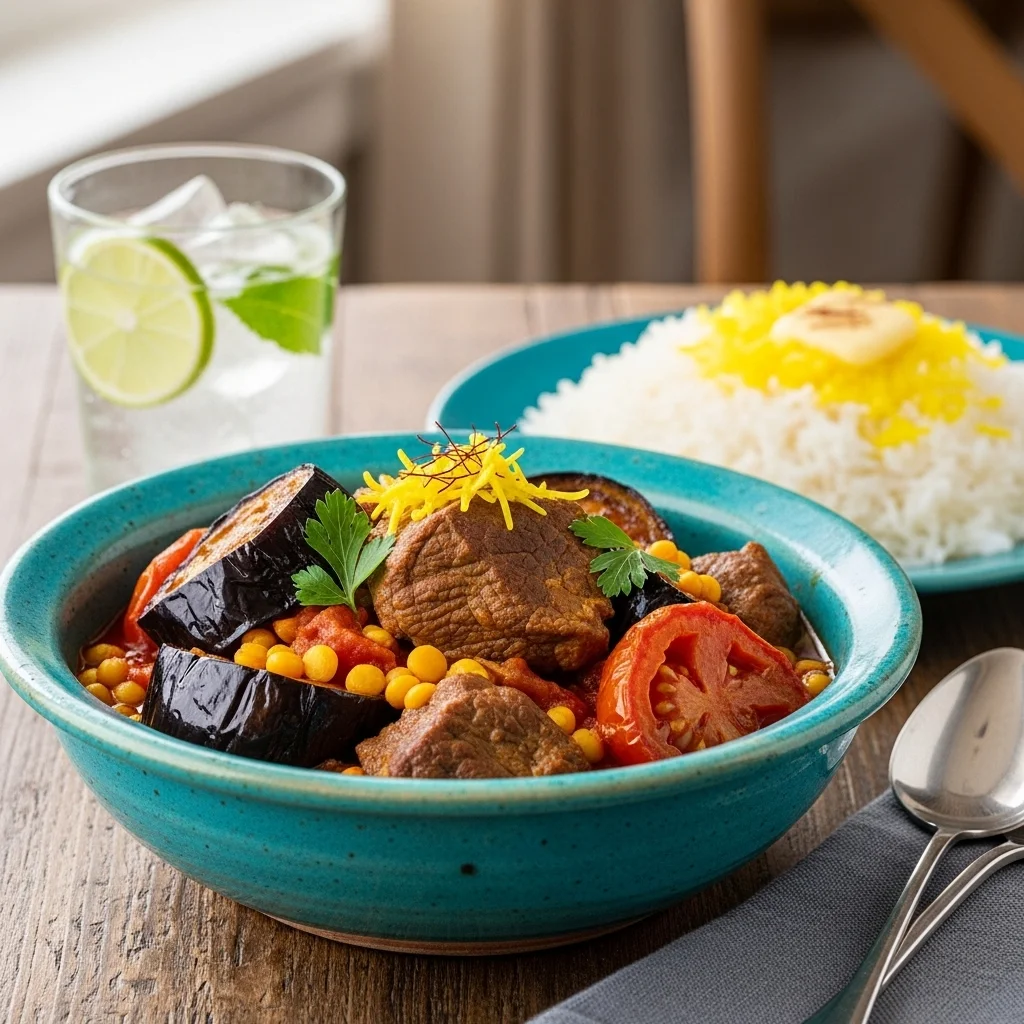
Khoresh Bademjan (Persian Eggplant and Lamb Stew)
Prep: 20 min | Cook: 1.5 hrs | Serves: 4 | Difficulty: Medium
Silky fried eggplant layered into a deeply savory, slow-braised lamb and tomato stew with saffron and verjuice or lemon juice. The eggplant absorbs all the flavors of the stew as it cooks and becomes extraordinarily tender and rich. One of the most satisfying Persian stews and a particular favorite in the summer months when eggplant is at its best.
Ingredients
- 500g lamb shoulder, cut into chunks
- 3 large eggplants, peeled and cut into thick slices lengthwise
- 1 large onion, finely diced
- 3 garlic cloves, minced
- 400g canned diced tomatoes
- 2 tbsp tomato paste
- 3 tbsp verjuice, lemon juice, or unripe grape juice
- Large pinch saffron dissolved in 3 tbsp warm water
- 1 tsp turmeric
- ½ tsp cinnamon
- Neutral oil for frying eggplant
- 2 tbsp olive oil for the stew
- Salt and cracked black pepper
- Saffron rice to serve
Instructions
Salt eggplant slices generously on both sides and leave for 20 minutes. Pat completely dry with paper towels. Shallow fry in neutral oil over medium-high heat for 3 to 4 minutes per side until deeply golden and soft. Drain on paper towels and set aside. Frying the eggplant separately rather than adding it raw gives it a rich, silky texture in the finished stew.
Heat olive oil in a large pot. Cook onion for 8 minutes until golden. Add garlic, turmeric, and cinnamon and cook 2 minutes. Add lamb and brown for 4 minutes on all sides.
Add tomato paste and cook 1 minute. Add canned tomatoes, saffron water, and verjuice. Season with salt and pepper. Bring to a boil then reduce to a low simmer. Cover and cook for 40 minutes.
Layer fried eggplant slices gently over the top of the stew. Cover and cook for 30 more minutes until the lamb is completely tender and the eggplant has absorbed all the flavors of the sauce.
Serve over saffron rice, spooning the stew over the top with care to keep the eggplant intact.
Pro Tip: Never skip salting and drying the eggplant before frying. The salt draws out bitter moisture and the thorough drying prevents dangerous oil splattering in the pan.
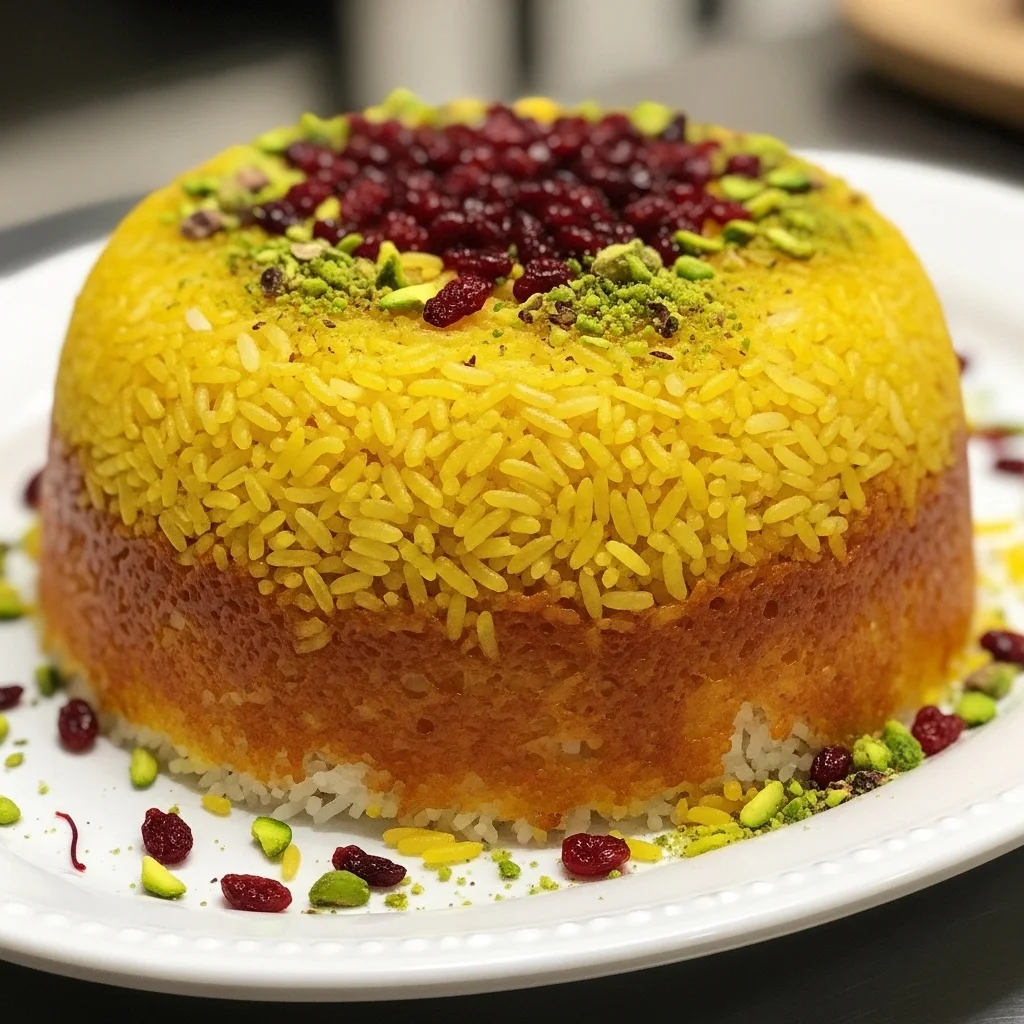
Persian Saffron Rice with Tahdig
Prep: 15 min + 30 min soak | Cook: 45 min | Serves: 4–6 | Difficulty: Medium
No Persian meal is complete without perfectly steamed basmati rice and the legendary tahdig — the golden, crispy rice crust that forms at the base of the pot and is considered the most prized part of the entire meal. Mastering Persian rice and tahdig is a rite of passage and once you crack it you will make it forever.
Ingredients
- 2 cups basmati rice, thoroughly washed and soaked for 30 minutes
- Large pinch of saffron, ground and dissolved in 4 tbsp warm water
- 3 tbsp butter or neutral oil
- 1 tbsp salt for the parboiling water
- For a potato tahdig (the most classic version): 1 large potato, peeled and cut into thin round slices
Instructions
Drain soaked rice. Bring a large pot of water to a rolling boil with 1 tablespoon of salt. Add rice and parboil for exactly 6 minutes. The grains should be al dente with a tiny white dot visible in the center when bitten. Drain immediately and rinse once with cool water.
Melt butter in a large non-stick pot over medium heat. Arrange potato slices in a single overlapping layer across the entire base. Season lightly with salt.
Pile the parboiled rice gently over the potatoes in a mound shape. Do not press or flatten it. Drizzle saffron water over the rice. Wrap the pot lid tightly in a clean cloth and cover the pot.
Cook on medium heat for 5 minutes then reduce to the absolute lowest possible heat. Steam for 35 to 40 minutes without lifting the lid.
To serve, place the pot briefly on a cold wet cloth for 30 seconds to loosen the tahdig. Invert onto a large plate. The golden potato tahdig should slide out intact. Alternatively spoon the rice onto a platter and use a spatula to lift the tahdig in pieces and arrange over the top.
Pro Tip: The cold wet cloth placed under the pot at the end of cooking is a Persian trick that creates a sudden temperature shock that releases the tahdig cleanly from the base.
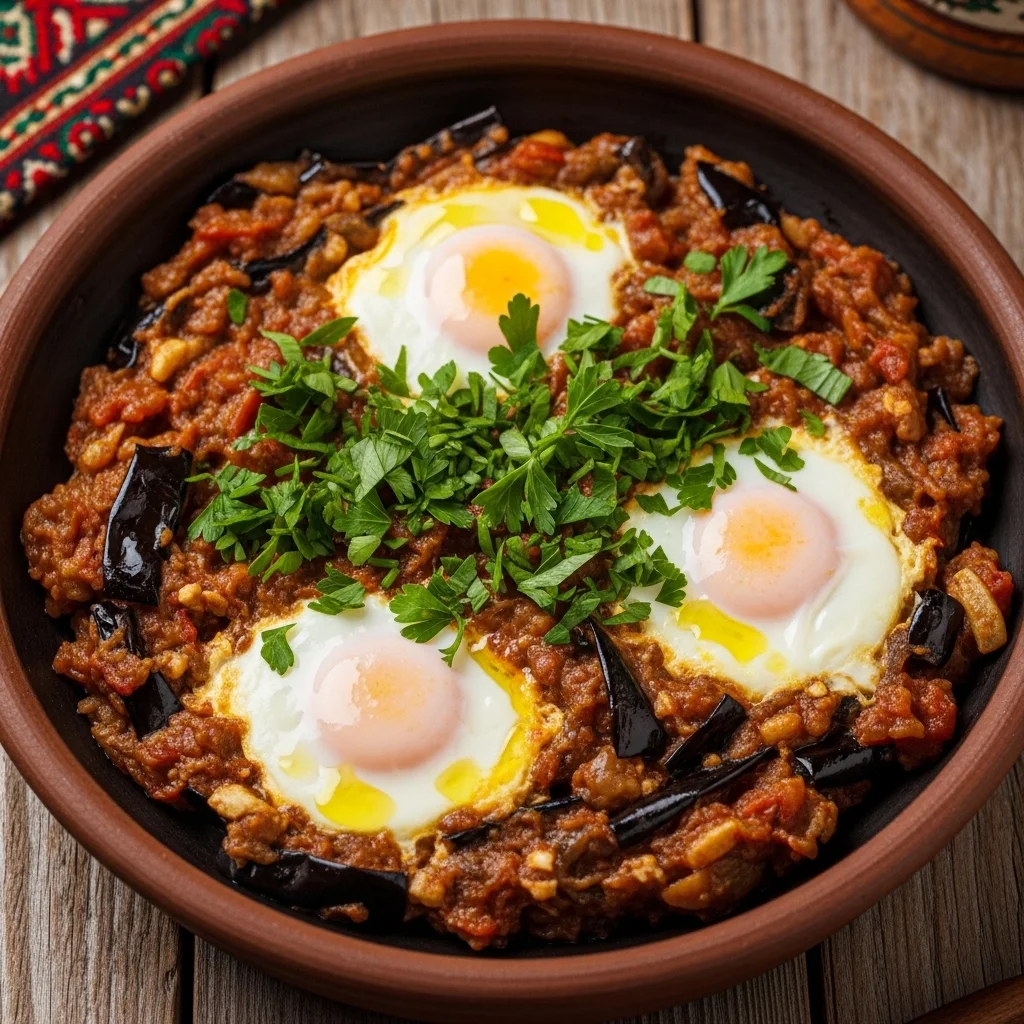
Mirza Ghasemi (Persian Smoked Eggplant with Eggs)
Prep: 15 min | Cook: 30 min | Serves: 4 | Difficulty: Easy
A deeply smoky, garlicky Persian dish from the northern Caspian region of Gilan — charred eggplants blended with roasted tomatoes, garlic, and eggs into something rich, smoky, and absolutely extraordinary. Served as a main course with warm flatbread or as part of a Persian spread. It is one of those dishes that stops people mid-bite.
Ingredients
- 3 large eggplants
- 3 ripe tomatoes, diced
- 5 garlic cloves, minced
- 4 large eggs
- 2 tbsp olive oil or butter
- 1 tsp turmeric
- ½ tsp smoked paprika
- Salt and cracked black pepper
- Large pinch of saffron dissolved in 2 tbsp warm water (optional but excellent)
- Fresh flat-leaf parsley and warm flatbread to serve
Instructions
Char the eggplants directly over a gas flame, turning regularly with tongs, for 15 to 20 minutes until completely blackened and collapsed all over. This direct flame charring is the entire source of the dish’s signature smoky depth. Alternatively roast under the highest broiler setting for 35 minutes.
Place charred eggplants in a colander. Cool for 10 minutes. Peel away all the blackened skin completely and discard. Chop the soft flesh roughly and squeeze out any excess liquid. Set aside.
Heat olive oil or butter in a large skillet over medium heat. Add garlic and cook 1 minute until golden. Add turmeric and smoked paprika and cook 30 seconds. Add tomatoes and cook for 8 minutes until completely broken down.
Add eggplant and stir everything together. Cook for 5 minutes, mashing and stirring until the mixture is cohesive and deeply flavored. Add saffron water if using.
Make four wells in the mixture. Crack an egg into each well. Cover and cook on medium-low heat for 4 to 5 minutes until whites are set and yolks are still soft and runny. Scatter parsley over the top and serve immediately with warm flatbread.
Pro Tip: Charring the eggplant over an open gas flame rather than roasting in the oven creates a profoundly deeper smokiness that is essential to the character of this dish. If you have a gas burner use it.