12 Classic Korean Dinner Recipes You Must Try In 2026
Korean cuisine is one of the most exciting and deeply satisfying food cultures in the world. With its perfect balance of spicy, savory, sweet, and umami flavors, Korean dinner recipes have taken the global food scene by storm — and for very good reason.
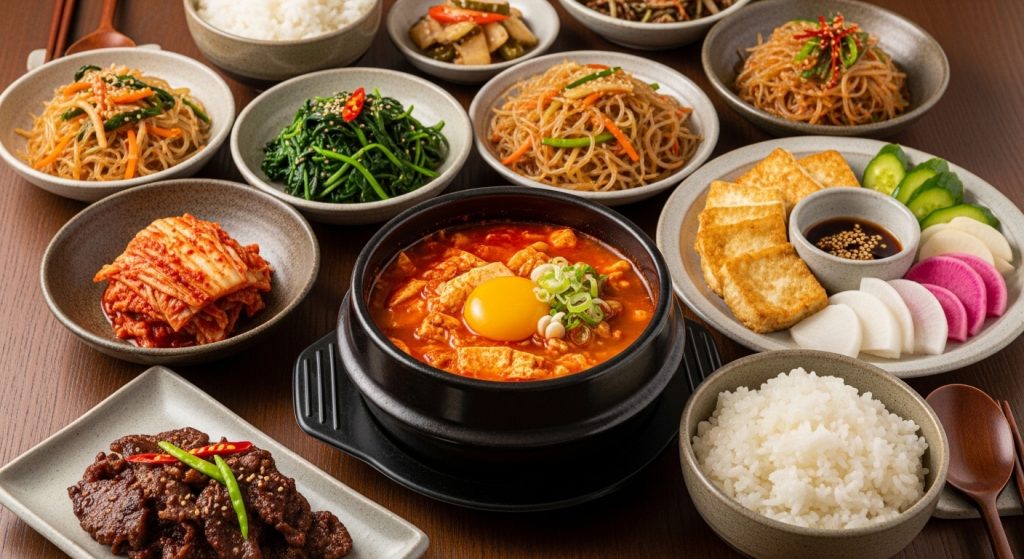
Whether you’re a total beginner curious about cooking Korean food at home, or a seasoned cook looking to expand your recipe collection, this guide covers the most beloved, must-know Korean dishes.
From the famous bulgogi and bibimbap to warming kimchi stew and crispy seafood pancakes, every recipe here is explained clearly so you can actually cook it with confidence.
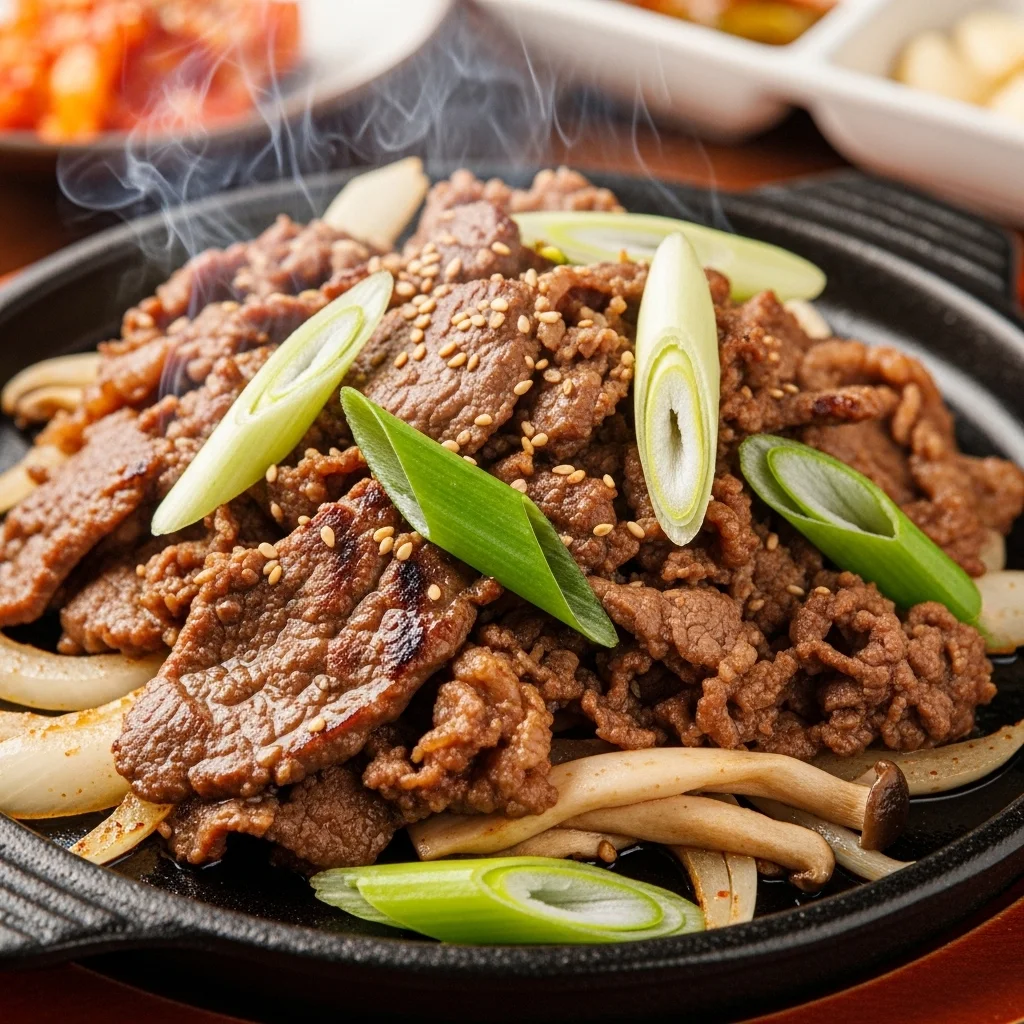
Bulgogi — Korean BBQ Beef (불고기)
Prep: 15 min + 30 min marinate | Cook: 10 min | Serves: 4 | Difficulty: Easy
Bulgogi literally means “fire meat,” and it’s arguably the most internationally recognized Korean dish. Thinly sliced beef is marinated in a sweet, savory, slightly smoky sauce and then grilled or pan-cooked until beautifully caramelized. It’s the gateway dish to Korean cuisine easy to love, impossible to stop eating.
Ingredients:
- 500g beef sirloin or ribeye, thinly sliced
- 4 tbsp soy sauce
- 2 tbsp sesame oil
- 2 tbsp brown sugar or honey
- 1 Asian pear (or kiwi), grated
- 5 garlic cloves, minced
- 1 tsp fresh ginger, grated
- 1 medium onion, thinly sliced
- 2 green onions, chopped
- 1 tbsp sesame seeds (for garnish)
- Black pepper to taste
Instructions:
If your beef isn’t pre-sliced, pop it in the freezer for 30 minutes this makes it much easier to slice paper thin.
Make the marinade: combine soy sauce, sesame oil, sugar, grated pear, garlic, ginger, and black pepper. The pear is the secret — it naturally tenderizes the meat.
Add the sliced beef and onion to the marinade. Mix well to coat every piece. Cover and refrigerate for at least 30 minutes (overnight gives even better results).
Heat a heavy skillet or grill pan over high heat. Cook the beef in batches don’t overcrowd the pan or it will steam instead of sear.
Cook 2–3 minutes per side until the edges caramelize slightly. Garnish with green onions and sesame seeds. Serve with steamed rice and kimchi.
Pro Tip: Ask your butcher to slice the beef ultra-thin “bulgogi style.” Or look for pre-sliced beef at any Korean grocery store — it saves a lot of time.
Bibimbap — Korean Mixed Rice Bowl (비빔밥)
Prep: 25 min | Cook: 20 min | Serves: 4 | Difficulty: Medium
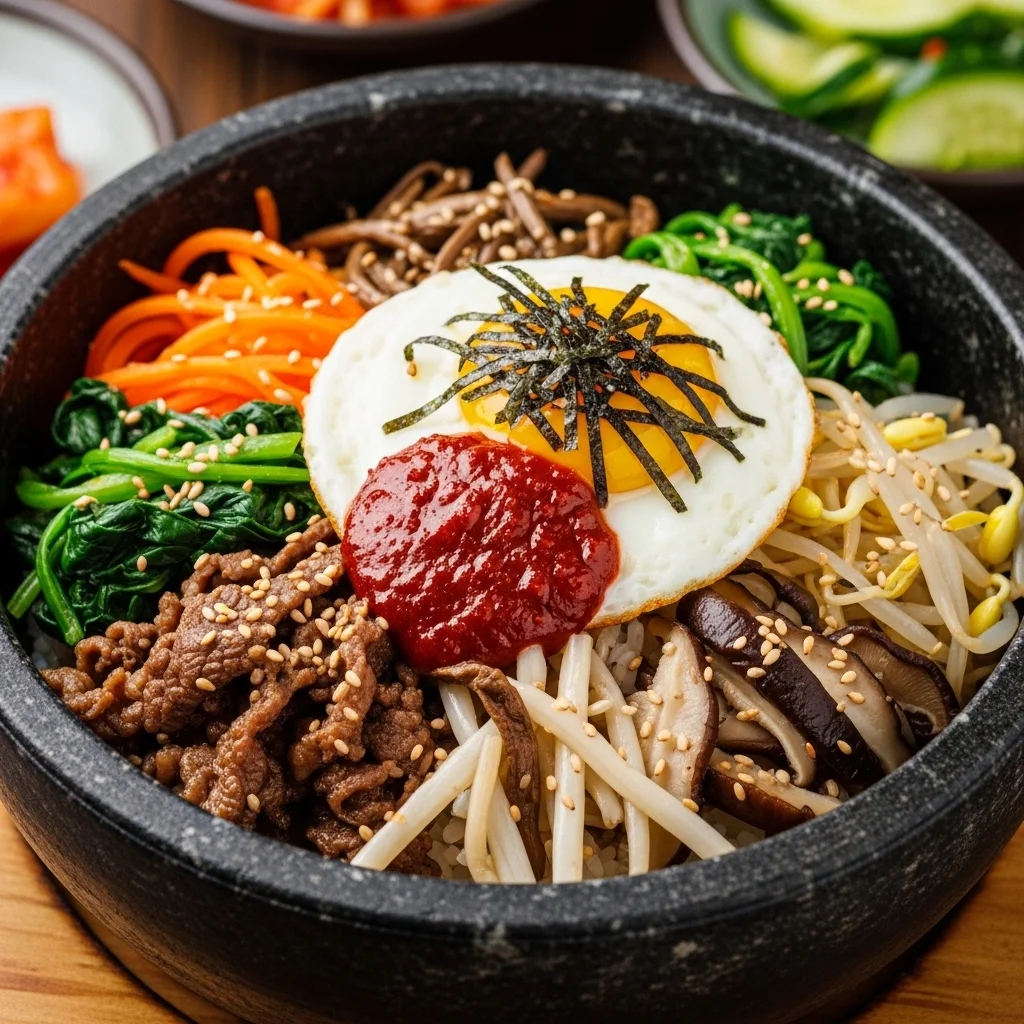
Bibimbap is a beautiful, nourishing bowl of steamed rice topped with colorful seasoned vegetables, a fried egg, and gochujang (Korean chili paste). The name literally means “mixed rice” — you mix everything together before eating. It’s nutritious, endlessly customizable, and one of the most iconic Korean meals you can make at home.
Ingredients:
- 3 cups cooked short-grain rice
- 200g spinach, blanched and seasoned
- 2 medium carrots, julienned and sautéed
- 200g bean sprouts, blanched
- 200g shiitake mushrooms, sautéed
- 200g beef mince or bulgogi beef
- 4 eggs (one per bowl)
- 2 tbsp gochujang (Korean chili paste)
- 1 tbsp sesame oil
- 1 tbsp soy sauce
- Sesame seeds to garnish
Instructions:
Season each vegetable separately: toss spinach and bean sprouts with a little sesame oil, garlic, and salt. Stir-fry carrots and mushrooms with a splash of soy sauce.
Cook the beef mince with soy sauce, sugar, garlic, and sesame oil until browned. Set aside.
Make the bibimbap sauce: mix 2 tbsp gochujang, 1 tbsp sesame oil, 1 tsp sugar, and 1 tsp sesame seeds together in a small bowl.
Add a scoop of hot rice to each bowl. Arrange all the toppings in separate, colorful sections around the bowl — this is the iconic presentation.
Fry an egg sunny-side up and place on top. Add a spoonful of bibimbap sauce and a drizzle of sesame oil. Mix everything vigorously before eating!
Pro Tip: For dolsot bibimbap (the crispy version), serve in a pre-heated stone bowl brushed with sesame oil — the rice forms an incredible golden crust at the bottom.
Kimchi Jjigae — Kimchi Stew (김치찌개)
Prep: 10 min | Cook: 30 min | Serves: 4 | Difficulty: Easy
Kimchi jjigae is the ultimate Korean comfort food. It’s a deeply flavorful, bubbling hot stew made with fermented kimchi, pork belly, tofu, and gochugaru. The older and more sour your kimchi, the richer and more complex the stew becomes. This is the dish every Korean home cook makes — and one of the most soul-satisfying meals you can eat on a cold evening.
Ingredients:
- 2 cups well-fermented kimchi (sour kimchi works best)
- 200g pork belly, cut into bite-sized pieces
- 300g firm tofu, cubed
- ½ cup kimchi juice
- 2 cups water or anchovy stock
- 1 tbsp gochugaru (Korean red pepper flakes)
- 1 tbsp soy sauce
- 1 tsp sesame oil
- 3 garlic cloves, minced
- 1 tsp sugar
- 2 green onions, chopped
Instructions:
In a medium pot, sauté pork belly over medium heat until lightly browned and the fat begins to render. No extra oil needed — the pork provides enough fat on its own.
Add the kimchi and kimchi juice. Stir and cook for 5 minutes until the kimchi softens slightly and starts to smell incredible.
Pour in the water or anchovy stock. Stir in gochugaru, garlic, soy sauce, and sugar. Bring to a boil.
Reduce heat and simmer for 15–20 minutes. The longer it simmers, the deeper the flavor gets.
Gently add tofu cubes. Simmer another 5 minutes. Finish with sesame oil and green onions. Serve piping hot alongside steamed rice.
Pro Tip: Use kimchi that has been fermenting for at least 2–3 weeks. Fresh kimchi won’t give the same depth. If your kimchi is fresh, add an extra tablespoon of gochugaru and a small squeeze of lemon to compensate.
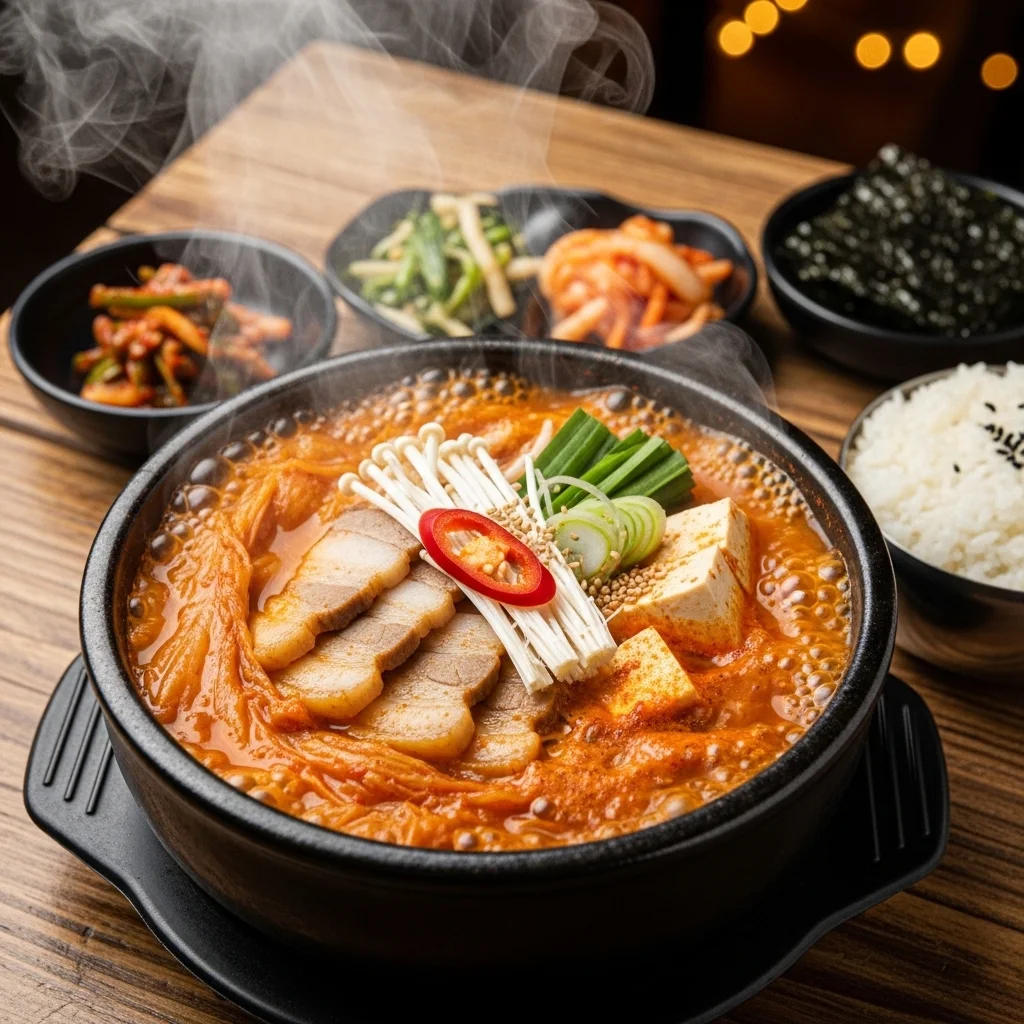
Japchae — Stir-Fried Glass Noodles (잡채)
Prep: 20 min | Cook: 20 min | Serves: 4 | Difficulty: Medium
Japchae is a festive Korean noodle dish made with silky sweet potato glass noodles stir-fried with colorful vegetables and beef in a savory-sweet soy and sesame sauce. It’s traditionally served at Korean celebrations and holidays, but it’s so delicious you’ll want to make it every single week. The chewy, glossy noodles are unlike anything else.
Ingredients:
- 250g dangmyeon (sweet potato glass noodles)
- 200g beef sirloin, thinly sliced
- 2 cups spinach
- 1 medium carrot, julienned
- 1 medium onion, sliced
- 5 shiitake mushrooms, sliced
- 1 red bell pepper, sliced
- 4 tbsp soy sauce (divided)
- 3 tbsp sesame oil (divided)
- 2 tbsp sugar
- 3 garlic cloves, minced
- Sesame seeds to garnish
Instructions:
- Marinate beef in 1 tbsp soy sauce, 1 tsp sesame oil, 1 tsp sugar, and garlic for 15 minutes.
- Boil the glass noodles per package instructions (usually 6–8 min). Drain, rinse with cold water, and toss with 1 tbsp soy sauce and 1 tbsp sesame oil. Cut into manageable lengths with kitchen scissors.
- Stir-fry each vegetable separately in a lightly oiled pan with a pinch of salt — carrots, onion, mushrooms, and bell pepper, about 2–3 minutes each. Blanch spinach and squeeze dry.
- Cook the marinated beef in the same pan until browned, about 3 minutes.
- Combine everything in a large mixing bowl. Add remaining soy sauce, sesame oil, and sugar. Toss well until every noodle is coated and glossy. Sprinkle sesame seeds and serve warm or at room temperature.
Pro Tip: Dangmyeon (sweet potato starch noodles) are non-negotiable here don’t substitute with regular glass noodles. Find them easily at any Korean or Asian supermarket.
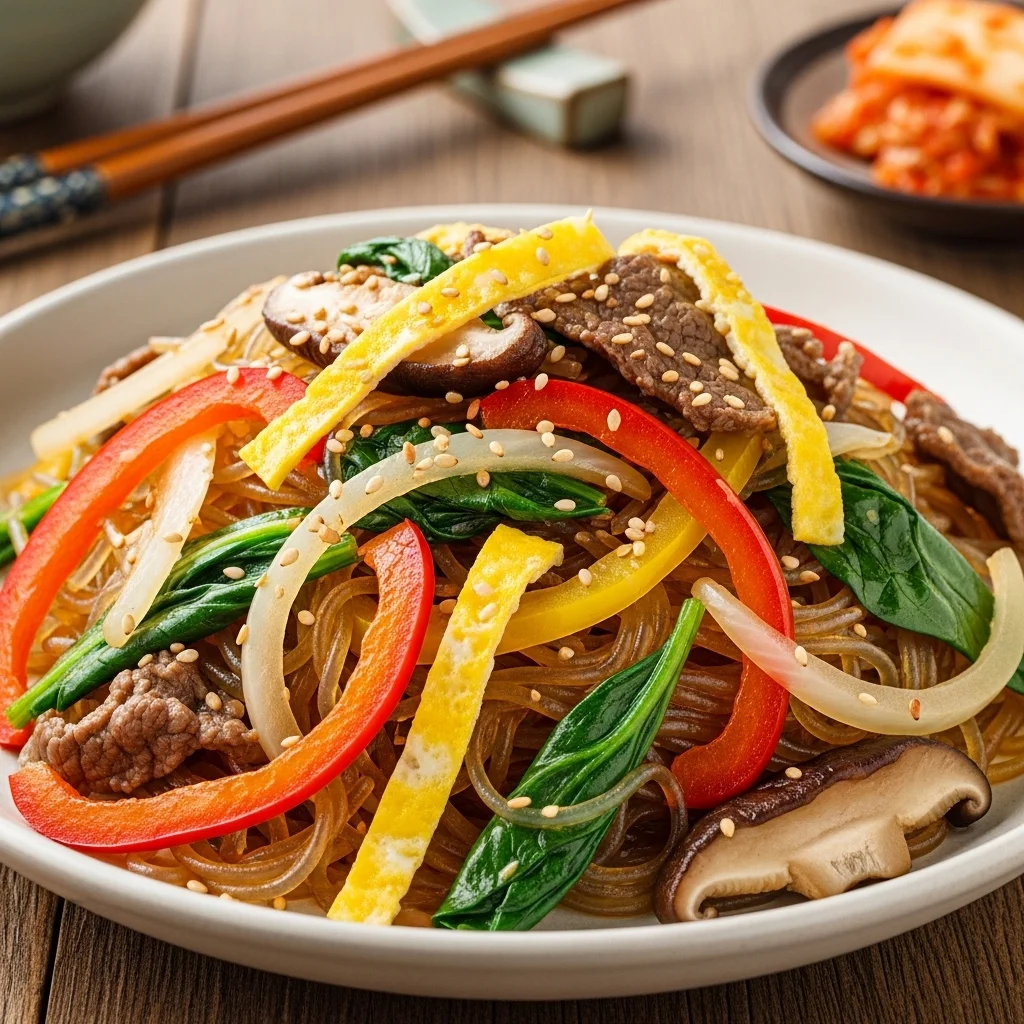
Doenjang Jjigae — Soybean Paste Stew (된장찌개)
Prep: 10 min | Cook: 25 min | Serves: 4 | Difficulty: Easy
If kimchi jjigae is spicy comfort food, doenjang jjigae is its earthy, nourishing cousin. Made with Korean fermented soybean paste (doenjang), this stew is rich, complex, and deeply savory. Packed with tofu, zucchini, mushrooms, and potato in an umami-loaded broth, this is what Korean families eat nearly every day — and for very good reason.
Ingredients:
- 2–3 tbsp doenjang (Korean soybean paste)
- 3 cups anchovy or kelp stock
- 300g firm tofu, cubed
- 1 medium zucchini, diced
- 1 medium potato, cubed small
- 5 mushrooms (oyster or shiitake)
- ½ onion, diced
- 3 garlic cloves, minced
- 1 tsp gochugaru (optional, for heat)
- 1 green chili, sliced
- 2 green onions, sliced
Instructions:
- Make a quick anchovy stock: simmer 10 dried anchovies and a small piece of dried kelp in 4 cups of water for 10 minutes. Strain and keep the clear broth.
- Dissolve doenjang paste into the warm broth by pressing it through a small mesh strainer — this ensures a smooth, lump-free stew.
- Add potatoes first and simmer 8 minutes since they take the longest to cook. Then add onion, garlic, and mushrooms.
- Add zucchini and tofu. Simmer on medium heat for another 8–10 minutes until all vegetables are tender.
- Taste and adjust — more doenjang for depth, gochugaru for heat. Finish with green onions and sliced green chili. Serve immediately with a bowl of rice.
Pro Tip: Korean doenjang is not the same as Japanese miso — it’s coarser, stronger, and more pungent. Don’t substitute them directly. The authentic doenjang is what gives this stew its characteristic deep, complex flavor.
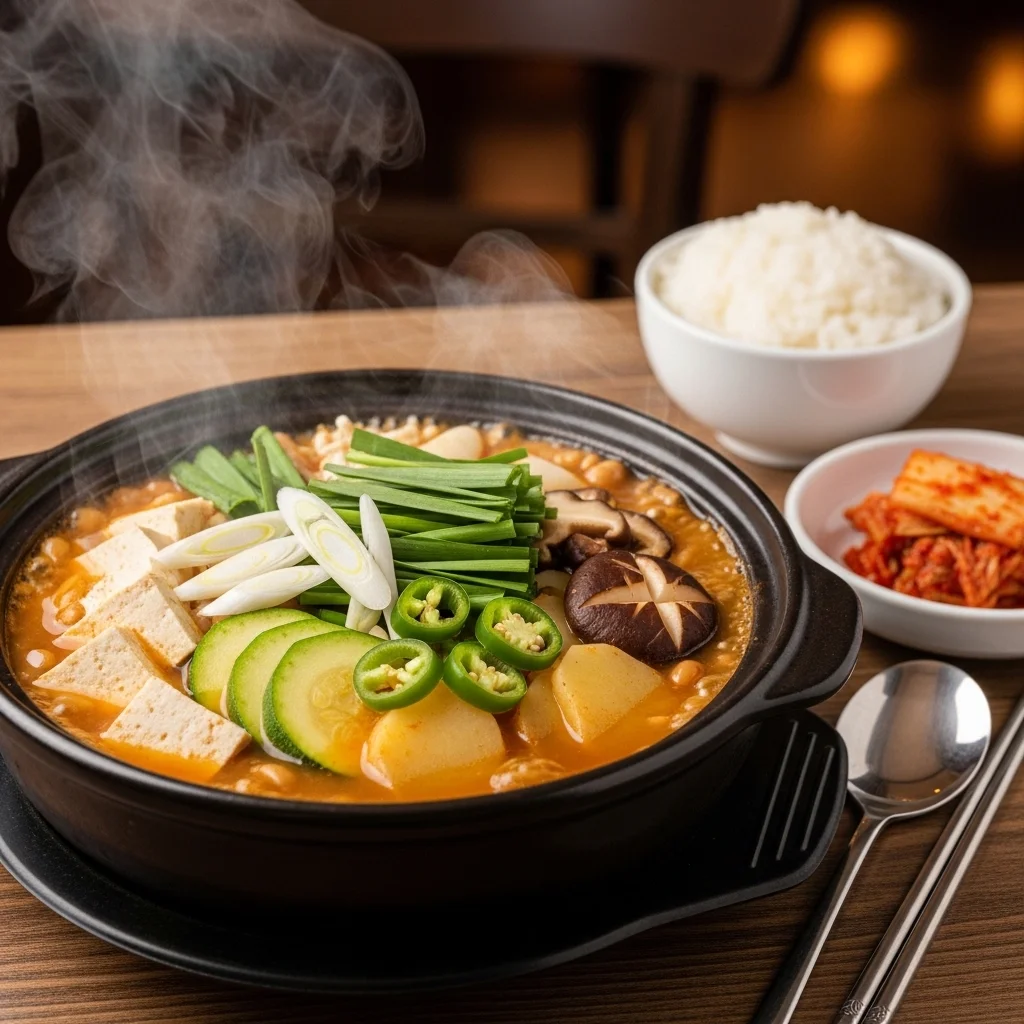
Galbi — Korean Grilled Short Ribs (갈비)
Prep: 15 min + 4 hr marinate | Cook: 10 min | Serves: 4 | Difficulty: Easy
Galbi are Korean-style beef short ribs marinated in a sweet, savory, deeply aromatic sauce and grilled to sticky, caramelized perfection. The thin flanken-cut ribs cook fast on a hot grill and deliver an incredible combination of sweet soy, sesame, and charred beef. This is party food, celebration food, and “I need something extraordinary tonight” food.
Ingredients:
- 1.5kg flanken-cut beef short ribs
- 6 tbsp soy sauce
- 4 tbsp brown sugar
- 3 tbsp sesame oil
- ½ Asian pear, grated
- ½ onion, grated
- 5 garlic cloves, minced
- 1 tbsp fresh ginger, grated
- 1 tbsp rice wine (mirin)
- Black pepper to taste
- Sesame seeds and green onions to serve
Instructions:
- Soak the ribs in cold water for 30 minutes to draw out excess blood. Pat completely dry with paper towels.
- Combine all marinade ingredients in a bowl: soy sauce, sugar, sesame oil, grated pear, grated onion, garlic, ginger, and rice wine.
- Coat each rib thoroughly in the marinade. Place in a zip-lock bag or covered dish and refrigerate for at least 4 hours — overnight is ideal for maximum flavor.
- Preheat your grill, grill pan, or broiler to high heat. Grill ribs for 3–4 minutes per side. Watch closely — the sugar caramelizes fast and can burn.
- Serve with steamed rice, lettuce leaves, ssamjang dipping sauce, and sliced garlic. Wrap the meat in lettuce with a dab of ssamjang for the full authentic experience.
Pro Tip: Flanken-cut (cross-cut) short ribs are the authentic choice sliced thin across the bone, they marinate quickly and cook in minutes. Ask your butcher if you don’t see them on display.
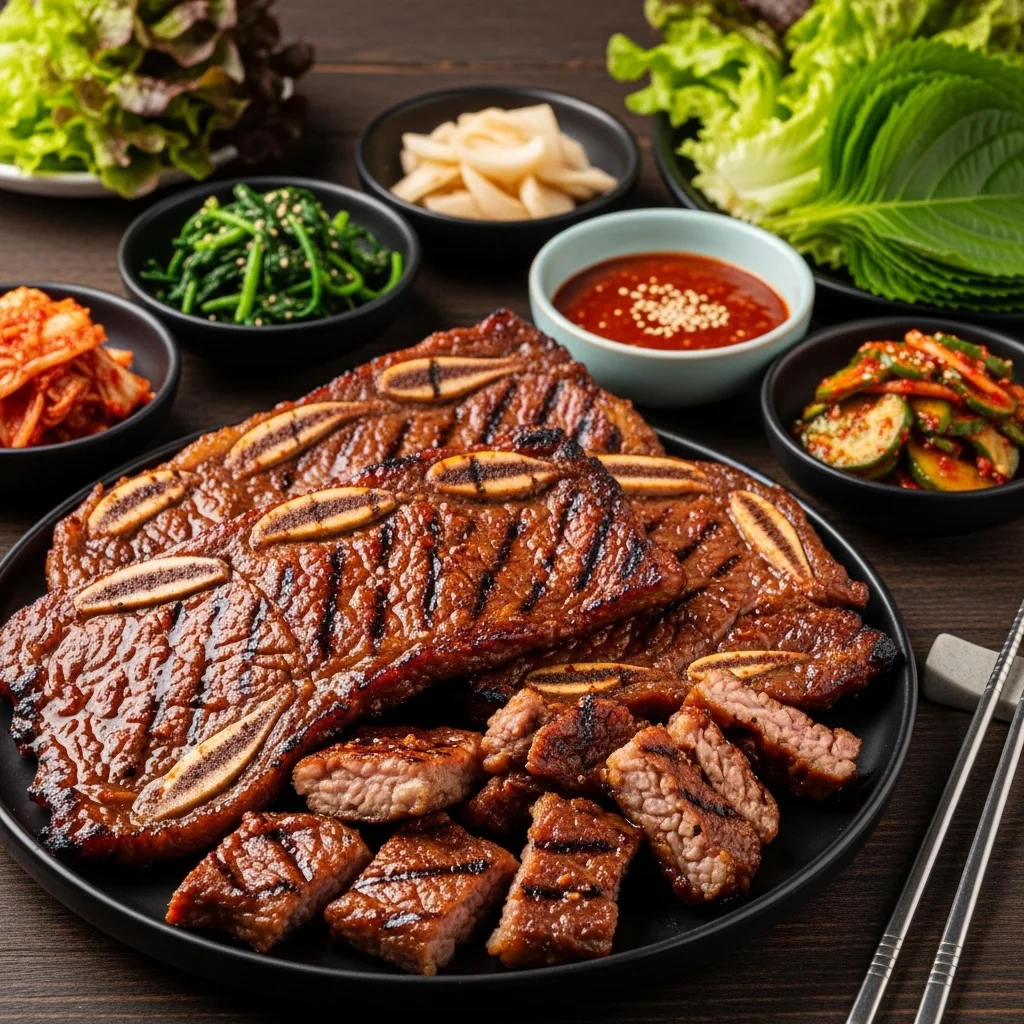
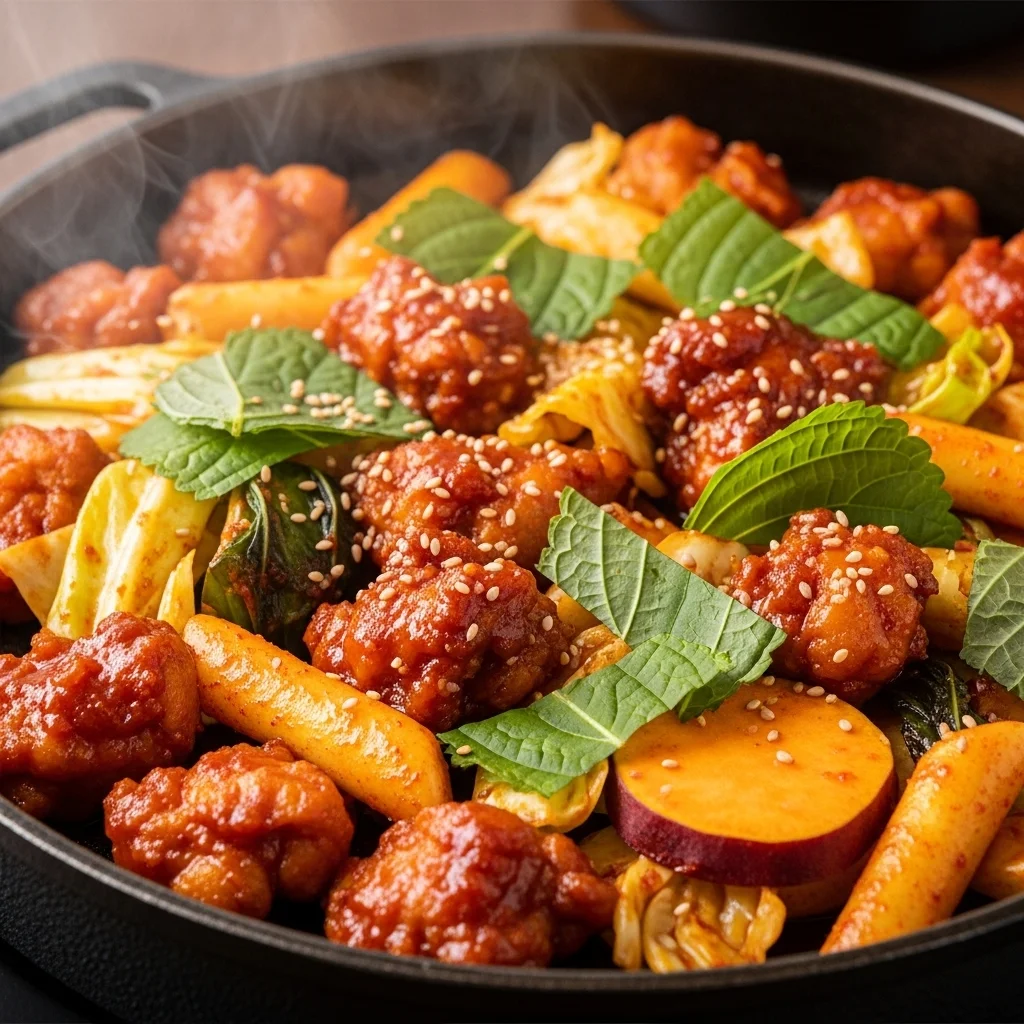
Dakgalbi — Spicy Stir-Fried Chicken (닭갈비)
Prep: 20 min + 30 min marinate | Cook: 20 min | Serves: 4 | Difficulty: Medium
Dakgalbi is bold, spicy, and incredibly aromatic — Korean stir-fried chicken cooked in a fiery gochujang sauce with sweet potato, cabbage, and chewy rice cakes. It originated in Chuncheon and has become one of Korea’s most beloved street food dishes. The combination of tender chicken, sticky tteok, and deeply spiced sauce is outrageously good.
Ingredients:
- 700g boneless chicken thighs, cut into bite-sized pieces
- 200g cylindrical rice cakes (tteok)
- 1 cup cabbage, roughly chopped
- 1 small sweet potato, thinly sliced
- 3 tbsp gochujang
- 1 tbsp gochugaru
- 2 tbsp soy sauce
- 1 tbsp sesame oil
- 1 tbsp sugar
- 4 garlic cloves, minced
- 1 tsp ginger, grated
- Green onions and sesame seeds to finish
Instructions:
Mix the sauce: combine gochujang, gochugaru, soy sauce, sesame oil, sugar, garlic, and ginger. It should be spicy, slightly sweet, and deeply savory.
Toss the chicken pieces in two-thirds of the sauce. Marinate for at least 30 minutes.
Soak rice cakes in cold water for 20 minutes if they’re packaged and firm — this prevents them from sticking together in the pan.
Heat a large wide pan or cast-iron skillet over medium-high heat with a little oil. Cook the chicken in the sauce, stirring regularly, for about 8 minutes.
Add sweet potato, cabbage, and rice cakes along with a splash of water (about ¼ cup). Stir-fry everything together for another 8–10 minutes until the chicken is cooked through and the sauce is thick and sticky. Serve topped with green onions.
Pro Tip: Toward the end, press leftover rice into the pan to make bokkeumbap (fried rice) — scraping up all those caramelized sauce bits from the bottom. This finishing move is the best part of the whole meal.
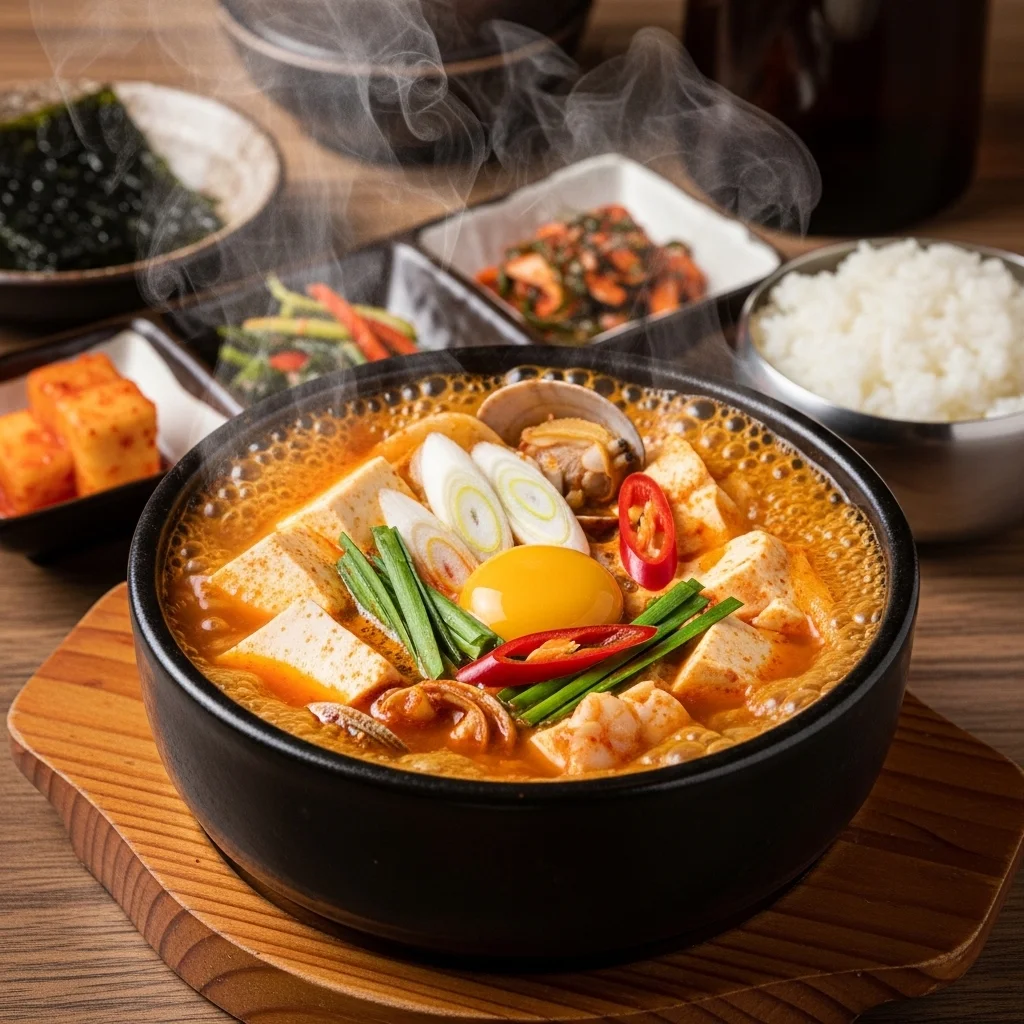
Sundubu Jjigae — Spicy Soft Tofu Stew (순두부찌개)
Prep: 10 min | Cook: 20 min | Serves: 2–3 | Difficulty: Easy
Sundubu jjigae is a rich, fiery Korean stew served bubbling hot in a stone pot. Silken tofu melts into the spicy, savory broth, and a raw egg is cracked in just before serving to cook softly in the heat. It can be made with seafood, pork, or kept fully vegetarian. One of the most comforting Korean dishes you’ll ever eat — and surprisingly simple to make at home.
Ingredients:
- 2 tubes sundubu (soft tofu)
- 150g pork belly or shrimp (or both)
- ½ cup kimchi, roughly chopped
- 2 tbsp gochugaru
- 1 tbsp soy sauce
- 1 tsp sesame oil
- 3 garlic cloves, minced
- 1½ cups anchovy stock or water
- 2 eggs
- ½ tsp salt
- Green onions to garnish
Instructions:
In a stone pot or heavy saucepan, heat sesame oil over medium heat. Add pork belly and cook until it starts to turn opaque.
Add garlic and gochugaru, stirring for about 1 minute until fragrant and the red color deepens in the oil.
Add kimchi and stir-fry for 2 minutes. This step builds the rich flavor base of the entire stew.
Pour in anchovy stock and bring to a boil. Season with soy sauce and salt.
Spoon the soft tofu directly into the broth in large chunks — don’t stir, just let it gently settle. Add shrimp if using. Simmer 5 minutes. Just before serving, crack a raw egg into the center. The heat will cook it softly. Garnish with green onions and serve immediately with rice.
Pro Tip: Serve in the same pot it’s cooked in — the stew should still be actively bubbling when it reaches the table. That sizzle is part of the entire experience
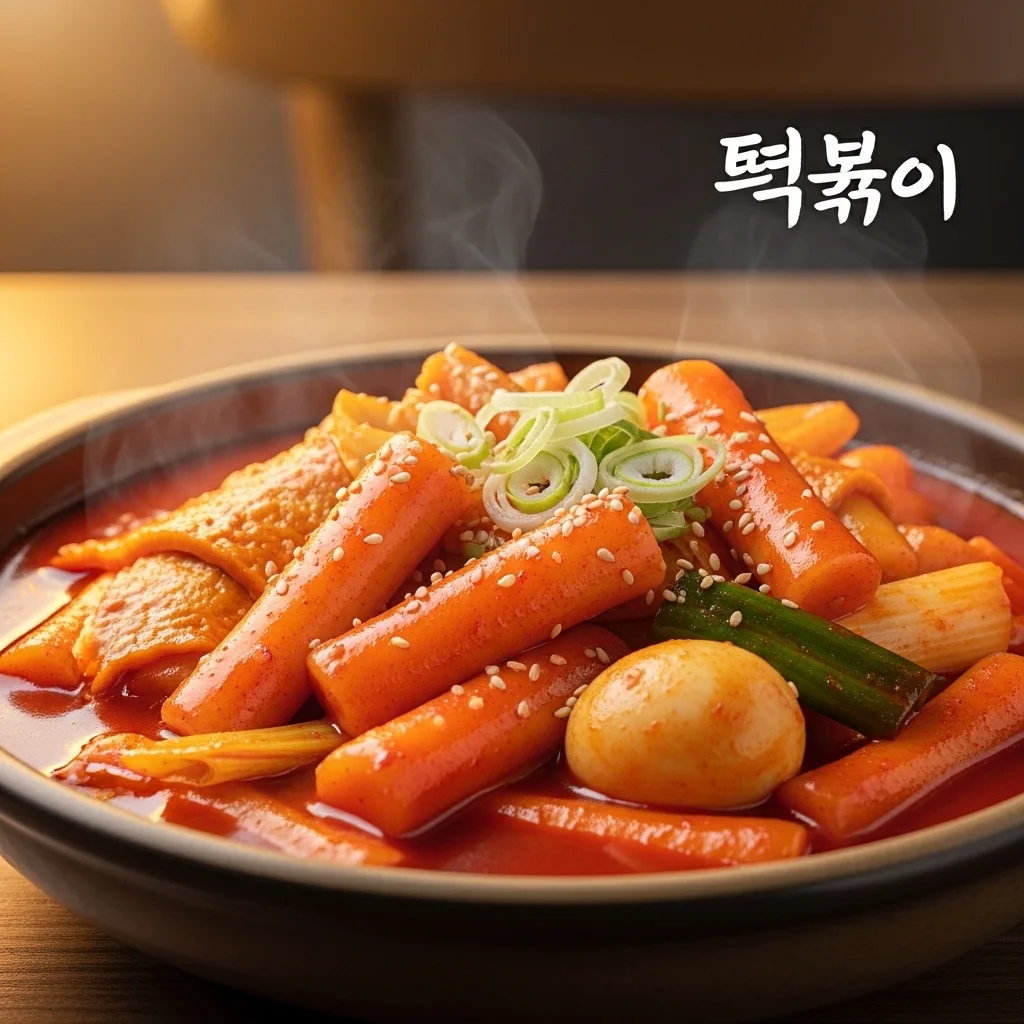
Tteokbokki — Spicy Korean Rice Cakes (떡볶이)
Prep: 5 min | Cook: 15 min | Serves: 3–4 | Difficulty: Very Easy
Tteokbokki is arguably the most popular Korean street food in the world. Chewy cylindrical rice cakes simmered in a sweet, spicy gochujang sauce with fish cakes and boiled eggs — it’s sticky, addictive, and impossible to stop eating. If you’ve never cooked Korean food before, this is one of the most accessible and exciting recipes to start with.
Ingredients:
- 500g cylindrical rice cakes (tteok)
- 200g Korean fish cakes (eomuk), sliced
- 2 boiled eggs, peeled
- 3 tbsp gochujang
- 1 tbsp gochugaru
- 2 tbsp sugar
- 1 tbsp soy sauce
- 2 cups anchovy stock or water
- 2 green onions, cut into pieces
- Sesame seeds to garnish
Instructions:
Soak rice cakes in cold water for 20–30 minutes if they’ve been refrigerated. Fresh rice cakes don’t need soaking.
In a wide pan, bring anchovy stock to a boil. Add gochujang, gochugaru, sugar, and soy sauce. Stir until the paste fully dissolves into the broth.
Add the rice cakes and fish cakes. Cook over medium-high heat, stirring frequently, for 8–10 minutes until the rice cakes are soft and chewy and the sauce thickens into a glossy coating.
Add boiled eggs and green onions. Simmer for 2 more minutes.
Taste and adjust — more gochujang for heat, more sugar for balance. The sauce should be thick and sticky. Sprinkle sesame seeds and serve hot directly from the pan.
Pro Tip: Don’t let tteokbokki sit too long after cooking the rice cakes keep absorbing the sauce and can become very dense. Serve and eat immediately for the best chewy texture.
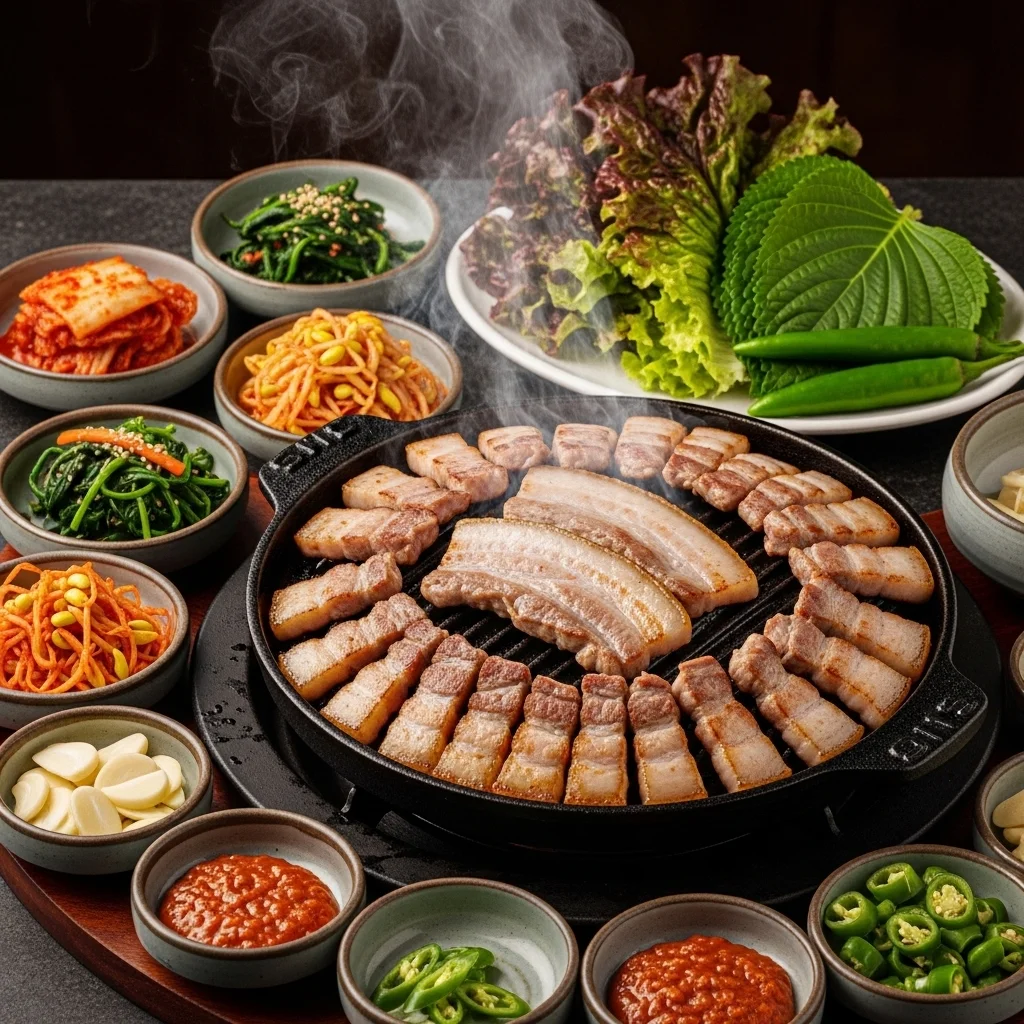
Samgyeopsal — Korean Grilled Pork Belly (삼겹살)
Prep: 10 min | Cook: 15 min | Serves: 4 | Difficulty: Very Easy
Samgyeopsal is the quintessential Korean BBQ experience. Thick slices of pork belly are grilled on a hot pan, then wrapped in fresh lettuce leaves with garlic, ssamjang, and kimchi. It’s interactive, social, and absolutely delicious. No marinade needed — the pork’s natural fat keeps it impossibly juicy and flavorful.
Ingredients:
- 800g thick-cut pork belly slices
- Salt and black pepper
- Butter lettuce or perilla leaves for wrapping
- 6 garlic cloves, thinly sliced
- 4 tbsp ssamjang (Korean dipping paste)
- Kimchi to serve alongside
- 2 tbsp sesame oil + ½ tsp salt (dipping sauce)
- Steamed rice
Instructions:
Heat a cast-iron grill pan or tabletop grill to high. No oil needed — pork belly is fatty enough on its own.
Season pork belly lightly with salt and pepper. Place slices on the grill and cook 3–4 minutes per side until the fat is golden and edges are crispy.
Use kitchen scissors to cut the cooked pork into bite-sized pieces directly on the grill — this is very Korean and very satisfying!
Grill the garlic slices alongside the pork until golden and softened.
To eat: take a lettuce leaf, add a piece of pork, a grilled garlic slice, a small spoon of ssamjang, and some kimchi. Wrap it all up and eat in one bite. Serve with sesame oil dipping sauce and cold beer or soju on the side!
Pro Tip: Mix 2 tbsp sesame oil with ½ tsp sea salt and a pinch of black pepper for the simplest, most delicious dipping sauce. Dip freshly grilled pork in this before wrapping — it elevates the whole meal dramatically.
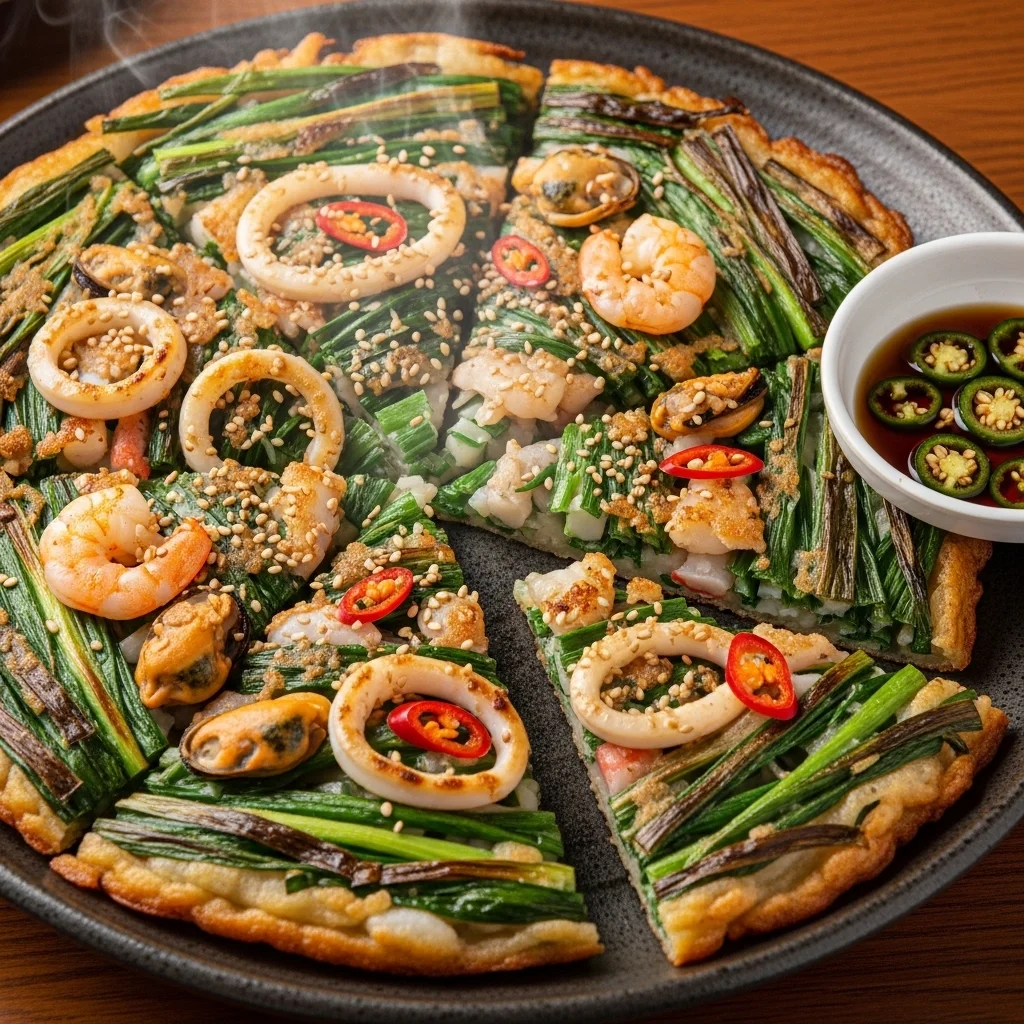
Haemul Pajeon — Korean Seafood & Green Onion Pancake (해물파전)
Prep: 15 min | Cook: 15 min | Serves: 3–4 | Difficulty: Easy
Haemul pajeon is a crispy, golden Korean savory pancake loaded with green onions, squid, shrimp, and scallops. The exterior is beautifully crispy while the inside stays chewy and moist. It’s a beloved Korean rainy-day food — there’s even a saying that the sound of falling rain sounds like a pajeon sizzling in a pan. Serve it with a tangy soy dipping sauce for a dish that is pure comfort.
Ingredients:
- 1 cup all-purpose flour
- ¼ cup rice flour (for extra crispiness)
- 1 cup ice-cold water
- 1 egg
- ½ tsp salt
- 10 green onions, trimmed to pan length
- 100g squid, sliced into rings
- 100g shrimp, peeled and roughly chopped
- 3 tbsp vegetable oil for frying
Dipping sauce: 2 tbsp soy sauce, 1 tbsp rice vinegar, ½ tsp sesame oil, 1 tsp sugar, pinch of gochugaru
Instructions:
Make the dipping sauce first: combine all sauce ingredients and stir until the sugar dissolves. Set aside.
Whisk together flour, rice flour, ice-cold water, egg, and salt until smooth. The batter should be thin — closer to crepe batter than pancake batter. Ice-cold water is the trick to extra crispiness.
Heat 3 tbsp oil in a large skillet (28–30cm) over medium-high heat until shimmering hot.
Arrange green onions in the pan in a single layer. Pour the batter over them so it fills all the gaps. Scatter seafood evenly across the top.
Cook 4–5 minutes undisturbed until the bottom is deeply golden. Carefully flip and cook another 3–4 minutes. Both sides should be crispy. Slice into pieces and serve immediately with the dipping sauce.
Pro Tip: The secret to a truly crispy pajeon is very hot oil and the patience to not touch it while it cooks. That undisturbed searing time is what creates the golden crust.
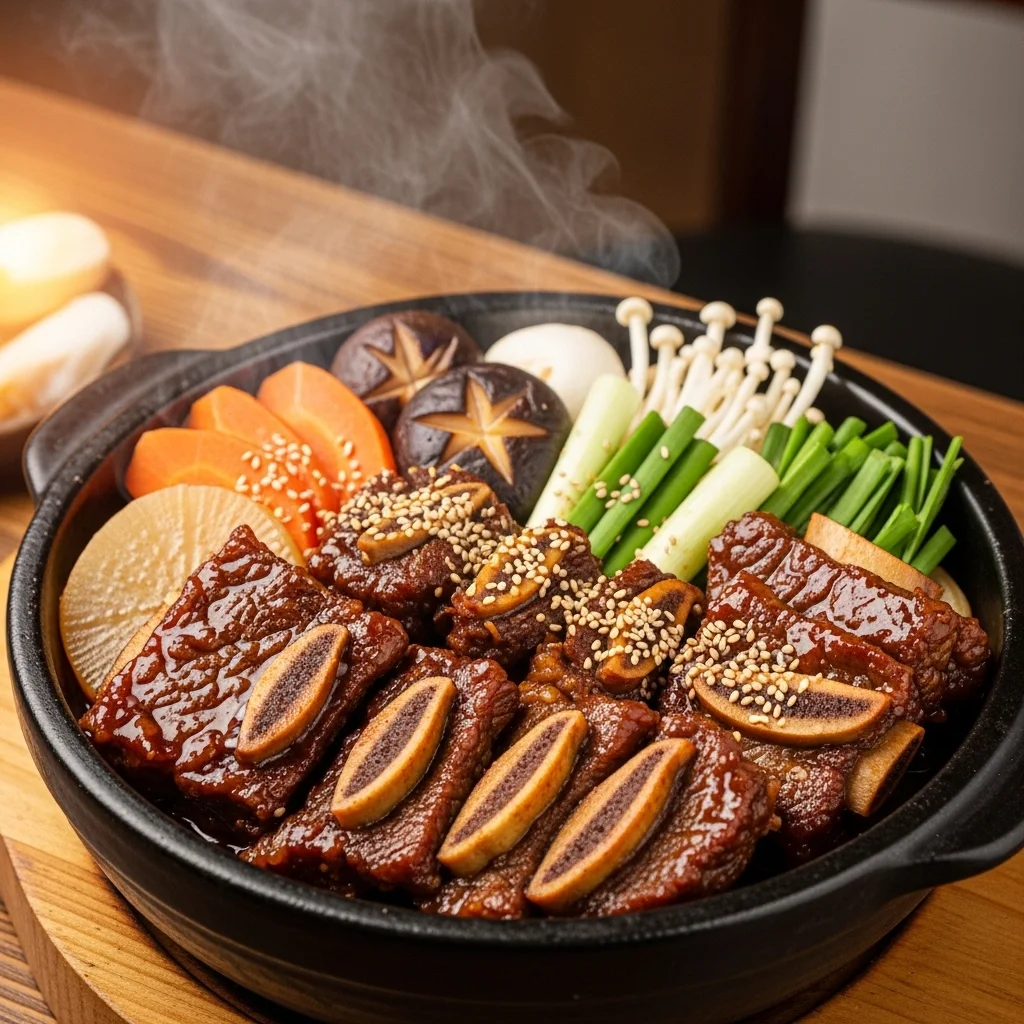
Galbijjim — Braised Korean Short Ribs (갈비찜)
Prep: 20 min | Cook: 1.5–2 hours | Serves: 4–5 | Difficulty: Medium
Galbijjim is the crown jewel of Korean home cooking — beef short ribs braised low and slow in a rich, sweet-savory sauce with vegetables until they’re fork-tender and falling off the bone. This is special occasion food, the dish Korean mothers make for birthdays and holidays. It takes time, but the result is absolutely extraordinary: deeply flavored, impossibly tender, and beautiful to serve.
Ingredients:
- 1.5kg beef short ribs, English-cut
- ½ Asian pear, grated
- 6 tbsp soy sauce
- 3 tbsp brown sugar
- 2 tbsp sesame oil
- 5 garlic cloves, minced
- 1 tbsp ginger, grated
- 2 medium carrots, cut into chunks
- 1 medium daikon radish, cubed
- 8 dried shiitake mushrooms, soaked and drained
- 2 cups water
- Sesame seeds and green onions to garnish
Instructions:
Soak short ribs in cold water for 1–2 hours to draw out the blood. Drain and pat dry. This step is essential for a clean, clear braise.
Blanch the ribs: place them in a pot of cold water, bring to a boil for 5 minutes, drain, and rinse thoroughly. This removes impurities and ensures a beautiful broth.
Make the braising sauce: combine soy sauce, sugar, sesame oil, grated pear, garlic, and ginger. The pear naturally tenderizes the meat during the long braise.
Return ribs to the pot. Add the braising sauce and 2 cups of water. Bring to a boil, then reduce to a gentle low simmer. Cover and braise for 1 hour.
Add carrots, daikon, and soaked mushrooms. Continue braising for another 30–40 minutes until the ribs are completely tender and the sauce has reduced to a thick, glossy coating. Taste and adjust seasoning. Garnish generously and serve over steamed rice.
Pro Tip: Make galbijjim a day ahead — it genuinely tastes better the next day once the flavors have had overnight to deepen and meld together in the fridge