10 Authentic Indonesian Dinner Recipes You Must Try
Indonesia is one of the most extraordinary culinary destinations on the planet. Spread across more than seventeen thousand islands, this breathtaking archipelago is home to one of the richest, most diverse, and most deeply flavorful food cultures in the entire world. Indonesian cooking is a magnificent tapestry of bold spices, aromatic herbs, rich coconut-based sauces, and cooking techniques that have been refined and passed down through generations across hundreds of distinct regional cultures.
From the legendary beef rendang of West Sumatra to the aromatic nasi goreng of Java, the satay of every street corner, and the rich soups of Sulawesi — Indonesian dinner recipes cover a breathtaking range of flavors, textures, and experiences. Whether you are discovering Indonesian cuisine for the very first time or you are a passionate food lover wanting to cook these extraordinary dishes at home, this guide is for you.
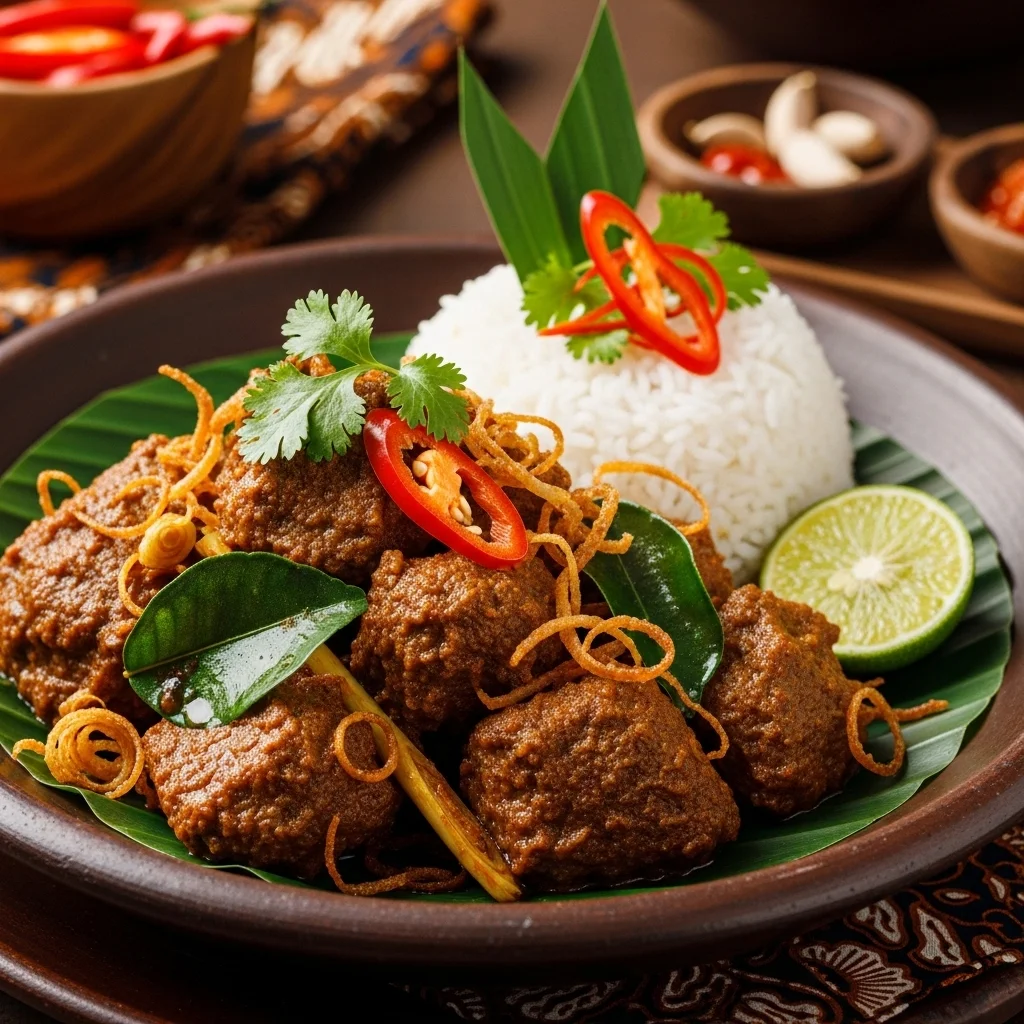
Beef Rendang
Prep: Twenty min | Cook: Three hours | Serves: Five | Difficulty: Medium
Rendang is widely considered one of the most delicious dishes in the entire world — and it is Indonesia’s most iconic and celebrated recipe. Originating from the Minangkabau people of West Sumatra, rendang is a slow-cooked dry beef curry in which tender chunks of beef are simmered for hours in a rich, intensely spiced coconut milk sauce until the liquid has completely evaporated and the beef is coated in a dark, caramelized, extraordinarily aromatic crust. The flavor is complex beyond description — deeply savory, warmly spiced, slightly sweet, and completely unforgettable.
Ingredients:
- One kg beef chuck or brisket, cut into large chunks
- Four hundred ml coconut milk
- Two lemongrass stalks, bruised
- Four kaffir lime leaves
- Two turmeric leaves if available
- One cinnamon stick
- Three cardamom pods
- Three cloves
- One star anise
- Two tbsp coconut sugar or brown sugar
- Salt to taste
- Toasted shredded coconut (kerisik), two tbsp — this is the authentic thickener
For the spice paste (bumbu):
- Eight dried red chilies, soaked and drained
- Six shallots, roughly chopped
- Four garlic cloves
- Three candlenuts or macadamia nuts
- One thumb-sized piece of fresh ginger
- One thumb-sized piece of fresh galangal
- One tsp ground turmeric
- One tsp ground coriander
Instructions:
Make the spice paste by blending all bumbu ingredients together with a splash of water until completely smooth. A food processor or blender works well — traditional rendang uses a stone mortar and pestle which gives the most fragrant result if you have the time and patience.
Heat two tablespoons of oil in a large heavy pot over medium heat. Add the spice paste and cook, stirring constantly, for eight to ten minutes until it darkens, smells deeply fragrant, and the oil starts to separate around the edges. This is the most important step — properly cooked spice paste is the foundation of great rendang.
Add the beef chunks and toss to coat every piece in the spice paste. Cook for five minutes, stirring, until the beef is sealed on the outside.
Add the coconut milk, lemongrass, kaffir lime leaves, turmeric leaves, cinnamon, cardamom, cloves, and star anise. Bring to a boil, then reduce to a low simmer. Cook uncovered, stirring occasionally, for two to two and a half hours. The liquid will gradually reduce and the coconut milk will separate into oil — do not worry, this is exactly what should happen.
In the final stage when nearly all the liquid has evaporated, add the toasted coconut and sugar. Stir constantly now as the rendang fries in the coconut oil, developing that signature dark, caramelized, deeply fragrant coating. Cook for ten to fifteen more minutes until the beef is dark, dry, and coated in an extraordinary aromatic crust. Serve with steamed white rice.
Pro Tip: Patience is everything in rendang the three-hour cook time is not negotiable. Authentic rendang that has been cooked long enough tastes completely different from rendang that has been rushed. The caramelization in the final stage is where the magic truly happens.
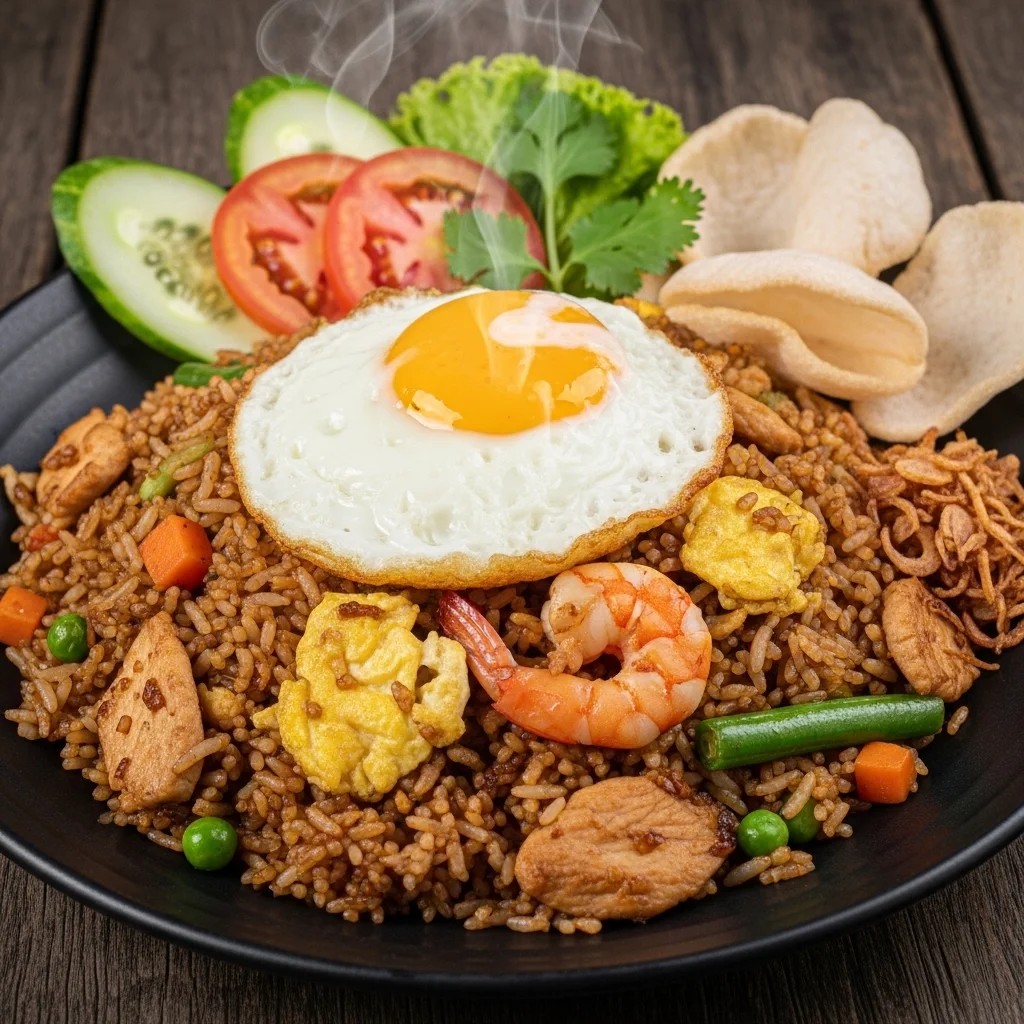
Nasi Goreng (Indonesian Fried Rice)
Prep: Ten min | Cook: Fifteen min | Serves: Four | Difficulty: Easy
Nasi goreng is Indonesia’s most famous dish and one of the most beloved fried rice recipes in the world. Unlike Chinese-style fried rice, Indonesian nasi goreng gets its distinctive deep, savory-sweet flavor from kecap manis — a thick, sweet Indonesian soy sauce — combined with shrimp paste, chilies, and garlic. It is traditionally topped with a fried egg, crispy shallots, cucumber slices, and prawn crackers for a complete, satisfying dinner that is bold, aromatic, and deeply satisfying.
Ingredients:
- Three cups cooked day-old rice, cold
- Two hundred grams chicken, shrimp, or a combination — diced small
- Three large eggs
- Four garlic cloves, minced
- Three shallots, thinly sliced
- Two red chilies, finely sliced
- One tsp shrimp paste (terasi)
- Three tbsp kecap manis (sweet soy sauce)
- One tbsp regular soy sauce
- One tsp fish sauce
- Two tbsp vegetable oil
- Salt and white pepper to taste
To serve:
- Two fried eggs (one per portion)
- Crispy fried shallots
- Sliced cucumber and tomato
- Prawn crackers
- Fresh lime wedges
Instructions:
Prepare the aromatics: mince the garlic, slice the shallots, and slice the chilies. Have everything ready before you start cooking because nasi goreng moves fast once the wok is hot.
Heat the oil in a large wok over the highest heat possible. Add the shallots and cook for two minutes until starting to golden. Add the garlic, chilies, and shrimp paste. Stir-fry vigorously for one minute until the shrimp paste is fragrant and well incorporated — it will smell pungent at first but this mellows beautifully as it cooks.
Add the chicken or shrimp and cook for three minutes until cooked through. Push everything to one side of the wok. Crack the eggs into the empty side and scramble quickly, breaking them into small pieces as they cook. Mix through with the other ingredients.
Add the cold rice. Press and toss it vigorously over the highest heat for three to four minutes, breaking up every clump, until the grains are separated and hot. Pour over the kecap manis, regular soy sauce, and fish sauce. Toss everything together very thoroughly until every grain of rice is evenly coated in the dark, glossy sauce.
Season with salt and white pepper. Plate and top with a fried egg, crispy fried shallots, sliced cucumber and tomato, and prawn crackers. Serve immediately with a wedge of lime.
Pro Tip: Kecap manis is the soul of nasi goreng — it cannot be substituted with regular soy sauce. Its thick, sweet, molasses-like quality gives nasi goreng its distinctive dark color and uniquely sweet-savory flavor. Find it at any Asian supermarket.
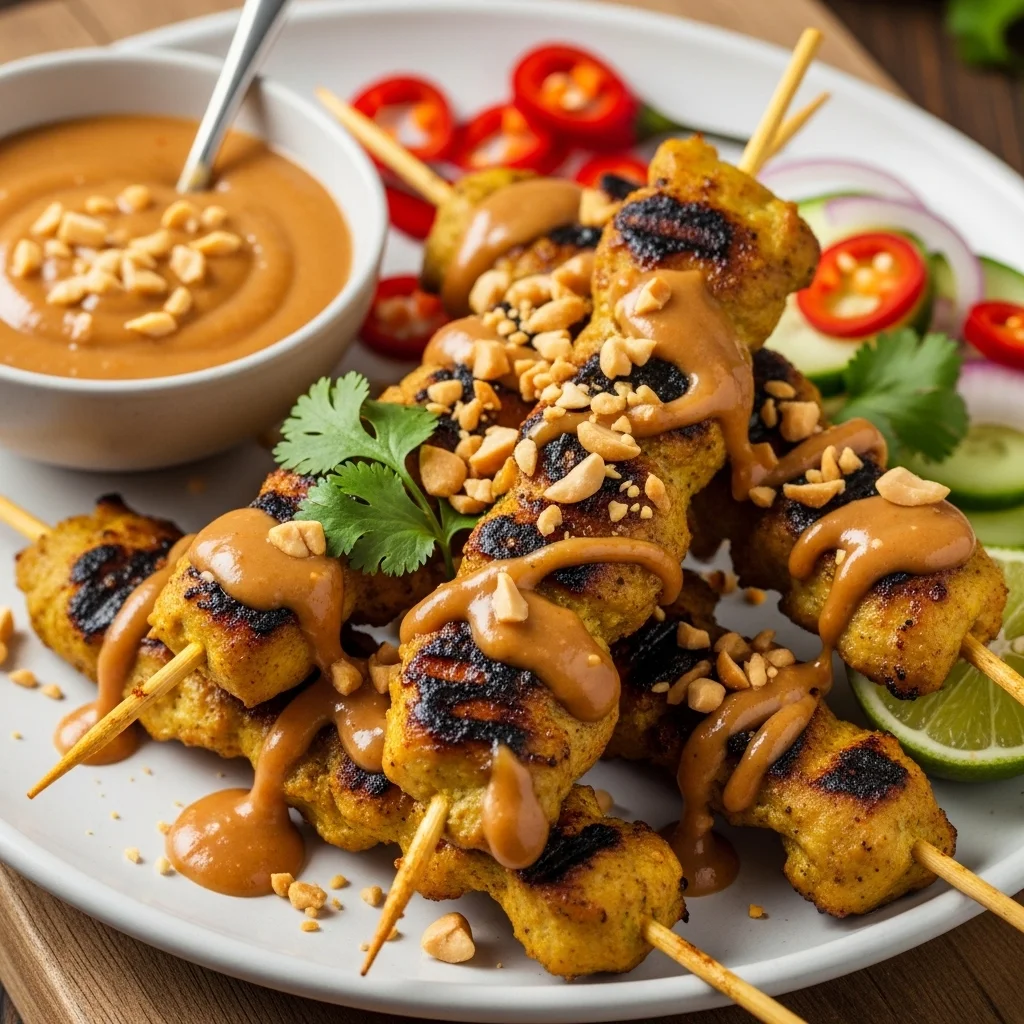
Chicken Satay with Peanut Sauce (Sate Ayam)
Prep: Twenty min plus one hour marinate | Cook: Fifteen min | Serves: Four | Difficulty: Easy
Indonesian chicken satay is one of the most iconic street foods in all of Southeast Asia — tender, marinated chicken skewers grilled over charcoal until perfectly caramelized, then served with a rich, creamy, spiced peanut sauce that is completely addictive. The combination of lemongrass-infused chicken and that extraordinary peanut sauce is one of the greatest flavor partnerships in the culinary world. This is the recipe that makes everyone ask for the recipe.
Ingredients:
For the chicken satay:
- Six hundred grams boneless skinless chicken thighs, cut into small cubes
- Three tbsp kecap manis
- Two tbsp vegetable oil
- Three garlic cloves, minced
- One lemongrass stalk, white part only, finely minced
- One tsp ground turmeric
- One tsp ground coriander
- Salt to taste
- Bamboo skewers, soaked in water for thirty minutes
For the peanut sauce:
- One cup smooth natural peanut butter
- Three tbsp kecap manis
- Two tbsp soy sauce
- One tbsp tamarind paste or lime juice
- Two garlic cloves, minced
- One tsp chili flakes or sambal oelek
- One cup warm water
- One tsp coconut sugar or brown sugar
To serve:
- Steamed white rice or rice cakes (lontong)
- Sliced red onion and cucumber
- Crispy fried shallots
- Extra sambal on the side
Instructions:
Make the marinade by combining kecap manis, vegetable oil, garlic, minced lemongrass, turmeric, coriander, and salt. Add the chicken cubes and toss to coat every piece thoroughly. Cover and marinate in the refrigerator for at least one hour — overnight gives even more deeply flavored satay.
Make the peanut sauce: combine peanut butter, kecap manis, soy sauce, tamarind, garlic, chili flakes, and coconut sugar in a saucepan over medium-low heat. Add warm water gradually, stirring constantly, until the sauce is smooth and pourable. It should be thick but not gluey — add more water if needed. Taste and adjust — it should be rich, slightly sweet, tangy, and gently spiced. Keep warm.
Thread the marinated chicken pieces onto the soaked bamboo skewers — about four to five pieces per skewer, pushing them together fairly tightly.
Grill the skewers over high heat on a grill pan, outdoor grill, or under the broiler for three to four minutes per side, basting with any remaining marinade as they cook. The chicken should be beautifully charred at the edges and caramelized from the kecap manis.
Arrange the satay skewers on a plate alongside sliced red onion, cucumber, and a generous bowl of warm peanut sauce for dipping. Serve with steamed rice or lontong and extra sambal.
Pro Tip: Soaking the bamboo skewers in water for at least thirty minutes before grilling prevents them from catching fire and burning under the heat before the chicken is cooked.
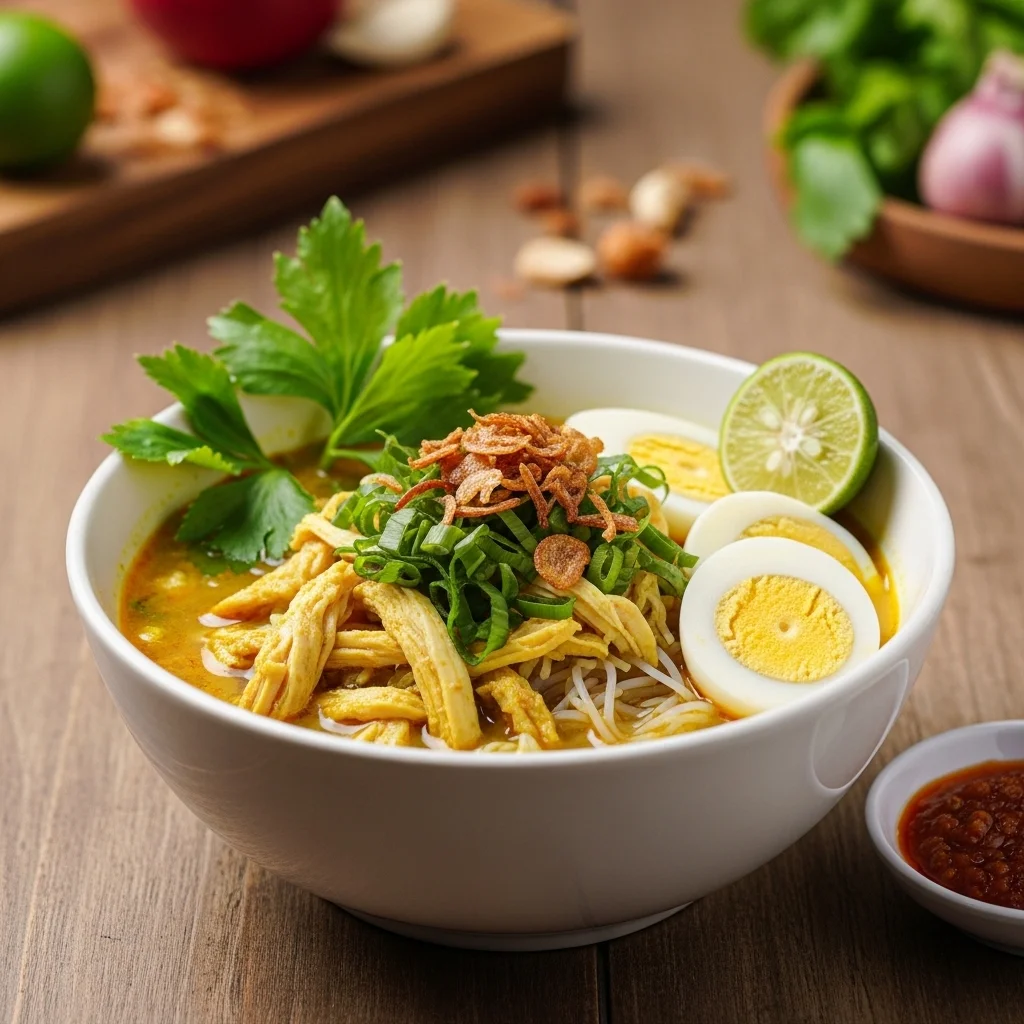
Soto Ayam (Indonesian Chicken Soup)
Prep: Twenty min | Cook: Forty five min | Serves: Five | Difficulty: Easy
Soto ayam is Indonesia’s most beloved soul-warming soup — a beautifully golden, aromatic chicken broth fragrant with turmeric, lemongrass, ginger, and kaffir lime leaves, filled with tender shredded chicken and served with an extraordinary array of garnishes that make every bowl completely unique and endlessly satisfying. It is bright, clean, deeply nourishing, and one of the most comforting bowls of soup in all of Indonesian cooking.
Ingredients:
For the broth:
- One kg bone-in chicken pieces
- Two lemongrass stalks, bruised
- Four kaffir lime leaves
- Two bay leaves
- One thumb-sized piece galangal, sliced
- Eight cups water
- Salt to taste
For the spice paste:
- Six shallots, roughly chopped
- Four garlic cloves
- Two thumb-sized pieces fresh turmeric or one tsp ground turmeric
- One thumb-sized piece fresh ginger
- Three candlenuts or macadamia nuts
- One tsp ground coriander
- Half tsp ground white pepper
- Two tbsp vegetable oil
To serve:
- Cooked glass noodles or rice vermicelli
- Hard boiled eggs, halved
- Bean sprouts, briefly blanched
- Crispy fried shallots
- Fresh tomato, diced
- Celery leaves, chopped
- Lime wedges
- Sambal and kecap manis on the side
Instructions:
Make the broth: place the chicken pieces in a large pot with the lemongrass, kaffir lime leaves, bay leaves, galangal, and water. Bring to a boil, skim off any foam that rises, then reduce to a gentle simmer. Cook for thirty minutes until the chicken is fully cooked and tender. Remove the chicken, shred the meat from the bones, and set aside. Keep the broth warm.
Make the spice paste: blend all spice paste ingredients into a smooth paste. Heat vegetable oil in a saucepan over medium heat and fry the paste for five to six minutes, stirring constantly, until it is deeply fragrant and the oil separates slightly.
Pour the warm chicken broth through a strainer into the saucepan with the fried spice paste. Stir well to combine. Bring back to a gentle simmer and taste — adjust salt and season generously. The broth should be golden, aromatic, and deeply flavorful.
To serve: place a small portion of glass noodles in a bowl. Ladle the hot golden broth over the noodles generously. Add shredded chicken and a halved hard-boiled egg. Top with bean sprouts, fresh tomato, celery leaves, and a mountain of crispy fried shallots. Serve with lime wedges, sambal, and kecap manis on the side so everyone can season their own bowl.
Pro Tip: The extraordinary garnishes are not optional in soto ayam they are the soul of the dish. The combination of crispy shallots, fresh tomato, celery leaves, and the squeeze of lime transforms the broth from a plain chicken soup into something truly extraordinary.
Gado-Gado (Indonesian Vegetable Salad with Peanut Sauce)
Prep: Twenty min | Cook: Fifteen min | Serves: Four | Difficulty: Easy
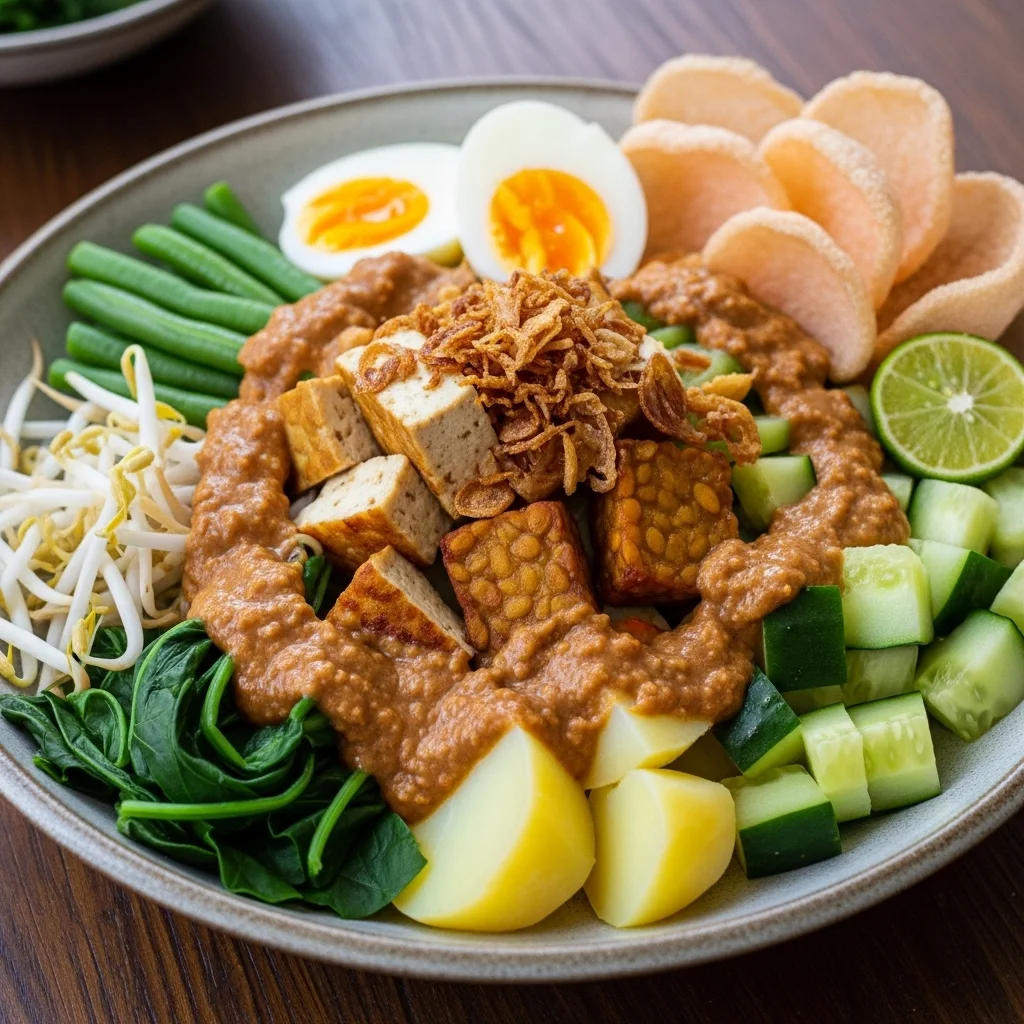
Gado-gado is one of Indonesia’s most iconic and universally loved dishes — a stunning composed salad of blanched and fresh vegetables, hard-boiled eggs, tofu, and tempeh all brought together by an extraordinarily spiced peanut sauce that is rich, tangy, slightly sweet, and completely addictive. It is hearty enough to be a complete dinner, beautiful enough to impress any guest, and one of the greatest vegetarian meals in the world.
Ingredients:
For the salad:
- Two cups bean sprouts, briefly blanched
- Two cups water spinach or regular spinach, blanched
- Two medium potatoes, boiled and sliced
- One cup green beans, blanched
- Two medium carrots, blanched and sliced
- Four hard-boiled eggs, halved
- Two hundred grams firm tofu, pan-fried or air-fried until golden
- One hundred grams tempeh, pan-fried until crispy
- Half cucumber, sliced
- Prawn crackers to serve
For the peanut sauce:
- One cup natural smooth peanut butter
- Three garlic cloves, minced
- Two red chilies, finely minced
- Three tbsp kecap manis
- Two tbsp tamarind paste or lime juice
- One tsp coconut sugar
- Half cup warm water
- Salt to taste
Instructions:
Make the peanut sauce first as it improves as it sits: combine peanut butter, garlic, chilies, kecap manis, tamarind, and coconut sugar in a bowl. Add warm water gradually, stirring well until smooth and pourable. The sauce should be thick enough to coat a spoon but loose enough to pour. Taste and balance — adjust lime for tartness, kecap manis for sweetness, and chili for heat. Season with salt.
Prepare all the vegetables: blanch the bean sprouts in boiling water for thirty seconds. Blanch the spinach for one minute. Blanch the green beans for three minutes and the carrots for two minutes. Boil the potatoes until tender then slice. All blanched vegetables should be briefly plunged into cold water after cooking to preserve their color and stop the cooking.
Pan-fry the tofu in a little oil until golden and slightly crispy on all sides. Pan-fry the tempeh slices until golden brown and crispy — tempeh gets an incredible nutty flavor when fried properly.
Arrange everything beautifully on a large serving platter or in individual bowls — vegetables, tofu, tempeh, eggs, and cucumber arranged in separate sections. Pour the peanut sauce generously over everything or serve it alongside for dipping. Top with prawn crackers and serve immediately.
Pro Tip: Gado-gado is all about variety and contrast soft boiled potato against crispy tempeh, cold cucumber against warm blanched spinach, creamy peanut sauce over everything. The more variety in your components, the more extraordinary the final dish becomes.
Mie Goreng (Indonesian Fried Noodles)
Prep: Ten min | Cook: Fifteen min | Serves: Four | Difficulty: Easy
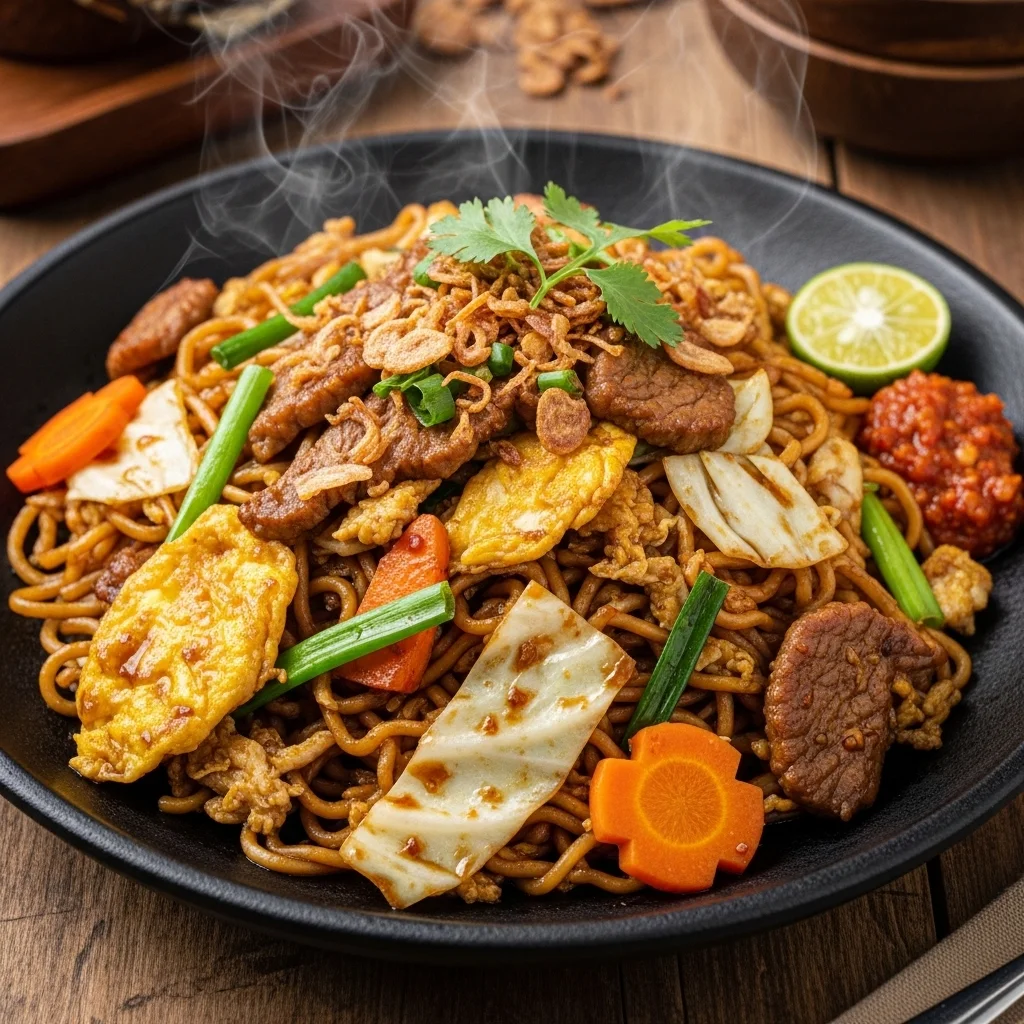
Mie goreng is Indonesia’s beloved fried noodle dish — and it is one of the most satisfying, bold, and deeply flavorful noodle recipes in all of Southeast Asian cooking. Egg noodles are stir-fried over screaming hot heat with chicken, shrimp, vegetables, and a sticky, savory-sweet sauce built on kecap manis and shrimp paste until every noodle is coated in extraordinary flavor. It is an Indonesian street food classic that is equally brilliant as a home-cooked dinner.
Ingredients:
- Four hundred grams fresh egg noodles or dried egg noodles cooked and drained
- Two hundred grams boneless chicken thighs, thinly sliced
- One hundred grams shrimp, peeled and deveined
- Two eggs, beaten
- Two cups cabbage, roughly shredded
- Three green onions, cut into pieces
- One cup bean sprouts
- Four garlic cloves, minced
- Three shallots, thinly sliced
- Two red chilies, sliced
- One tsp shrimp paste
- Three tbsp kecap manis
- Two tbsp soy sauce
- One tbsp oyster sauce
- Two tbsp vegetable oil
- Salt and white pepper to taste
- Crispy fried shallots, lime, and sambal to serve
Instructions:
If using dried noodles, cook them until just al dente, drain, rinse with cold water, and toss with a little oil to prevent sticking. Fresh noodles can go straight into the wok.
Heat the oil in a large wok over the highest heat available. Add the sliced shallots and cook for one minute until lightly golden. Add the garlic, chilies, and shrimp paste. Stir-fry vigorously for one minute until deeply fragrant.
Add the chicken slices and stir-fry for two to three minutes until cooked through. Add the shrimp and cook for one more minute until just pink.
Push everything to the side. Pour the beaten eggs into the empty side and scramble quickly into small pieces. Mix through with the other ingredients.
Add the noodles to the wok. Toss everything together over high heat. Pour over the kecap manis, soy sauce, and oyster sauce. Toss vigorously for two to three minutes until every noodle is coated in the dark, glossy sauce. Add the cabbage and bean sprouts in the last minute — they should stay slightly crisp. Season with salt and white pepper.
Serve topped with crispy fried shallots, a wedge of lime, and sambal on the side.
Pro Tip: The highest possible heat throughout the entire cooking process is the most important factor. The intense heat dries the noodles slightly, caramelizes the sauce, and creates that irresistible slightly smoky wok flavor that makes restaurant mie goreng so extraordinary.
Opor Ayam (Chicken in Coconut Milk)
Prep: Fifteen min | Cook: Forty five min | Serves: Four | Difficulty: Easy
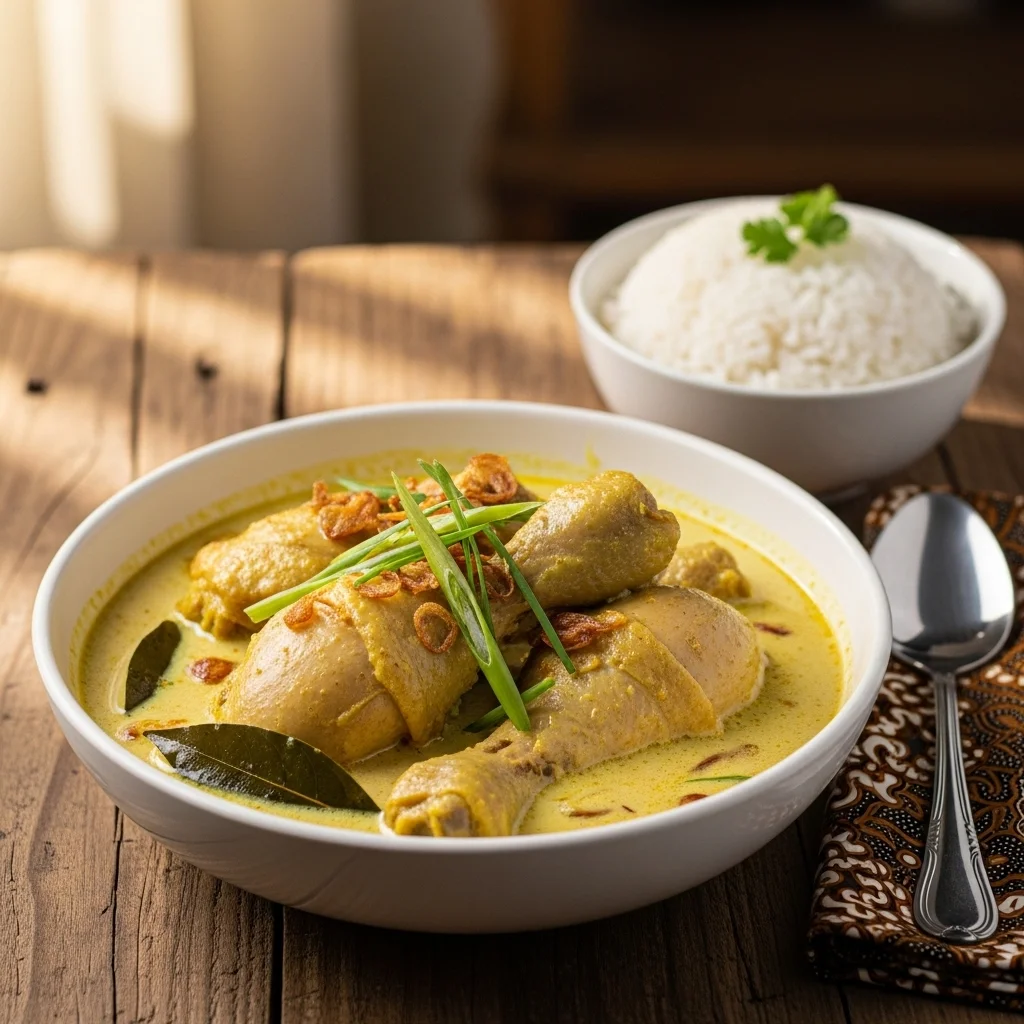
Opor ayam is one of the most comforting and beautiful dishes in all of Indonesian cooking — tender chicken braised gently in a fragrant, creamy coconut milk sauce infused with lemongrass, galangal, kaffir lime leaves, and a warmly spiced paste of candlenuts, coriander, and white pepper. It is mild rather than spicy, elegant rather than rustic, and the sauce is so extraordinarily fragrant and creamy it is almost impossible to stop eating. This is the dish served at Indonesian celebrations and family gatherings.
Ingredients:
- One kg bone-in chicken pieces
- Four hundred ml coconut milk
- Two hundred ml coconut cream
- Two lemongrass stalks, bruised
- Four kaffir lime leaves
- Two bay leaves
- One thumb-sized piece galangal, sliced
- One cinnamon stick
- Salt and coconut sugar to taste
- Two tbsp vegetable oil
For the spice paste:
- Six shallots, roughly chopped
- Four garlic cloves
- Four candlenuts or macadamia nuts
- One tbsp ground coriander
- One tsp ground cumin
- One tsp ground white pepper
- Half tsp ground turmeric
- One thumb-sized piece fresh ginger
Instructions:
Blend all spice paste ingredients together with a splash of water until completely smooth. The candlenuts are essential — they give the sauce a rich, slightly fatty, subtly nutty creaminess that is characteristic of opor ayam.
Heat vegetable oil in a large heavy pot over medium heat. Add the spice paste and cook, stirring constantly, for six to eight minutes until deeply fragrant and the oil begins to separate around the edges. Add the lemongrass, kaffir lime leaves, bay leaves, galangal, and cinnamon stick. Stir for one more minute.
Add the chicken pieces and turn to coat in the fragrant spice paste. Cook for five minutes, turning occasionally, until the chicken is sealed on the outside.
Pour in the coconut milk and stir to combine. Bring to a gentle boil then reduce to a low simmer. Cover and cook for thirty minutes, turning the chicken occasionally.
Stir in the coconut cream and add a small pinch of coconut sugar. Simmer uncovered for a further ten minutes until the sauce has reduced slightly and is beautifully creamy and golden. Taste and adjust salt. The sauce should be aromatic, mildly spiced, and deeply rich. Serve over steamed white rice with sambal on the side.
Pro Tip: Never boil coconut cream vigorously — always add it at the end and simmer gently. Hard boiling splits the coconut cream and makes the sauce oily and grainy rather than silky and unified.
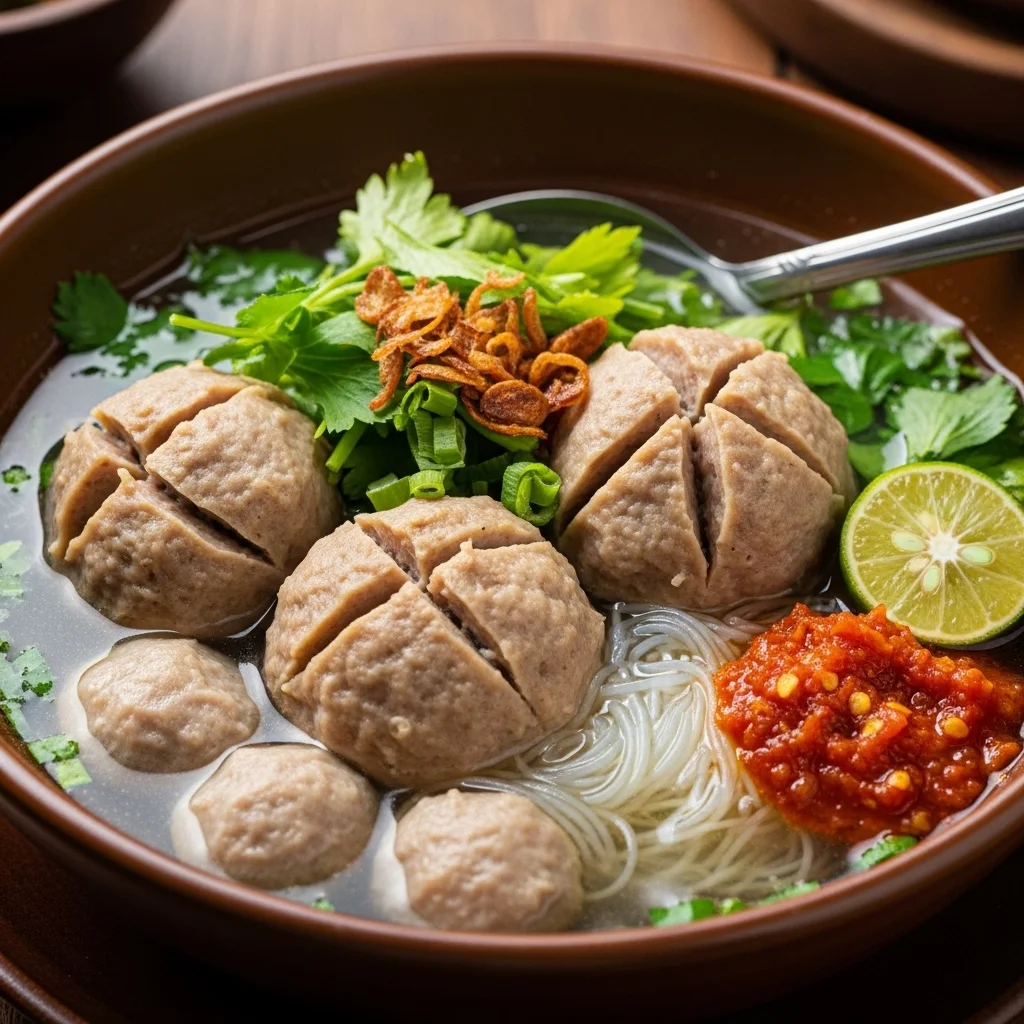
Bakso (Indonesian Meatball Soup)
Prep: Thirty min | Cook: Thirty min | Serves: Five | Difficulty: Medium
Bakso is the most popular street food in all of Indonesia — springy, perfectly seasoned beef meatballs served in a rich, clear broth with noodles, tofu, and an extraordinary array of toppings. The meatballs have a distinctive bouncy, chewy texture that comes from processing the beef with tapioca starch, which is unlike any other meatball in the world. A steaming bowl of bakso from a street cart is one of the great Indonesian eating experiences.
Ingredients:
For the meatballs:
- Five hundred grams lean ground beef
- Two tbsp tapioca starch or cornstarch
- Three garlic cloves, minced
- One tsp ground white pepper
- One tsp salt
- One egg white
- Ice cold water as needed
For the broth:
- Six cups beef broth
- Four garlic cloves, minced
- Three shallots, sliced
- One tsp white pepper
- Salt and fish sauce to taste
- Two tbsp vegetable oil
To serve:
- Egg noodles or rice vermicelli, cooked
- Fried tofu puffs, halved
- Bean sprouts
- Boiled eggs, halved
- Celery leaves and green onions
- Crispy fried shallots
- Sambal, kecap manis, and white vinegar
Instructions:
Make the meatballs: place the ground beef, tapioca starch, garlic, white pepper, salt, and egg white in a food processor. Process for two to three minutes, adding ice cold water a tablespoon at a time, until the mixture is completely smooth, sticky, and slightly elastic. The cold temperature and processing time are what create the signature springy texture.
Bring a large pot of water to a gentle simmer — not a rolling boil. Wet your hands and scoop out portions of the meat paste, rolling them between your palms into smooth, round balls about three to four centimeters in diameter. Drop each ball directly into the simmering water. Cook for ten to twelve minutes until the meatballs float and are cooked through. Remove with a slotted spoon and set aside.
Make the broth: heat oil in a pot and sauté the shallots and garlic for three minutes until softened and fragrant. Pour in the beef broth, add white pepper, and bring to a gentle simmer. Season generously with salt and fish sauce. The broth should be clear, clean, and deeply savory.
To serve: place cooked noodles in each bowl. Add three to four meatballs, fried tofu puffs, bean sprouts, and a halved boiled egg. Ladle hot broth over everything generously. Top with celery leaves, green onions, and crispy fried shallots. Serve with sambal, kecap manis, and a splash of white vinegar on the side.
Pro Tip: The food processor processing time and the ice cold water are what create authentic springy bakso meatballs. Insufficient processing gives you dense, ordinary meatballs rather than the distinctively bouncy texture that makes bakso so special and unique.
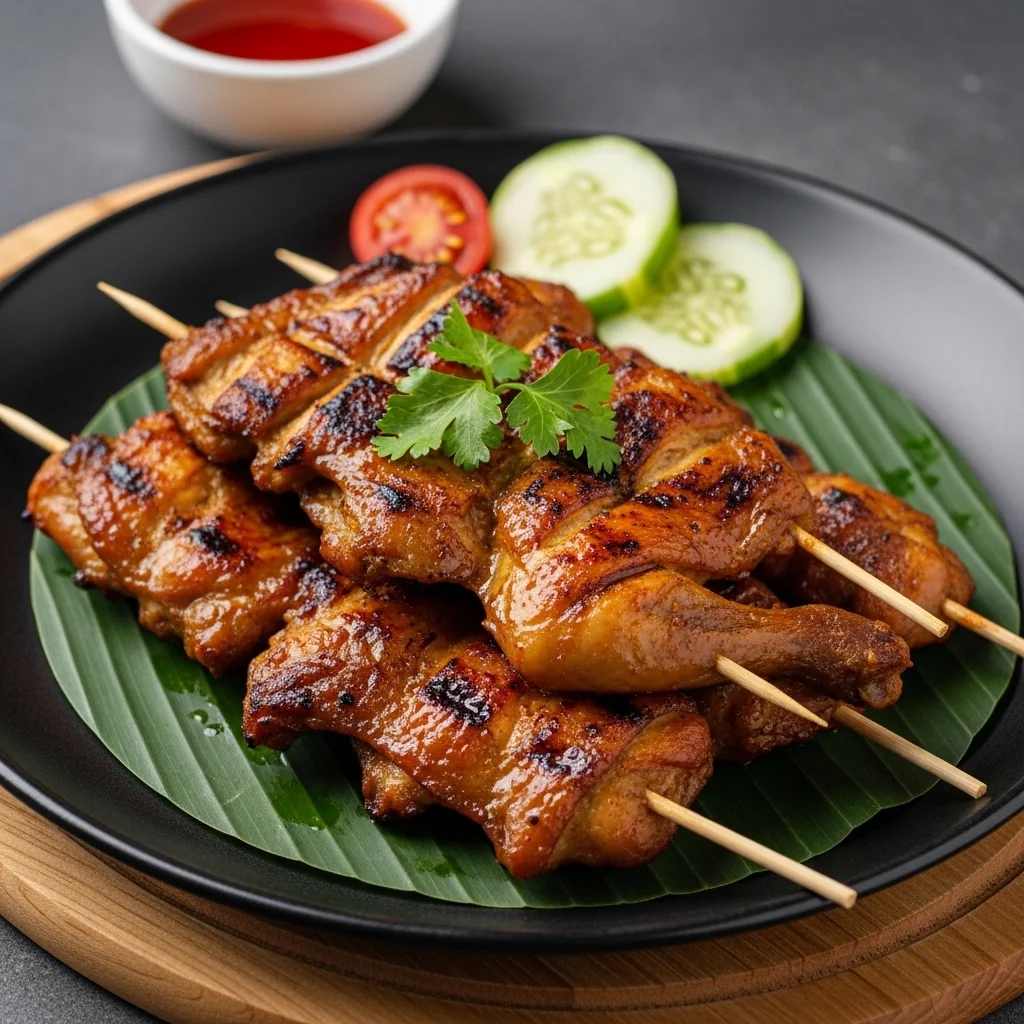
Ayam Bakar (Indonesian Grilled Chicken)
Prep: Fifteen min plus two hours marinate | Cook: Thirty min | Serves: Four | Difficulty: Easy
Ayam bakar is Indonesia’s most beloved grilled chicken — marinated in a deeply aromatic blend of spices, galangal, lemongrass, and kecap manis, then grilled over hot coals until magnificently charred on the outside while remaining incredibly juicy within. It is sold on virtually every street corner across the archipelago, and the combination of sweet kecap manis caramelization with fragrant Indonesian spices creates one of the most extraordinary grilled chicken experiences in the world.
Ingredients:
- One whole chicken, cut into eight pieces, or one kg bone-in chicken pieces
- Three tbsp kecap manis
- Two tbsp vegetable oil
- Salt to taste
For the spice paste:
- Six shallots, roughly chopped
- Four garlic cloves
- Three red chilies
- One thumb-sized piece galangal
- One lemongrass stalk, white part only
- One tsp ground coriander
- One tsp ground turmeric
- Half tsp ground cumin
- Two candlenuts or macadamia nuts
Instructions:
Blend all spice paste ingredients together until smooth. Heat one tablespoon of oil in a pan over medium heat and fry the paste for five minutes until fragrant and slightly darker. Remove from heat and allow to cool slightly.
Score the chicken pieces deeply with a knife — make three to four deep cuts into each piece going almost to the bone. This allows the marinade to penetrate deeply into the meat rather than just coating the surface.
Combine the fried spice paste, kecap manis, remaining oil, and salt. Rub this marinade generously into every piece of chicken, pushing it deep into the cuts. Cover and marinate in the refrigerator for at least two hours — overnight is ideal for the most deeply flavored result.
Grill the chicken over medium-high heat on an outdoor grill or grill pan. Cook for six to eight minutes per side, basting with any remaining marinade each time you flip. The kecap manis caramelizes beautifully on the surface, creating that magnificent dark, sticky, slightly charred exterior.
The chicken is done when the juices run completely clear when pierced at the thickest point. Rest for five minutes then serve with steamed rice, sambal, and sliced cucumber and tomato.
Pro Tip: Scoring the chicken deeply before marinating is the technique that transforms ayam bakar from just grilled chicken into something extraordinary. The spice paste penetrates right to the bone, flavoring every single bite of the meat from the inside out.
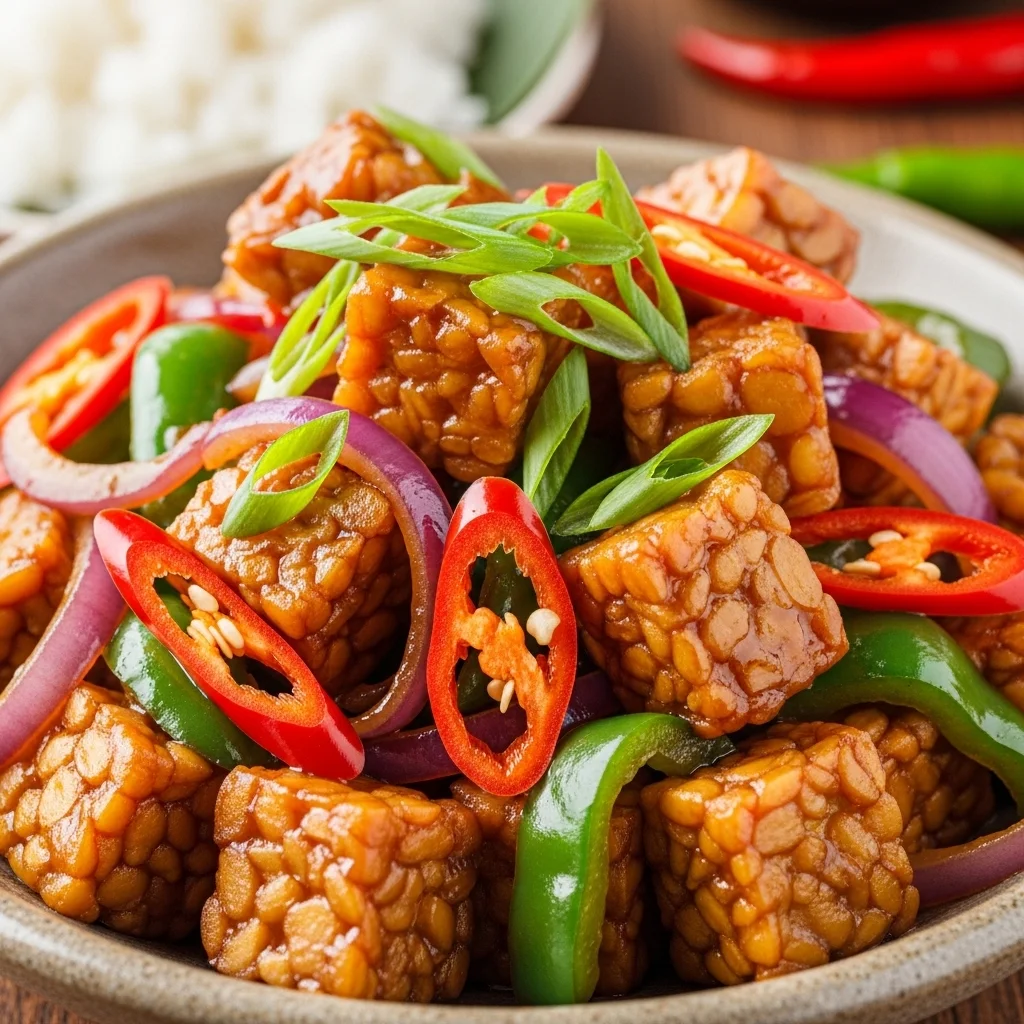
Tempeh Orek (Sweet and Spicy Fried Tempeh)
Prep: Ten min | Cook: Fifteen min | Serves: Four | Difficulty: Very Easy
Tempeh orek is one of Indonesia’s most universally loved everyday dishes — thin strips of tempeh fried until golden and crispy then tossed in a sweet, spicy, garlicky kecap manis glaze until every piece is caramelized and deeply flavored. It is served as a side dish alongside rice and other dishes in a traditional Indonesian rijsttafel spread, but it is so addictive and satisfying it can easily carry a meal entirely on its own. It is also one of the best introductions to tempeh for those who have never cooked with it before.
Ingredients:
- Three hundred grams tempeh, cut into thin strips or small cubes
- Four garlic cloves, thinly sliced
- Three shallots, thinly sliced
- Two red chilies, thinly sliced
- Three tbsp kecap manis
- One tbsp regular soy sauce
- One tbsp coconut sugar or brown sugar
- One tbsp tamarind paste or lime juice
- Two tbsp water
- Three tbsp vegetable oil for frying
- Salt to taste
- Crispy fried shallots to garnish
Instructions:
Heat oil in a large skillet over medium-high heat. Add the tempeh strips in a single layer — do not overcrowd. Fry for three to four minutes per side until deeply golden and crispy. Remove and set aside. The tempeh should be crunchy on the outside and have developed a beautiful nutty, slightly smoky flavor from frying.
In the same pan, reduce the oil to about one tablespoon. Add the sliced shallots and cook for two minutes until golden. Add the garlic and chilies and cook for one more minute until fragrant.
Add the kecap manis, soy sauce, coconut sugar, tamarind, and water. Stir well and let the sauce bubble for one minute until it thickens and becomes sticky and glossy.
Return the fried tempeh to the pan and toss to coat every piece thoroughly in the sweet, spicy glaze. Cook over medium heat for two to three minutes, tossing regularly, until the tempeh is completely lacquered in the sauce and the glaze has caramelized slightly onto each piece. Season with a pinch of salt if needed.
Serve over steamed white rice garnished with crispy fried shallots. It also works beautifully alongside rendang, opor ayam, or any of the other dishes in this collection as part of a larger Indonesian spread.
Pro Tip: Cutting the tempeh into thin strips rather than thick chunks gives you the maximum surface area for crisping during frying and for the glaze to cling to. Thin, crispy tempeh absorbs the sweet soy glaze far better than thick pieces.
See Also: Tasty Chorizo Dinner Recipes