8 Traditional Ethiopian Dinner Recipes
Ancient Flavors. Communal Tables. Food That Feeds the Soul.
Ethiopian cuisine is one of the oldest, most distinctive, and most deeply communal food cultures on the planet. Built on thousands of years of tradition, shaped by ancient spice trade routes, religious fasting practices, and a profound respect for the land and its ingredients, Ethiopian cooking delivers flavors that are bold, complex, and unlike anything else in the world.
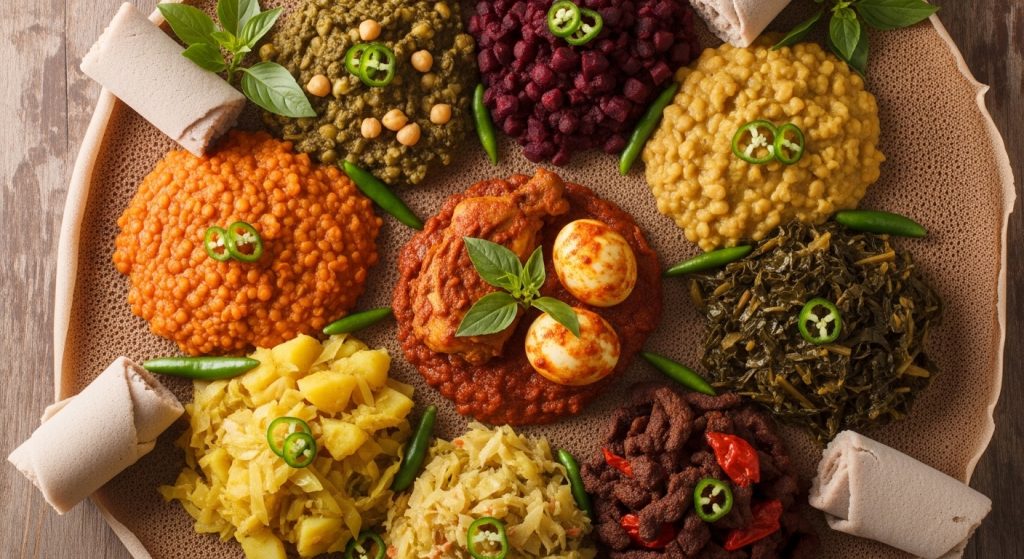
From the fire of berbere spice blend and the richness of niter kibbeh spiced butter to the depth of slow-cooked stews and the bright freshness of raw beef kitfo, these 8 traditional recipes bring the extraordinary soul of Ethiopian cooking into your kitchen.
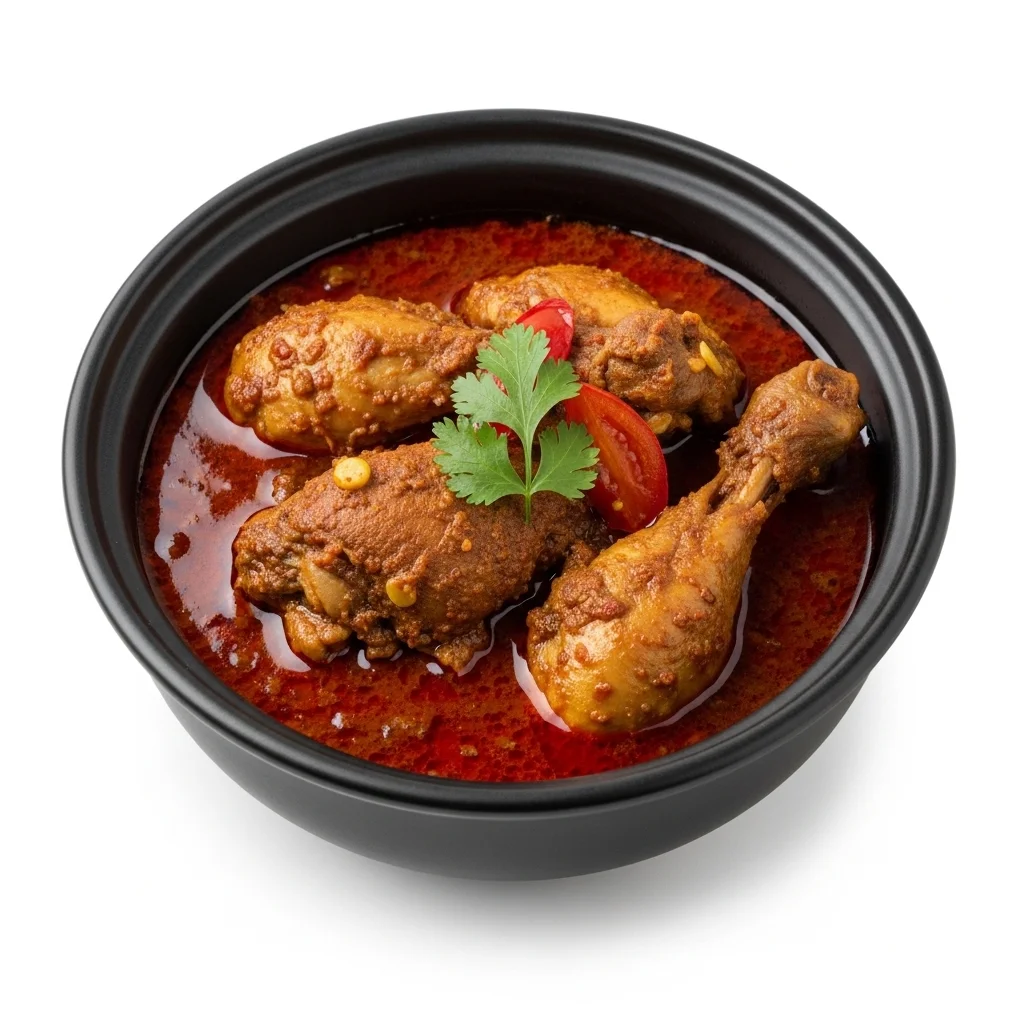
Doro Wat (Spiced Chicken Stew)
Prep: 25 min | Cook: 1.5 hrs | Serves: 4–6 | Difficulty: Medium
The crown jewel of Ethiopian cuisine and the dish served at every celebration, ceremony, and gathering of significance — a deeply rich, fiery, slow-cooked chicken stew made with berbere spice blend, caramelized onions, and niter kibbeh spiced butter, with whole hard-boiled eggs that absorb every drop of the magnificent sauce. Doro wat is not just a dinner — it is an event.
Ingredients
- 1kg chicken pieces, skin removed
- 4 large onions, very finely diced
- 3 tbsp berbere spice blend
- 3 tbsp niter kibbeh (Ethiopian spiced butter) or regular butter
- 1 tbsp tomato paste
- 4 hard-boiled eggs, pierced all over with a fork
- 5 garlic cloves, minced
- 1 tbsp fresh ginger, minced
- ½ cup tej (Ethiopian honey wine) or dry white wine
- Salt to taste
- Injera flatbread to serve
Instructions
Cook diced onions in a completely dry pot over medium heat — no oil, no butter — stirring constantly for 25–30 minutes until deeply caramelized, jammy, and almost paste-like. This lengthy dry caramelization is the authentic Ethiopian foundation technique and the single most important step in the entire recipe.
Add niter kibbeh and stir until melted and fragrant. Add berbere spice blend and cook for 5 minutes, stirring constantly, until the paste is deeply darkened and aromatic.
Add garlic, ginger, and tomato paste and cook 3 more minutes. Pour in tej or white wine and stir until reduced by half.
Add chicken pieces and enough water to just cover. Simmer covered for 40 minutes until chicken is completely cooked through and beginning to pull from the bone.
Add pierced hard-boiled eggs and simmer uncovered for 15 more minutes so the eggs absorb the beautiful sauce. Adjust seasoning and serve over injera with the eggs prominently displayed.
Pro Tip: The dry onion caramelization cooking onions with zero fat for 25–30 minutes is the non-negotiable foundation of authentic wat. It creates a sweet, deeply concentrated base that no amount of shortcutting can replicate. This step alone separates genuine doro wat from every imitation.
Misir Wat (Ethiopian Red Lentil Stew)
Prep: 15 min | Cook: 40 min | Serves: 4–6 | Difficulty: Easy
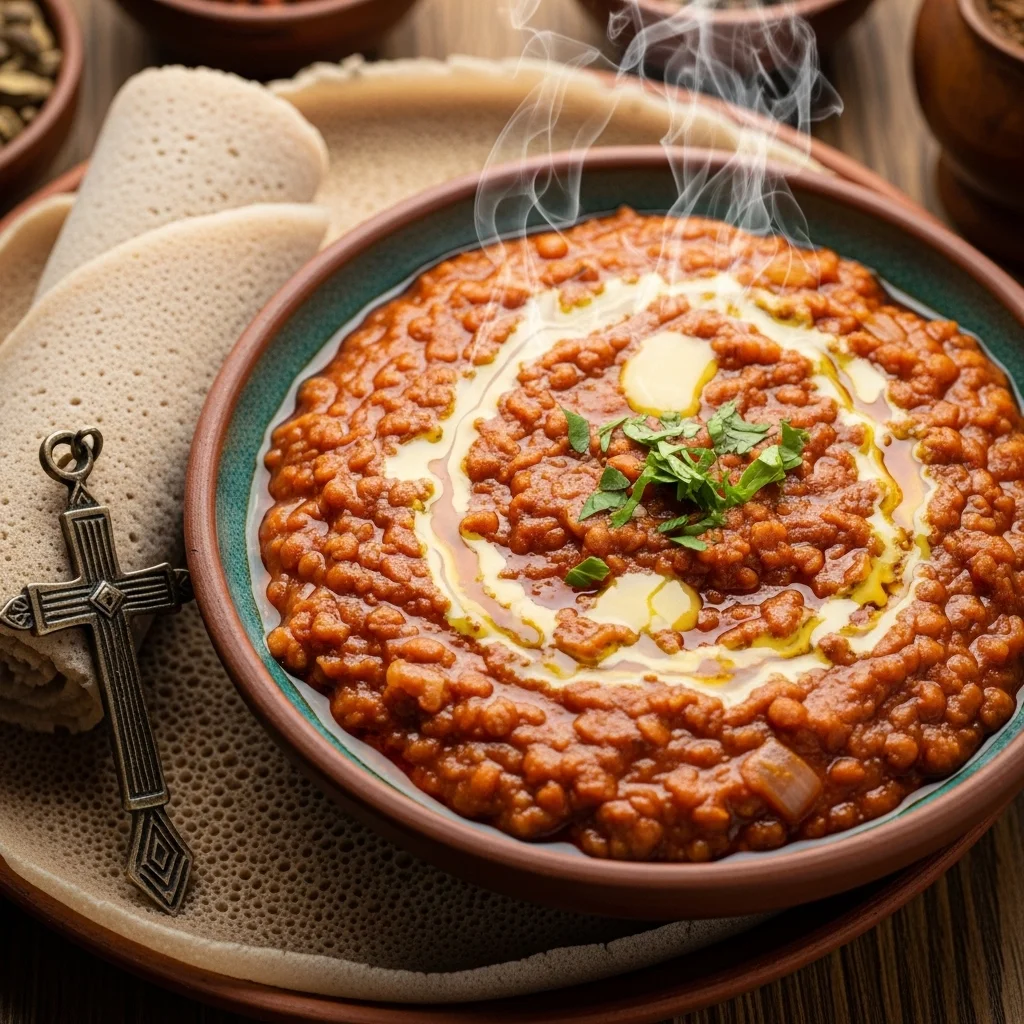
One of the most popular and beloved Ethiopian dishes — a thick, warmly spiced red lentil stew cooked with berbere and niter kibbeh into something deeply savory, slightly fiery, and completely satisfying. This is the backbone of the Ethiopian fasting table and one of the most nourishing, affordable, and genuinely delicious dishes in the entire cuisine.
Ingredients
- 2 cups red lentils, rinsed
- 3 large onions, finely diced
- 4 garlic cloves, minced
- 1 tbsp fresh ginger, minced
- 2 tbsp berbere spice blend
- 2 tbsp niter kibbeh or butter
- 1 tbsp tomato paste
- 3 cups vegetable stock or water
- Salt to taste
- Injera and fresh salad to serve
Instructions
Begin by dry caramelizing the onions in a pot over medium heat with no oil for 15–20 minutes, stirring regularly, until deeply golden and fragrant. This step is essential to the authentic flavor of all Ethiopian wats.
Add niter kibbeh and stir until melted. Add berbere, garlic, ginger, and tomato paste. Cook for 3–4 minutes, stirring constantly, until the spice paste is deeply fragrant and coats the onions beautifully.
Add rinsed lentils and stock. Stir well to combine and bring to a boil. Reduce to a steady simmer and cook for 25–30 minutes, stirring occasionally, until the lentils have completely broken down into a thick, creamy, richly spiced stew.
Season generously with salt. The finished misir wat should be thick enough to mound slightly on the injera without spreading too thin. Serve on injera with fresh salad and other dishes alongside.
Pro Tip: Misir wat should be noticeably thick if the stew seems too loose after the lentils break down, continue simmering uncovered for another 5–10 minutes. A properly thick misir wat holds its shape on the injera and tastes far more concentrated and satisfying than a thin, watery version.
Tibs (Ethiopian Sautéed Meat)
Prep: 15 min | Cook: 20 min | Serves: 4 | Difficulty: Easy
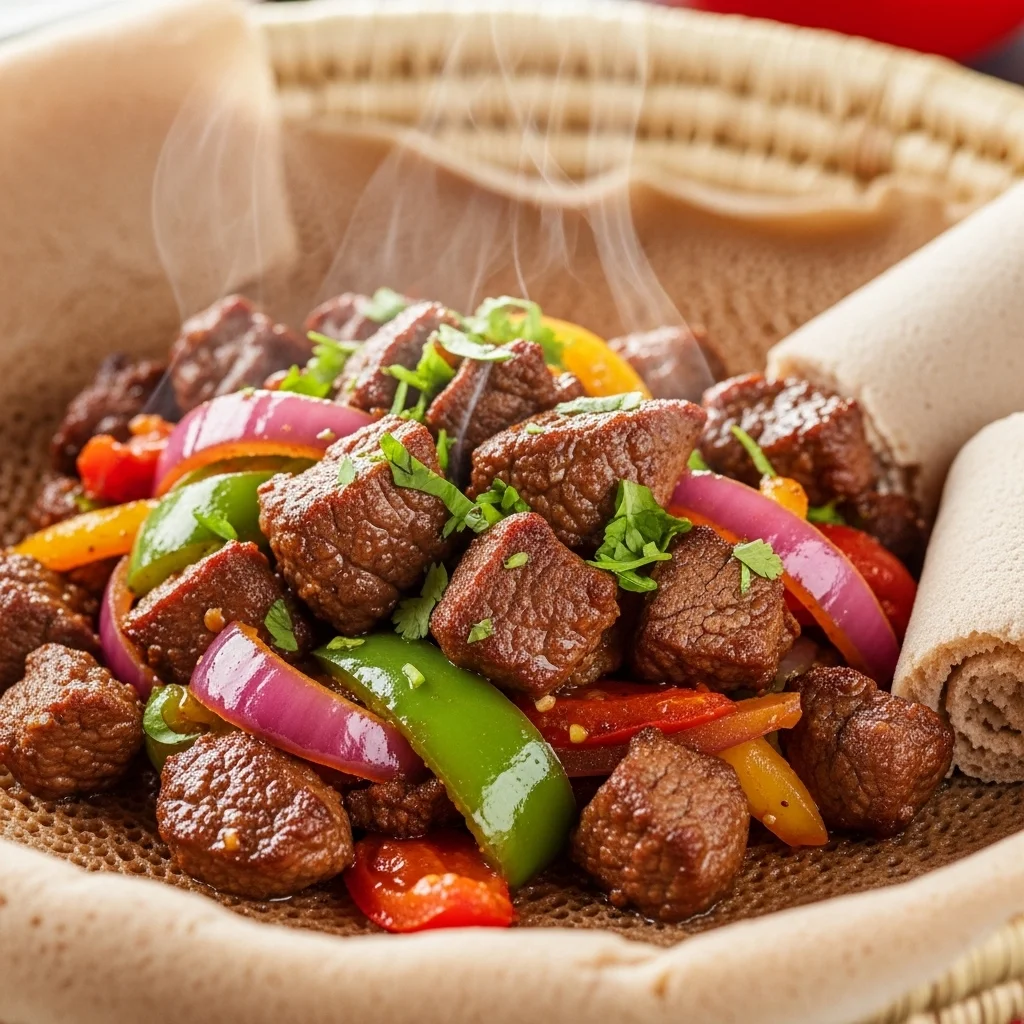
A sizzling, aromatic Ethiopian stir-fry of tender beef or lamb cubes cooked at high heat with onions, jalapeño, rosemary, and niter kibbeh until caramelized and deeply fragrant. Tibs is one of the most popular dishes in Ethiopian restaurants and homes and the version made with lamb is considered particularly special.
Ingredients
- 700g beef sirloin or lamb shoulder, cut into 3cm cubes
- 1 large onion, cut into wedges
- 3 jalapeño peppers, sliced lengthwise
- 4 garlic cloves, minced
- 2 tbsp niter kibbeh or butter
- 1 tbsp olive oil
- 1 sprig fresh rosemary
- 1 tsp mitmita (Ethiopian bird’s eye chili spice blend) or cayenne pepper
- 1 tsp cumin
- Salt and cracked black pepper
- Fresh tomato wedges to serve alongside
- Injera to serve
Instructions
Heat olive oil and niter kibbeh together in a large heavy skillet over high heat until the butter begins to sizzle and turn slightly golden. The combination of fat and high heat is what gives tibs its characteristic seared, caramelized crust.
Add meat cubes in a single layer without crowding — work in two batches if needed. Sear without moving for 2 minutes until deeply browned on the bottom, then toss and cook another 2 minutes. Remove and set aside.
In the same pan, cook onion wedges and jalapeño over high heat for 3–4 minutes until the edges begin to char. Add garlic, rosemary sprig, mitmita, and cumin. Cook 1 minute.
Return meat to the pan and toss everything together vigorously over high heat for 2–3 minutes until combined, sizzling, and deeply fragrant. Adjust seasoning generously with salt and pepper. Serve immediately on injera with fresh tomato wedges alongside.
Pro Tip: Tibs must be eaten immediately from the pan it is traditionally served in the same cast-iron skillet it was cooked in, sizzling at the table. The heat dissipates quickly and cold tibs loses all the sizzling energy that makes it so exciting.
Shiro Wat (Ethiopian Chickpea Powder Stew)
Prep: 10 min | Cook: 30 min | Serves: 4–6 | Difficulty: Easy
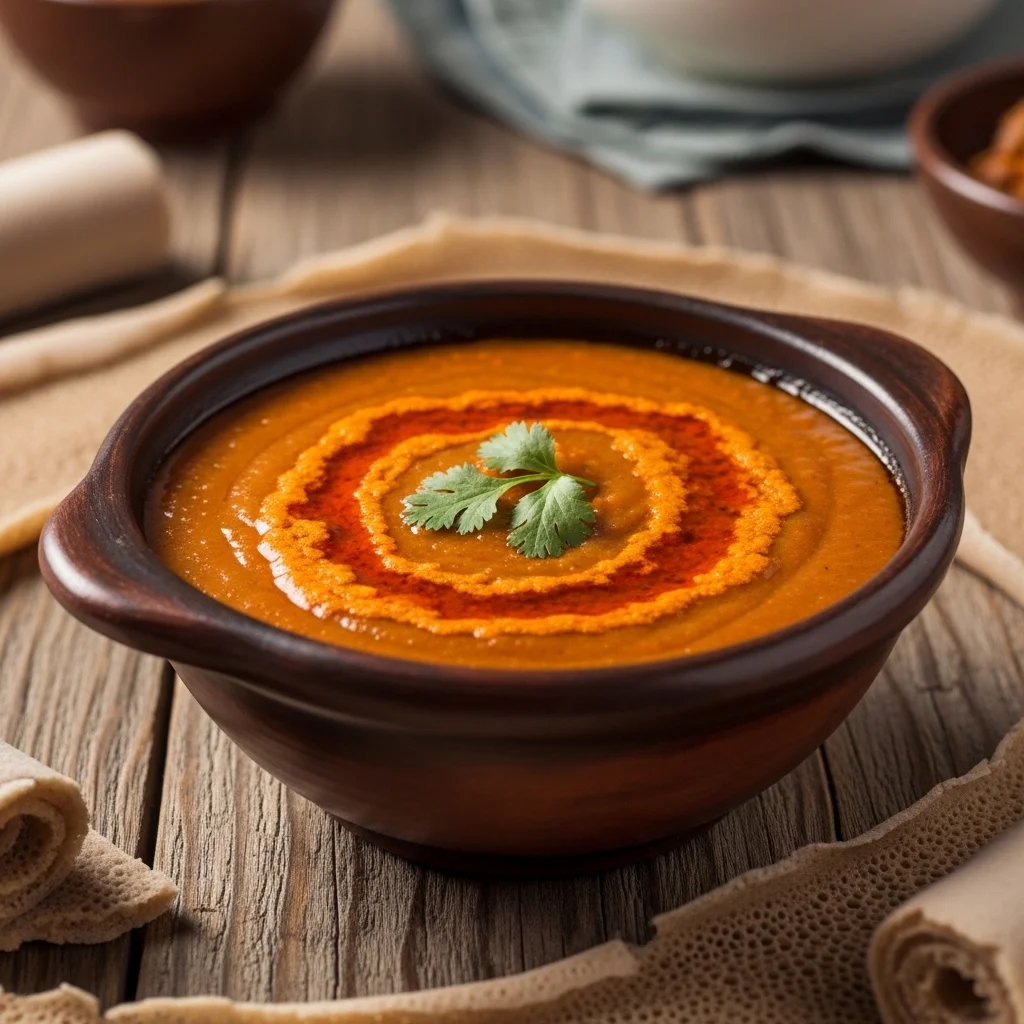
A deeply savory, silky stew made from ground roasted chickpea powder cooked with berbere and niter kibbeh — one of the most unique and beloved dishes in Ethiopian cooking. Shiro is comfort food in its purest form: smooth, warmly spiced, and deeply satisfying in a way that feels almost like a hug in bowl form.
Ingredients
- 1.5 cups shiro powder (spiced ground chickpea flour — available at Ethiopian or African grocery stores)
- 3 large onions, very finely diced
- 4 garlic cloves, minced
- 1 tbsp fresh ginger, minced
- 1 tbsp berbere spice blend
- 3 tbsp niter kibbeh
- 3 cups water or vegetable stock
- Salt to taste
- Injera and fresh salad to serve
Instructions
Dry caramelize onions in a pot over medium heat for 15–20 minutes with no oil until deeply golden and jammy.
Add niter kibbeh, garlic, ginger, and berbere. Cook for 3 minutes, stirring constantly, until deeply fragrant.
Add water or stock and bring to a gentle simmer. Whisk shiro powder into the liquid a little at a time, whisking constantly to prevent lumps from forming. The mixture will immediately begin to thicken.
Cook over low heat for 12–15 minutes, stirring constantly and frequently to prevent sticking, until the shiro has become a smooth, silky, thick stew with no raw flour taste. Season generously with salt. Add extra water if needed to reach a smooth, flowing consistency.
Serve on injera with fresh salad, sliced tomatoes, and other dishes.
Pro Tip: Stir shiro constantly during cooking it sticks and scorches on the base of the pot very quickly if left unattended even briefly. A good shiro wat demands your attention for the full cooking time and rewards it with an extraordinarily smooth, silky result.
Kitfo (Ethiopian Spiced Raw Beef)
Prep: 15 min | Cook: 5 min | Serves: 4 | Difficulty: Easy
Ethiopia’s most prized and celebrated dish — hand-minced lean beef dressed with warm niter kibbeh and mitmita spice blend, traditionally served raw or very lightly warmed. Kitfo is a delicacy of the highest order in Ethiopian culture, reserved for special occasions and honored guests, and it is one of the most extraordinary and distinctive dishes on the entire African continent.
Ingredients
- 500g beef tenderloin, very finely hand-minced (never machine-ground — the texture must be hand-chopped)
- 3 tbsp niter kibbeh, warmed
- 1 tsp mitmita (Ethiopian bird’s eye chili and cardamom spice blend)
- ½ tsp salt
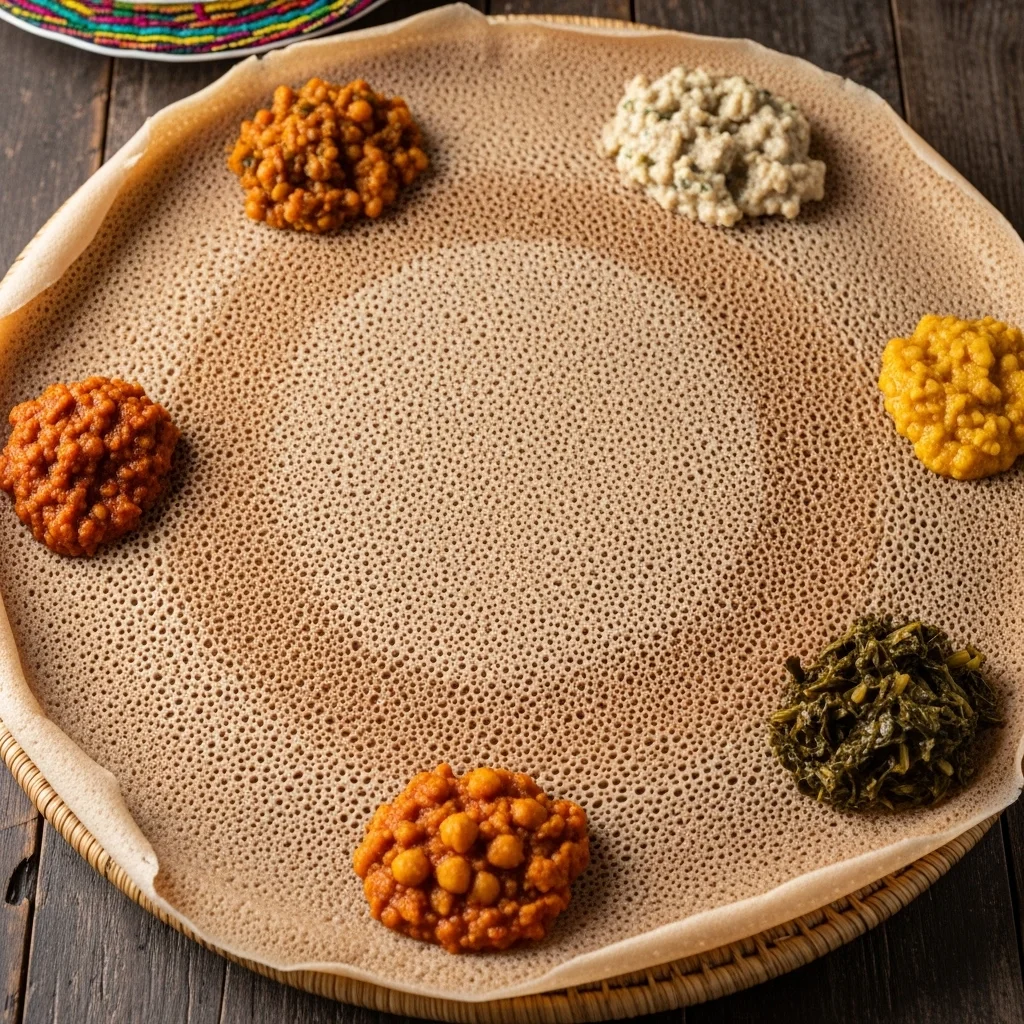
- To serve: ayib (Ethiopian fresh cheese, similar to cottage cheese) + gomen (sautéed collard greens) + injera
Instructions
Using a very sharp knife, finely mince the beef tenderloin by hand — chop, turn, and chop again until the texture is fine and even but not paste-like. Hand mincing is essential for kitfo — the texture must be slightly coarser and more textured than machine-ground beef, which becomes too dense and paste-like.
Warm the niter kibbeh gently in a small pan until just melted and fragrant — do not overheat. Pour the warm butter over the minced beef.
Add mitmita and salt. Mix gently but thoroughly with your hands until the warm butter is fully absorbed and the beef is evenly seasoned and glistening.
For leb leb (slightly warmed) kitfo, briefly cook the mixture in a pan over medium heat for 60–90 seconds, tossing gently. The beef should be just barely warmed through and slightly pink. Serve immediately with ayib, gomen, and injera.
Pro Tip: The beef for kitfo must be the freshest, highest-quality cut available — use tenderloin purchased the same day and prepare it immediately. Kitfo is a dish built entirely on the quality and freshness of its primary ingredient.

Gomen (Ethiopian Braised Collard Greens)
Prep: 15 min | Cook: 30 min | Serves: 4–6 | Difficulty: Very Easy
A deeply flavorful, warming side dish of collard greens slow-braised with garlic, ginger, and niter kibbeh until silky and tender — one of the most essential components of any Ethiopian spread. Gomen is beautiful in its simplicity and absolutely transforms when made with real niter kibbeh.
Ingredients
- 600g fresh collard greens or kale, stems removed and leaves thinly sliced
- 1 large onion, finely diced
- 4 garlic cloves, minced
- 1 tbsp fresh ginger, minced
- 2 jalapeño peppers, finely diced
- 3 tbsp niter kibbeh or butter
- ½ cup water or vegetable stock
- Salt and cracked black pepper
- Injera to serve
Instructions
Bring a large pot of salted water to a boil. Add sliced collard greens and blanch for 3 minutes. Drain thoroughly and squeeze out as much excess water as possible — this step removes bitterness and ensures the greens braise rather than steam in the final dish.
Heat niter kibbeh in a large skillet over medium heat. Cook onion for 8 minutes until very soft and golden. Add garlic, ginger, and jalapeño and cook 2 more minutes.
Add blanched, well-drained collard greens to the pan and toss to coat in the spiced butter mixture. Add stock, season generously with salt and pepper, and cook over medium heat for 15–18 minutes, tossing occasionally, until the greens are completely tender, deeply flavored, and have absorbed all the niter kibbeh fragrance.
Serve as part of an Ethiopian spread alongside wats and injera.
Pro Tip: Squeezing out every drop of water from the blanched greens before adding them to the pan is the critical step — waterlogged greens turn the entire dish watery and diluted instead of deeply flavored and silky.
Niter Kibbeh (Ethiopian Spiced Clarified Butter)
Prep: 10 min | Cook: 30 min | Makes: 1 cup | Difficulty: Easy
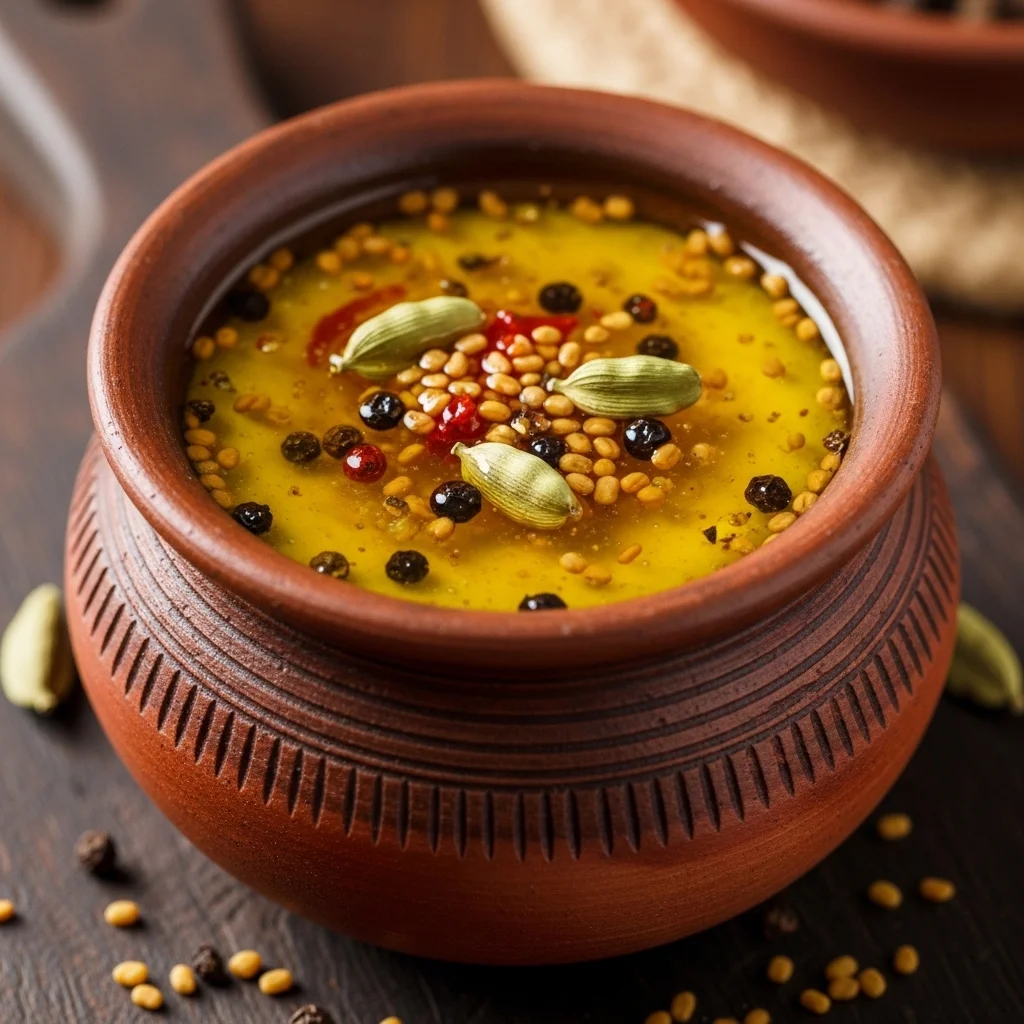
The liquid gold of Ethiopian cooking — a deeply aromatic, spiced clarified butter infused with onion, garlic, ginger, turmeric, cardamom, and a warming blend of spices that perfumes every dish it touches. Niter kibbeh is not just a cooking fat — it is a foundational flavor that defines the character of the entire Ethiopian kitchen. Make a batch and keep it in your fridge for weeks.
Ingredients
- 250g unsalted butter
- ¼ onion, roughly chopped
- 3 garlic cloves, minced
- 1 tbsp fresh ginger, minced
- ½ tsp turmeric
- ½ tsp cumin
- ¼ tsp cardamom
- ¼ tsp coriander
- ¼ tsp fenugreek seeds
- 1 small cinnamon stick
- 2 cloves
- Salt to taste
Instructions
Melt butter in a small heavy saucepan over medium-low heat. Add onion, garlic, and ginger. Cook gently for 5 minutes — the butter will begin to foam and the aromatics will soften and release their fragrance into the fat.
Add all the spices — turmeric, cumin, cardamom, coriander, fenugreek, cinnamon, and cloves. Stir gently to combine. Reduce heat to the lowest possible setting and cook very slowly for 20–25 minutes. The milk solids will sink to the bottom and the butter will become completely clear, golden, and deeply fragrant.
Do not stir too vigorously during cooking — you want the milk solids to settle cleanly on the bottom so they can be strained out.
Line a fine-mesh sieve with cheesecloth or a clean cloth and strain the butter slowly into a clean glass jar, leaving all the milk solids and spice residue behind. The resulting niter kibbeh should be crystal clear and golden with an extraordinary, complex aroma.
Seal and store in the refrigerator for up to 1 month or in the freezer for 3 months.
Pro Tip: Cook the butter over the absolute lowest heat for the full time rushing at higher heat burns the milk solids and turns the finished butter bitter with a scorched, unpleasant undertone that will carry through every dish you use it in.
See Also: 8 Quick Pressure Cooker Recipes